Tag: Christian living

  • What the Mountains Taught Me About the Valley

    What the Mountains Taught Me About the Valley

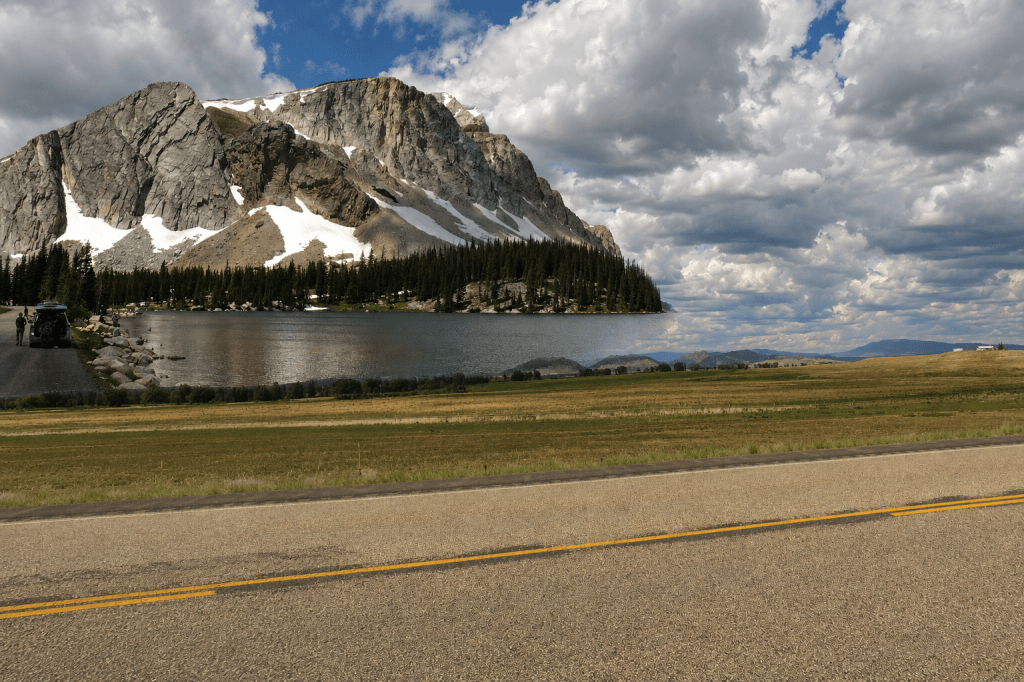
    Last summer, while driving through Wyoming and Colorado, I noticed something that challenged an assumption I’d carried for years.

    The valleys weren’t the difficult part of the journey.

    They were broad. Open. In many places, I could see for miles. The roads were relatively gentle, and obstacles could often be spotted long before I reached them.

    It was the mountains that demanded my full attention.

    The road narrowed.

    The next curve disappeared from view.

    The drop-offs became steeper.

    The weather changed without warning.

    Every mile required a little more caution than the last.

    As I drove, a question quietly settled into my mind.

    Have we, as Christians, oversimplified the Bible’s language about mountains and valleys?

    For years, I’ve heard people describe difficult seasons as “walking through the valley” and victorious seasons as “standing on the mountaintop.” There is certainly biblical truth behind those expressions. After all, David wrote of walking through “the valley of the shadow of death,” and mountains are often places where God revealed Himself in extraordinary ways.

    But Scripture paints a richer picture than our clichés sometimes allow.

    Not every valley in the Bible is a place of despair.

    Some valleys are fertile.

    Some are filled with rivers.

    Some become places where battles are fought and won.

    Some are where people build homes, raise families, and experience God’s daily provision.

    Likewise, not every mountain represents ease or triumph.

    Abraham climbed Mount Moriah carrying the wood for Isaac’s sacrifice.

    Moses climbed Mount Sinai into God’s presence.

    Elijah climbed Mount Carmel to confront hundreds of false prophets.

    Each ascent required obedience before it brought revelation.

    Then I thought about Lot.

    When Abraham gave him first choice, Lot looked toward the well-watered plain of the Jordan. It seemed like the obvious decision. Fertile land. Prosperity. Opportunity. Yet that same plain led him toward Sodom. The problem wasn’t that Lot chose a valley. The problem was that he chose by sight instead of by faith.

    The geography wasn’t the lesson.

    His heart was.

    Perhaps that’s where we sometimes miss the point.

    We become so focused on whether we’re living in a “valley” or standing on a “mountain” that we forget the Bible never asks us to put our confidence in the terrain.

    It asks us to trust the One who leads us through it.

    Sometimes God meets us on the mountain.

    Sometimes He restores us beside still waters in the valley.

    Sometimes He calls us to climb.

    Sometimes He calls us to descend.

    Peter wanted to remain on the mountain after witnessing Christ’s glory, but Jesus led him back down because ministry was waiting below.

    Mountaintops are often places of revelation.

    Valleys are often places where that revelation is lived out.

    Looking back, I realized the most dangerous part of my drive wasn’t the open valley stretching before me.

    It was the climb where I couldn’t see what lay around the next bend.

    Yet that’s also where I became most attentive.

    I slowed down.

    I watched more carefully.

    I depended less on myself.

    Maybe that’s exactly why God sometimes leads us into seasons where we can’t see very far ahead.

    Not because He has abandoned us…

    But because faith grows best when we learn to trust the Guide more than the map.

    The older I get, the less interested I am in labeling every season of life as either a mountain or a valley.

    Instead, I’m learning to ask a different question.

    Where is God leading me today?

    Because whether the road winds through fertile plains, shadowed ravines, or steep mountain passes, His presence has always mattered far more than the landscape.

    ⸻

    Final Word

    We spend a lot of time asking whether we’re on the mountaintop or in the valley.

    Scripture asks a different question.

    Are you following the Shepherd?

    The terrain will change.

    Some days will be wide, open valleys filled with quiet provision.

    Others will be steep climbs where every step requires faith.

    Neither place defines your relationship with God.

    His presence does.

    So don’t place your hope in reaching easier ground.

    Place it in the One who never leaves the path.

  • The Blessing You Didn’t Pray For

    The Blessing You Didn’t Pray For

    “Every good gift and every perfect gift is from above…” — James 1:17

    A song came to mind this week that asks a series of thought-provoking questions.

    What if the things we call hardships are sometimes the very means by which God accomplishes His greatest work in our lives?

    It isn’t asking whether pain is enjoyable.
    It isn’t suggesting that loss somehow becomes pleasant.

    Instead, it challenges us to consider a difficult possibility:

    What if some of God’s greatest blessings arrive in packages we would never choose to open?

    That thought immediately took me back through Scripture.

    Joseph certainly wouldn’t have chosen betrayal by his brothers.
    He wouldn’t have chosen slavery.
    He wouldn’t have chosen prison.

    Yet years later, he could look back and see that God had been working through every painful chapter.

    David probably wouldn’t have chosen years of hiding in caves while running for his life.

    Moses likely wouldn’t have volunteered for forty years in the wilderness.

    Naomi certainly wouldn’t have chosen famine, widowhood, and the loss of her sons.

    None of those experiences felt like blessings when they were happening.

    Yet every one of them became part of God’s greater purpose.

    I wonder how many blessings I’ve almost missed because I was looking for the wrong wrapping paper.

    We naturally think blessings look like answered prayers.

    Open doors.
    Good health.
    Financial provision.
    Restored relationships.

    There is no question those things can be tremendous gifts from God.

    But sometimes His greatest gifts are quieter.

    A disappointment that redirected our lives.
    A closed door that protected us from walking somewhere we shouldn’t.
    A season of waiting that taught us patience.
    A trial that stripped away our self-reliance and taught us complete dependence upon Him.

    None of us pray for those things.

    Yet many of us would honestly say they became turning points in our walk with Christ.

    I’ve noticed something else.

    We usually recognize those blessings only by looking backward.

    Very few people say in the middle of suffering,

    “I can already see why God allowed this.”

    Perspective often comes long after the pain.

    Perhaps that’s why faith is so essential.

    Faith trusts that God is good before we can understand what He is doing.

    Only later do we begin to see how He was weaving together circumstances we never could have imagined.

    Romans 8:28 isn’t a promise that everything is good.

    It’s a promise that God is working through everything for the good of those who love Him and are called according to His purpose.

    That doesn’t minimize grief.
    It doesn’t erase loss.
    It doesn’t pretend suffering isn’t real.

    It simply reminds us that God never wastes any of it.

    One day, I believe we’ll look back and discover that some of the moments we would have erased from our story became the very chapters God used to shape us most into the image of Christ.

    Final Word

    We spend much of our lives asking God to change our circumstances.

    Sometimes He does.

    But often, His greater miracle is using those circumstances to change us.

    Perhaps the greatest blessings aren’t always the ones that make life easier.

    Perhaps they’re the ones that make us more like Jesus.

  • The Only Opinion That Ultimately Matters

    “For if our heart condemn us, God is greater than our heart, and knoweth all things.” — 1 John 3:20

    Someone once shared a thought that has stayed with me:

    “Sometimes maturing in Christ means letting people believe things about you that aren’t true, remaining quiet, and trusting God to defend you.”

    That isn’t always easy.

    Everything inside us wants to explain ourselves, defend our motives, and make sure everyone knows our side of the story.

    Sometimes that’s appropriate.

    Paul defended his ministry. Jesus answered honest questions. Scripture never teaches us to remain silent in every situation.

    But it does teach us that there comes a point where our confidence must rest in something greater than public opinion.

    I’ve often said:

    “What God knows about me is infinitely more important than what people think or say about me.”

    Think about David.

    As he fled Jerusalem, Shimei cursed him, threw stones at him, and publicly accused him. David’s soldiers wanted to silence the man immediately.

    David refused.

    Instead, he entrusted his reputation to God.

    Think about Jesus.

    He was called a deceiver, a blasphemer, demon possessed, and a friend of sinners. Many of the accusations He simply allowed to stand unanswered because His mission was greater than winning the court of public opinion.

    The older I get, the more I realize that maturity isn’t learning how to win every argument.

    It’s learning which ones don’t need to be won.

    If every misunderstanding demands an explanation…

    If every criticism demands a rebuttal…

    If every accusation demands a defense…

    We’ll spend our lives trying to manage our image instead of cultivating our character.

    That doesn’t mean we ignore godly correction. In fact, mature believers should welcome correction when it’s true.

    But false assumptions, rumors, and misunderstandings are different.

    Sometimes the greatest act of faith is quietly continuing to live a life of integrity and allowing time—and God—to reveal the truth.

    One day, none of us will stand before our critics.

    We won’t stand before Facebook.

    We won’t stand before our friends.

    We won’t stand before those who misunderstood us.

    We will stand before God.

    And on that day, what He knows about us will matter infinitely more than what anyone ever thought or said about us.

    So don’t spend your life chasing the approval of people.

    Pursue the approval of the One who already knows your heart.

    Final Word

    Your reputation is what people believe about you.

    Your character is who you are when only God sees.

    Invest more energy in your character than your reputation.

  • Looking Back

    Looking Back

    “Remember Lot’s wife.” — Luke 17:32

    Those three words from Jesus have always fascinated me.

    Out of all the people and stories He could have referenced, Jesus pointed His listeners back to a woman whose name we don’t even know.

    Most people focus on what she did.

    She looked back.

    But I wonder if the deeper issue wasn’t where her eyes were focused.

    Perhaps it was where her heart remained.

    Genesis tells us that God was delivering Lot and his family from Sodom before judgment fell upon the city. The angels urged them to flee and gave a simple instruction:

    “Escape for your life. Do not look behind you.”

    Yet somewhere along the journey, Lot’s wife turned and looked back.

    Why?

    Scripture doesn’t tell us.

    Perhaps she missed her home.

    Perhaps she missed friends and memories.

    Perhaps she simply feared the uncertainty of what lay ahead.

    Whatever the reason, her heart was still connected to something God had called her to leave behind.

    The older I get, the more I realize that many of us are not trapped by sinful places.

    We’re trapped by familiar ones.

    We become comfortable in seasons that were once exactly where God wanted us to be… but are no longer where He is leading us. Hu

    Sometimes it’s a ministry.
    Sometimes it’s a job.
    Sometimes it’s a group of friends.
    Sometimes it’s a dream we have carried for decades.

    We know God is leading us forward, but part of us keeps looking over our shoulder.

    Not because the past was evil.

    But because it was known.

    The future is not.

    I remember nearly thirty years ago when I stepped away from teaching the youth class in McAlester.

    The hardest part wasn’t laying down the responsibility.

    The hardest part was not looking back.

    That season had shaped me.

    I loved those students.
    I loved the ministry.
    I loved what God had done there.

    But eventually I had to learn that following God sometimes means leaving a season you loved in order to embrace one you cannot yet see.

    Abraham left Ur.
    Moses left Midian.
    David left the pasture.
    The disciples left their nets, tax booth, and fig tree.

    None of them were given a complete roadmap.

    They were simply asked to trust God enough to take the next step. And often, the next step didn’t make sense until years later.

    Perhaps that’s why this story still speaks so powerfully today.

    Many of us are asking God for clarity about the future while secretly wishing He would restore the past.

    We want the old ministry.
    The old relationships.
    The old opportunities.
    The old version of ourselves.

    But what if God is not trying to recreate what was?

    What if He is trying to create something new?

    What if looking back isn’t always longing for our past life?

    What if sometimes it’s refusing to believe God can do something different in the future?

    That question has challenged me deeply.

    Because every season of life eventually ends.

    Children grow up.
    Careers change.
    Ministries evolve.
    Doors close.
    Dreams shift.

    The question isn’t whether seasons will change.

    The question is whether we will trust God when they do.

    Lot’s wife teaches us that there is danger in living with our feet pointed toward God’s future while our hearts remain anchored in yesterday.

    The past can be honored.
    The lessons can be remembered.
    The memories can be cherished.

    But they cannot become our destination.

    God never calls us backward.

    He always calls us forward.

    Final Word:

    Maybe the question isn’t:

    “What am I looking back at?”

    Maybe the better question is:

    “Do I trust God enough to believe that what lies ahead may be different from the past… and still be exactly where He wants me to be?”

    After all, it’s hard to move forward while you’re looking back.

  • Give Me Truth

    “Rather than love, than money, than fame, give me truth.”
    — Henry David Thoreau

    Truth sounds noble… until it costs you something.

    It’s easy to praise truth when it’s inspirational.

    It’s much harder when truth isolates you, threatens your comfort, damages your reputation, or costs you relationships.

    Biblical truth has always carried a price tag.

    Ask Noah.

    The man spent decades building an ark while the world mocked him as irrational and extreme. Yet the flood still came.

    Ask Elijah.

    One prophet standing against hundreds was declared a troublemaker and hunted by a king and queen because he refused to bow to a culture built on compromise.

    Ask Jeremiah.

    He loved his nation enough to tell them the truth, and they answered by throwing him into a pit.

    Ask John the Baptist.

    He lost his head because he refused to soften the truth about sin for the sake of political favor.

    Ask the apostles.

    Most of them died not because they were violent men, but because they would not deny what they had seen and heard about Jesus Christ.

    And ultimately, ask Jesus Himself.

    Truth was nailed to a cross by people who claimed to love God while rejecting the very Word standing in front of them.

    The cost of truth did not end at Calvary.

    Throughout history, men and women have continued to pay a price for refusing to abandon what they knew to be true.

    Dietrich Bonhoeffer stood against the lies and evil of Nazi Germany, fully aware that his convictions could cost him his freedom—and ultimately his life.

    Today, believers in parts of Africa gather for worship despite threats of violence, imprisonment, and death. Some have watched churches burn and loved ones suffer because they refused to deny Christ.

    In China and other restrictive nations, Christians continue meeting in underground churches, knowing that obedience may carry consequences most of us have never faced.

    Even in societies that celebrate freedom, standing on biblical convictions can carry a cost. Careers may be affected. Friendships may be strained. Reputations may suffer. The pressure is often less about denying Christ outright and more about remaining silent when His truth becomes unpopular.

    The forms may change.

    The cost remains.

    Every generation is eventually faced with the same question:

    What am I willing to lose in order to remain faithful to the truth?

    That’s the part modern culture often ignores:

    Truth is rarely hated when it’s vague.

    Truth becomes dangerous when it becomes specific.

    The world doesn’t mind spirituality that never confronts sin.

    It doesn’t mind Christianity that never requires repentance.

    It doesn’t mind churches that entertain but never convict.

    But biblical truth?

    Truth that calls people to surrender?

    Truth that challenges pride, lust, greed, hatred, hypocrisy, and self-worship?

    That kind of truth has always been costly.

    And yet, throughout history, every revival, every awakening, and every genuine move of God was built on men and women who decided truth mattered more than acceptance.

    John 8:32 (NKJV)

    “And you shall know the truth, and the truth shall make you free.”

    Notice:

    Jesus never said truth would make us comfortable.

    He said it would make us free.

    Final Word

    We live in a generation that often values comfort over conviction, platform over principle, and feelings over truth.

    Yet every generation has faced its own test.

    Noah faced it.

    Jeremiah faced it.

    John the Baptist faced it.

    Bonhoeffer faced it.

    Persecuted believers face it today.

    And now the question comes to us.

    Do I want truth badly enough to accept the cost that comes with it?

    Because truth will demand something from all of us.

    But truth offers something compromise never can:

    Freedom.

    “And ye shall know the truth, and the truth shall make you free.” (John 8:32)

    Truth may be costly, but the price of abandoning it is always higher.

  • Scripture Is Not About Me… But It Still Reveals Me

    Scripture Is Not About Me… But It Still Reveals Me

    Yesterday, we talked about James describing God’s Word as a mirror.

    That thought sparked some interesting discussion.

    One person commented that the Bible is written so we can see Christ and follow God—not so we can see ourselves.

    In one sense, I completely agree.

    The Bible is not primarily a self-help book. It is the revelation of God. From Genesis to Revelation, Scripture points us to God’s character, God’s promises, God’s mercy, God’s judgment, and ultimately God’s plan of redemption through Jesus Christ.

    Christ is the center of Scripture.

    But I think we can make a mistake if we stop there.

    If Scripture reveals Christ, and Christ exposes what is in my heart, then self-examination becomes unavoidable.

    Throughout the Bible, we find people who encountered God and immediately became aware of themselves.

    When Isaiah saw the Lord high and lifted up, his first response was not to analyze the sins of the nation around him. He cried, “Woe is me! for I am undone.”

    When Peter witnessed the miraculous catch of fish, he fell at Jesus’ feet and said, “Depart from me; for I am a sinful man, O Lord.”

    At the Last Supper, when Jesus told the disciples that one of them would betray Him, they did not immediately begin pointing fingers. Instead, one by one, they asked, “Lord, is it I?”

    In every case, seeing God more clearly caused them to see themselves more clearly.

    That is why James compares God’s Word to a mirror.

    A mirror does not create flaws.

    A mirror reveals what is already there.

    The purpose of Scripture is not to make me the hero of the story. The purpose of Scripture is to reveal God. Yet when God is revealed, I begin to see myself honestly.

    We do not read David so we can pretend we are David.

    We do not read Esau so we can condemn Esau.

    We do not read Peter simply to admire Peter.

    These men often become mirrors.

    David reveals the heart of repentance.

    Esau reveals the danger of placing temporary desires above eternal blessings.

    Peter reveals how quickly passion can outrun wisdom.

    Judas reveals that it is possible to be near Jesus while withholding complete surrender.

    The goal is not identification.

    The goal is transformation.

    The question is not, “Which Bible character am I?”

    The better question is, “Lord, what are You showing me that needs to change?”

    That question requires humility.

    It is easy to read about the Pharisees and see someone else.

    It is easy to read about Judas and think of someone else’s betrayal.

    It is easy to read about Esau and think of someone else’s poor choices.

    It is much harder to ask whether traces of those same attitudes might exist in our own hearts.

    Yet that is often where real growth begins.

    The closer we draw to God, the less interested we become in evaluating everyone else and the more willing we become to examine ourselves.

    Perhaps that is why the disciples’ question still echoes through Scripture.

    Not, “Lord, is it him?”

    Not, “Lord, is it her?”

    Not, “Lord, is it them?”

    But, “Lord, is it I?”

    When we open God’s Word, may we see Christ more clearly than ever before.

    And in His light, may we have the courage to see ourselves honestly as well.

  • Divine Disruptions – Day 4

    Divine Disruptions – Day 4

    Pharaoh: When Pride Outlives the Plagues

    📖 “But Pharaoh hardened his heart at this time also…” — Exodus 8:32 (NKJV)


    Pharaoh didn’t miss what God was saying.
    He just didn’t like what it required.

    And that’s what makes his story so dangerous—it shows us that spiritual blindness isn’t always about ignorance. Sometimes it’s about arrogance.

    God didn’t start small with Pharaoh. He sent Moses with a simple but loaded message:

    “Let My people go.”
    Pharaoh’s response? “Who is the Lord, that I should obey His voice?” (Exodus 5:2)

    And right there, the line was drawn.
    Pharaoh didn’t just reject the message—he rejected the authority behind it.


    🔥 Then the disruption began.

    God sent plagues.
    Not just natural disasters, but direct attacks on the Egyptian gods—each plague a divine dismantling of Egypt’s pride, power, and control.

    • The Nile turned to blood—a death blow to Egypt’s economy and spirituality.
    • Frogs swarmed their homes.
    • Dust became lice.
    • Disease struck their livestock.
    • Boils covered their bodies.
    • Hail pounded their crops.
    • Locusts devoured what was left.
    • Darkness covered the land.
    • And finally, death entered every Egyptian home.

    Nine chances to bow.
    Nine divine warnings to surrender.
    And yet… Pharaoh hardened his heart. Again. And again. And again.


    “And the Lord hardened Pharaoh’s heart…” (Exodus 9:12)

    That verse shakes me. Because it’s not just that Pharaoh resisted—God eventually confirmed it.

    God gave Pharaoh opportunity after opportunity to repent.
    But Pharaoh was more committed to being right than being righteous.
    He didn’t want to lose control.
    He didn’t want to look weak.
    He didn’t want to give up the throne.

    So God gave him over to the very pride he refused to let go.


    ⚠️ Here’s the warning that hits us today:

    You can be surrounded by miracles… and still choose rebellion.
    You can feel conviction… and still ignore it.
    You can see God working… and still harden your heart.

    Divine disruptions are supposed to wake us up.
    But if we resist long enough, they stop being invitations—and become judgments.


    Pharaoh’s stubbornness didn’t just cost him personally.
    It broke a nation.
    His army drowned. His people suffered. His name became synonymous with rebellion.

    And here’s the moment that seals it:

    Pharaoh’s story doesn’t end in repentance.
    It ends in a watery grave—at the bottom of the very sea those he pursued had just walked through.
    Because sometimes, what we chase in rebellion… becomes the very thing that destroys us.

    He watched the people of God walk through freedom—and followed them into judgment.


    🙏 Reflection:

    • Have I confused God’s patience with His approval?
    • What repeated disruptions have I been writing off as coincidence?
    • Is my pride blinding me to the cost of disobedience?

    When God doesn’t have your attention, He’ll disturb what does.
    Just ask Pharaoh.

  • The Plastic Chair Was Never the Problem

    Key Scripture:
    “And you shall know the truth, and the truth shall make you free.” — John 8:32 (NKJV)
    “Be transformed by the renewing of your mind.” — Romans 12:2b (NKJV)


    I came across an image recently that caught me off guard—and convicted me more than I’d like to admit.

    It was a horse. Big, strong, muscular. But it was standing still, tied by a rope to a flimsy plastic lawn chair. That horse could’ve broken free without even trying. But it didn’t. Not because it couldn’t—but because it believed it was bound.

    And right then, I saw myself.

    For the past month, I’ve allowed distractions to pull me away from the very disciplines that gave me life—prayer, time in the Word, pouring truth into others through every platform God gave me. One small excuse turned into a week. One neglected moment of prayer turned into silence. Then came the guilt. The disappointment. The rope.

    Not one of those things—distraction, laziness, or even failure—was stronger than my calling or the presence of God in my life. But somewhere in my head, I gave them that power. I started believing that I had to feel on fire to be faithful. I told myself I needed to wait until I was inspired, until life calmed down, until I “got it together.”

    But that was the rope talking. That was the plastic chair.

    Jesus didn’t die and rise again to set us halfway free. The bondage we face now isn’t always external. Sometimes, it’s just a lie we’ve believed for too long.

    And that’s where the real battle is won: not just by cutting the rope—but by renewing the mind that believed it held us.

    Romans 12:2 doesn’t say we’re transformed by doing better. It says we’re transformed by the renewing of our mind. That’s where it starts. That’s where the chair loses its grip.

    So here I am—coming back to the things I’ve neglected. Not because I feel worthy, but because I now see the truth. The enemy will try to convince us we’re too far gone. That God’s disappointed. That we’re disqualified.

    But listen to me: that chair has no power.

    The truth is that God is waiting—not with condemnation, but with open arms.
    The truth is that freedom isn’t earned, it’s claimed.
    The truth is that your calling doesn’t evaporate when you get distracted.
    It waits—right where you left it.


    Reflection Questions:

    1. What lies have I believed about myself that are keeping me tied down?
    2. Where have I allowed distractions to become spiritual chains?
    3. What truth do I need to replace those lies with today?

    Closing Prayer:
    Father, I confess that I’ve allowed myself to become entangled in lies and distractions. I’ve believed the rope was real, even when You’ve already given me freedom. Help me today to renew my mind—to replace the lies with truth. I want to walk in the freedom Jesus died to give me. Pull me back into the disciplines I’ve neglected, and meet me in that place. I’m coming home. In Jesus’ name, amen.

  • Nearer Than You’ve Ever Dreamed

    Fifteen years ago, I received a phone call from a friend in what I can only describe as a full-blown spiritual crisis. Through tears and strained silence, she confessed things she thought disqualified her from God’s presence: sexual sin, rebellion, alcohol abuse, and a string of regrets. Her voice cracked as she asked, “Does God even see me anymore? Can He still hear me?”

    Truth be told, I didn’t have the right words in that moment. So I did what I always do when I feel helpless—I prayed, then turned to Scripture. The story of the prodigal son in Luke 15:11-32 brought comfort. That image of a father running to his broken, returning son never fails to bring me to tears.

    Later, I picked up Max Lucado’s Come Thirsty, and this fictional yet spiritually potent scene caught my eye. Jesse, a Christ-figure, finds Meagan in a cafe. She’s exhausted, emotionally wrecked, and burdened by shame. She spills out her story—a series of poor choices that left her feeling used and discarded. Then she asks: “Where’s God in all this?”

    Jesse leans in and replies, “Nearer than you’ve ever dreamed.”

    This is the heart of the gospel.

    Psalm 34:18 (NKJV) declares,

    “The Lord is near to those who have a broken heart, and saves such as have a contrite spirit.”

    And Isaiah 55:6-7 (NKJV) urges,

    “Seek the Lord while He may be found, call upon Him while He is near. Let the wicked forsake his way… and He will have mercy… for He will abundantly pardon.”

    We serve a God who draws near to the broken.

    Not just the polished or the cleaned-up.

    Not just the Sunday best version.

    But the tear-streaked, regret-heavy, “I’m barely holding it together” version.

    Maybe this is you today. Maybe you’re wondering, like my friend once did, if God still sees you. If He’s still listening. Let me remind you: He is. He always has been.

    He is nearer than you’ve ever dreamed.

    When have you felt far from God? What reminded you of His nearness?

    Share your story below. Someone else might need your honesty today.

  • When Obedience Makes No Sense: Marching Through the Impossible

    Scripture focus: “You will not need to fight in this battle. Position yourselves, stand still and see the salvation of the Lord…” (2 Chronicles 20:17, NKJV)

    The Bible is packed with stories that, if we’re being honest, sound like they should’ve ended in disaster. People facing impossible odds, following battle plans that would never fly in a military strategy room—and somehow walking away victorious. Why? Because God was the one calling the shots.

    Let’s start at the Red Sea. The children of Israel—more than 600,000 men, plus women and children—had finally escaped Egypt. But they were trapped between the uncrossable Red Sea and Pharaoh’s pursuing army. No weapons. No escape route. No time. But instead of rallying the people to arms, Moses said something crazy: “Stand still, and see the salvation of the Lord” (Exodus 14:13). Then God parted the waters. The people walked through on dry land. And when Pharaoh’s army followed, the sea closed in behind them.

    That’s not strategy. That’s sovereignty.

    And then there’s Jericho. A fortified city with high walls and strong defenses. Any human general would’ve planned a siege. But God gave Joshua a blueprint that sounded like a children’s game: walk around the city once a day for six days in total silence. Then on the seventh day, march around seven times. Blow the trumpets. Shout. That’s 13 total laps around the city.

    Now pause for a second. The number 13 has a bad reputation. The world calls it unlucky. Some elevators skip the 13th floor. People talk about Friday the 13th like it’s cursed. But let this sink in: God used 13 laps—that “unlucky” number—to bring down the walls of one of the strongest cities in the Promised Land.

    Let the world call it bad luck. We call it divine design.

    It doesn’t stop there. Gideon started with 32,000 men to fight the Midianites. But God trimmed it down to 10,000… then just 300 men—armed not with swords, but with trumpets, torches, and clay pitchers. Judges 7:12 says the enemy was “as numerous as locusts; and their camels… as the sand by the seashore.” That’s not just outnumbered. That’s outmatched, overwhelmed, and underqualified. Yet by God’s hand, victory came anyway.

    Over and over we see it:

    • Hezekiah and the Assyrian army (2 Kings 19)
    • Jehoshaphat against the armies of Moab and Ammon (2 Chronicles 20)
    • Daniel in the lion’s den (Daniel 6)
    • Shadrach, Meshach, and Abed-Nego in the fiery furnace (Daniel 3)

    These aren’t just Bible stories—they’re testimonies. Reminders that when obedience seems foolish, God’s power is often just moments away.

    I don’t know what kind of battle you’re facing today. Maybe you’re on lap 11 or 12, and nothing’s changed. The walls are still there. The enemy still looms. The fear is still whispering in your ear. But let me say this:

    Don’t quit before lap 13.

    Don’t let the world define your “unlucky” situation. Let God redeem it for His glory. Maybe you feel like the underdog—like Gideon. Or maybe you’ve been marching silently like Joshua, wondering if your obedience even matters. It does. It always does.

    And when you’re tired? When quitting seems easier than continuing? Remember the words of Jehaziel in 2 Chronicles 20:17, “Stand still and see the salvation of the Lord.” Or David’s bold declaration to Goliath in 1 Samuel 17:47, “The battle is the Lord’s.” Or the simple, powerful invitation from Psalm 46:10: “Be still, and know that I am God.”

    There’s a song from the Imperials—recorded back in 1979—that still speaks:

    Praise the Lord, for the chains that seem to bind you
    Serve only to remind you
    That they drop powerless behind you
    When you praise Him.

    Chains look real. Walls feel permanent. But God? He specializes in things that don’t make sense.


    Reflection Questions:

    1. Have you ever obeyed God when it didn’t make sense? What happened?
    2. Are you on a “lap” right now where quitting feels easier than trusting?
    3. What walls are you facing today that need a God-sized breakthrough?

    Final Encouragement:
    Obedience may not feel powerful—but it positions us to see God’s power clearly. Don’t stop short. Don’t buy the world’s definition of what’s “lucky” or “logical.” If He brought you to it, He’s more than able to bring you through it.

    Keep marching. Lap 13 is coming.