Tag: Daily Devotional

  • Create In Me A Clean Heart

    Create In Me A Clean Heart

    Scripture: Psalm 51

    Yesterday we looked at one of the most uncomfortable moments in all of Scripture.

    Nathan stood before King David and uttered four unforgettable words:

    “Thou art the man.”

    David’s response was immediate.

    “I have sinned against the LORD.” (2 Samuel 12:13)

    For most of us, that’s where the story ends.

    But Scripture doesn’t leave us standing in the throne room with Nathan.

    It invites us into David’s prayer closet.

    Psalm 51 is that prayer.

    If 2 Samuel 12 records David’s confession…

    Psalm 51 reveals David’s heart.

    I’ve read Psalm 51 countless times over the years, and it has long been one of my favorite chapters in the Bible.

    But through the years I’ve discovered something.

    There are certain passages of Scripture that become more meaningful the longer you live.

    When I was younger, I admired David’s poetry.

    Today…

    I understand his tears.

    David doesn’t spend this Psalm trying to explain himself.

    He doesn’t minimize his sin.

    He doesn’t compare himself to someone worse.

    He doesn’t bargain with God.

    No… he simply throws himself entirely upon the mercy of God.

    The opening words set the tone for everything that follows.

    “Have mercy upon me, O God, according to thy lovingkindness…”

    David doesn’t appeal to his past victories.

    He doesn’t remind God that he killed Goliath.

    He doesn’t mention the years he faithfully served as king.

    He simply pleads for mercy.

    That is where genuine repentance always begins.

    The more I read this Psalm, the more one truth stands out.

    David never asks God to change his circumstances.

    Instead…

    He asks God to change him.

    That may be the clearest evidence that his repentance was genuine.

    “Wash me thoroughly from mine iniquity…”

    “Cleanse me from my sin.”

    “Purge me with hyssop…”

    “Create in me a clean heart…”

    “Renew a right spirit within me.”

    Notice the pattern.

    Wash me.

    Cleanse me.

    Purge me.

    Create in me.

    Renew me.

    Restore me.

    Those aren’t the prayers of a man trying to escape consequences.

    They’re the prayers of a man who longs to be different.

    David understood something that we sometimes forget.

    Forgiveness isn’t merely about removing guilt.

    It’s about restoring fellowship with God.

    In this chapter, there is one verse that has always stopped me in my tracks.

    “Cast me not away from thy presence; and take not thy holy spirit from me.” (Psalm 51:11)

    David had already lost peace.

    He had already lost joy.

    His family would experience heartbreaking consequences because of his choices.

    But above everything else…

    He feared losing the presence of God.

    That tells me David finally understood what mattered most.

    One word in particular has fascinated me for years.

    “Create in me a clean heart, O God…”

    David didn’t ask God to repair his heart.

    He didn’t ask Him to polish it.

    Or improve it.

    The Hebrew word translated “create” is the same word used in Genesis 1.

    It describes something only God can do.

    David wasn’t asking for self-improvement.

    He was asking for a new creation.

    Isn’t that the hope of the Gospel?

    God doesn’t simply make bad people a little better.

    He makes dead things live again.

    He gives new hearts.

    New spirits.

    New beginnings.

    As I’ve reflected on my own life over the past sixteen years, these words have taken on a depth they never had before.

    Not because I’ve learned more Hebrew.

    Not because I’ve become a better Bible student.

    But because I’ve experienced the painful reality of living with the consequences of my own failures.

    I’ve learned that repentance isn’t just feeling sorry for what I’ve done.

    It’s longing to become someone different through the grace of God.

    That’s why Psalm 51 continues to speak to me.

    David never asked God to erase the past.

    He asked Him to transform the man who would live tomorrow.

    There is a profound difference.

    Repentance isn’t trying to convince God we’re better than we are.

    It’s agreeing with God about who we really are…

    and trusting Him to make us new.

    That is the beauty of grace.

    Not that God overlooks our sin.

    But that He cleanses the sinner who comes to Him with a broken and contrite heart.

    Final Word

    David wasn’t remembered because he was the king who never failed.

    He was remembered because he was the king who knew where to go when he did.

    Every one of us will fail.

    Every one of us will need mercy.

    The question isn’t whether we’ll ever have our own Psalm 51 moment.

    The question is whether we’ll come to God with excuses…

    or with surrender.

    May our prayer never become,

    “Lord, protect my reputation.”

    May it always be,

    “Create in me a clean heart, O God; and renew a right spirit within me.”

    Because God specializes in doing what only He can do.

    He doesn’t merely forgive repentant hearts.

    He creates new ones.

  • Two Kings. Two Prophets. Two Hearts.

    Two Kings. Two Prophets. Two Hearts.

    Last weekend, Lisa and I had the opportunity to see David at Sight & Sound in Branson.

    The production was outstanding.

    Like most people, I expected to leave thinking about Goliath.

    Instead, I couldn’t stop thinking about Nathan.

    As I watched the prophet confront David over his sin with Bathsheba and Uriah, I found myself comparing that scene with another confrontation recorded in Scripture.

    Two kings.

    Two prophets.

    Two sins.

    Two completely different responses.

    King Saul was confronted by Samuel after sparing King Agag and keeping the best of the Amalekite livestock, despite God’s clear command to destroy everything.

    King David was confronted by Nathan after committing adultery with Bathsheba and arranging for Uriah to be killed in battle.

    Neither man sought out correction.

    God sent a prophet to them.

    Both men had sinned.

    Both men were confronted.

    But that’s where the similarities end.

    When Samuel confronted Saul, his first response wasn’t confession.

    It was self-defense.

    “I have obeyed…”

    “The people took of the spoil…”

    “It was to sacrifice unto the Lord…”

    Excuse followed excuse.

    Responsibility was shifted.

    Blame was shared.

    Even after finally saying, “I have sinned,” Saul immediately added another request:

    “Honor me now, I pray thee, before the elders of my people.”

    Even in repentance, he was still concerned about preserving his image.

    Then Nathan stood before David.

    He didn’t begin with an accusation.

    He told a story.

    A rich man stole the only lamb a poor man possessed.

    David was furious.

    “The man that hath done this thing shall surely die!”

    Then Nathan spoke four words that have echoed through history.

    “Thou art the man.”

    At that moment, David could have done exactly what Saul had done.

    He could have blamed Bathsheba.

    He could have blamed loneliness.

    He could have blamed the pressures of leadership.

    He could have blamed anyone but himself.

    Instead, David uttered one of the shortest—and most powerful—confessions in all of Scripture.

    “I have sinned against the LORD.”

    No excuses.

    No blame shifting.

    No attempts to justify himself.

    Just honest repentance.

    David’s sin was enormous.

    Adultery.

    Deception.

    Murder.

    None of it was minimized.

    The consequences were real, painful, and far-reaching.

    His family suffered.

    His kingdom suffered.

    David himself suffered.

    Repentance does not erase earthly consequences.

    But it does restore fellowship with God.

    I’ve often wondered why preachers spend far more time talking about David and Goliath than David and Nathan.

    Perhaps it’s because Goliath is easier.

    We all like sermons that ask,

    “What giant are you facing?”

    Nathan asks a far more uncomfortable question.

    “Where are you refusing God’s correction?”

    One sermon inspires us.

    The other examines us.

    One points to battles around us.

    The other exposes battles within us.

    As I reflected on the production afterward, another thought settled into my heart.

    The greatest difference between Saul and David wasn’t that one sinned and the other didn’t.

    Both failed.

    Both needed mercy.

    The difference was what happened after God confronted them.

    Saul defended himself.

    David humbled himself.

    One protected his reputation.

    The other surrendered his heart.

    I don’t believe God is looking for people who never fail.

    If He were, none of us would qualify.

    I believe He’s looking for people who remain teachable.

    People who are willing to hear hard truth.

    People who care more about holiness than appearance.

    People who, when confronted by the Spirit of God, are willing to say,

    “Lord… You’re right.”

    Because every one of us will eventually have a “Thou art the man” moment.

    The question isn’t whether correction will come.

    The question is what kind of heart it will find.

    Final Word

    David wasn’t called “a man after God’s own heart” because he never sinned.

    He was called that because when God exposed his sin, he didn’t harden his heart.

    He humbled it.

    The difference between Saul and David wasn’t the seriousness of their failures.

    It was the condition of their hearts after they were confronted.

    May we never become so concerned with protecting our reputation that we stop listening to God’s correction.

    Because the path to restoration doesn’t begin with defending ourselves.

    It begins with four simple words…

    “I have sinned, Lord.”

  • What the Mountains Taught Me About the Valley

    What the Mountains Taught Me About the Valley

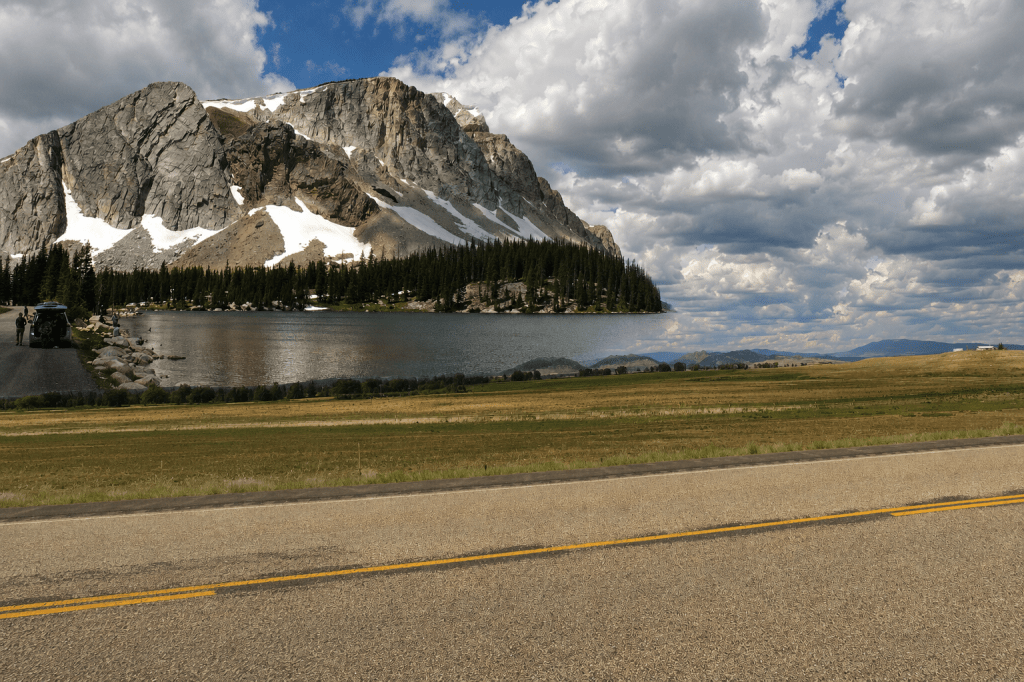
    Last summer, while driving through Wyoming and Colorado, I noticed something that challenged an assumption I’d carried for years.

    The valleys weren’t the difficult part of the journey.

    They were broad. Open. In many places, I could see for miles. The roads were relatively gentle, and obstacles could often be spotted long before I reached them.

    It was the mountains that demanded my full attention.

    The road narrowed.

    The next curve disappeared from view.

    The drop-offs became steeper.

    The weather changed without warning.

    Every mile required a little more caution than the last.

    As I drove, a question quietly settled into my mind.

    Have we, as Christians, oversimplified the Bible’s language about mountains and valleys?

    For years, I’ve heard people describe difficult seasons as “walking through the valley” and victorious seasons as “standing on the mountaintop.” There is certainly biblical truth behind those expressions. After all, David wrote of walking through “the valley of the shadow of death,” and mountains are often places where God revealed Himself in extraordinary ways.

    But Scripture paints a richer picture than our clichés sometimes allow.

    Not every valley in the Bible is a place of despair.

    Some valleys are fertile.

    Some are filled with rivers.

    Some become places where battles are fought and won.

    Some are where people build homes, raise families, and experience God’s daily provision.

    Likewise, not every mountain represents ease or triumph.

    Abraham climbed Mount Moriah carrying the wood for Isaac’s sacrifice.

    Moses climbed Mount Sinai into God’s presence.

    Elijah climbed Mount Carmel to confront hundreds of false prophets.

    Each ascent required obedience before it brought revelation.

    Then I thought about Lot.

    When Abraham gave him first choice, Lot looked toward the well-watered plain of the Jordan. It seemed like the obvious decision. Fertile land. Prosperity. Opportunity. Yet that same plain led him toward Sodom. The problem wasn’t that Lot chose a valley. The problem was that he chose by sight instead of by faith.

    The geography wasn’t the lesson.

    His heart was.

    Perhaps that’s where we sometimes miss the point.

    We become so focused on whether we’re living in a “valley” or standing on a “mountain” that we forget the Bible never asks us to put our confidence in the terrain.

    It asks us to trust the One who leads us through it.

    Sometimes God meets us on the mountain.

    Sometimes He restores us beside still waters in the valley.

    Sometimes He calls us to climb.

    Sometimes He calls us to descend.

    Peter wanted to remain on the mountain after witnessing Christ’s glory, but Jesus led him back down because ministry was waiting below.

    Mountaintops are often places of revelation.

    Valleys are often places where that revelation is lived out.

    Looking back, I realized the most dangerous part of my drive wasn’t the open valley stretching before me.

    It was the climb where I couldn’t see what lay around the next bend.

    Yet that’s also where I became most attentive.

    I slowed down.

    I watched more carefully.

    I depended less on myself.

    Maybe that’s exactly why God sometimes leads us into seasons where we can’t see very far ahead.

    Not because He has abandoned us…

    But because faith grows best when we learn to trust the Guide more than the map.

    The older I get, the less interested I am in labeling every season of life as either a mountain or a valley.

    Instead, I’m learning to ask a different question.

    Where is God leading me today?

    Because whether the road winds through fertile plains, shadowed ravines, or steep mountain passes, His presence has always mattered far more than the landscape.

    Final Word

    We spend a lot of time asking whether we’re on the mountaintop or in the valley.

    Scripture asks a different question.

    Are you following the Shepherd?

    The terrain will change.

    Some days will be wide, open valleys filled with quiet provision.

    Others will be steep climbs where every step requires faith.

    Neither place defines your relationship with God.

    His presence does.

    So don’t place your hope in reaching easier ground.

    Place it in the One who never leaves the path.

  • Divine Disruptions – Day 4

    Divine Disruptions – Day 4

    Pharaoh: When Pride Outlives the Plagues

    📖 “But Pharaoh hardened his heart at this time also…” — Exodus 8:32 (NKJV)


    Pharaoh didn’t miss what God was saying.
    He just didn’t like what it required.

    And that’s what makes his story so dangerous—it shows us that spiritual blindness isn’t always about ignorance. Sometimes it’s about arrogance.

    God didn’t start small with Pharaoh. He sent Moses with a simple but loaded message:

    “Let My people go.”
    Pharaoh’s response? “Who is the Lord, that I should obey His voice?” (Exodus 5:2)

    And right there, the line was drawn.
    Pharaoh didn’t just reject the message—he rejected the authority behind it.


    🔥 Then the disruption began.

    God sent plagues.
    Not just natural disasters, but direct attacks on the Egyptian gods—each plague a divine dismantling of Egypt’s pride, power, and control.

    • The Nile turned to blood—a death blow to Egypt’s economy and spirituality.
    • Frogs swarmed their homes.
    • Dust became lice.
    • Disease struck their livestock.
    • Boils covered their bodies.
    • Hail pounded their crops.
    • Locusts devoured what was left.
    • Darkness covered the land.
    • And finally, death entered every Egyptian home.

    Nine chances to bow.
    Nine divine warnings to surrender.
    And yet… Pharaoh hardened his heart. Again. And again. And again.


    “And the Lord hardened Pharaoh’s heart…” (Exodus 9:12)

    That verse shakes me. Because it’s not just that Pharaoh resisted—God eventually confirmed it.

    God gave Pharaoh opportunity after opportunity to repent.
    But Pharaoh was more committed to being right than being righteous.
    He didn’t want to lose control.
    He didn’t want to look weak.
    He didn’t want to give up the throne.

    So God gave him over to the very pride he refused to let go.


    ⚠️ Here’s the warning that hits us today:

    You can be surrounded by miracles… and still choose rebellion.
    You can feel conviction… and still ignore it.
    You can see God working… and still harden your heart.

    Divine disruptions are supposed to wake us up.
    But if we resist long enough, they stop being invitations—and become judgments.


    Pharaoh’s stubbornness didn’t just cost him personally.
    It broke a nation.
    His army drowned. His people suffered. His name became synonymous with rebellion.

    And here’s the moment that seals it:

    Pharaoh’s story doesn’t end in repentance.
    It ends in a watery grave—at the bottom of the very sea those he pursued had just walked through.
    Because sometimes, what we chase in rebellion… becomes the very thing that destroys us.

    He watched the people of God walk through freedom—and followed them into judgment.


    🙏 Reflection:

    • Have I confused God’s patience with His approval?
    • What repeated disruptions have I been writing off as coincidence?
    • Is my pride blinding me to the cost of disobedience?

    When God doesn’t have your attention, He’ll disturb what does.
    Just ask Pharaoh.