Tag: Daily Truth Quiet Reflection Real Faith

  • Shaken, but Still Standing

    Shaken, but Still Standing

    Job 23:8–10; Matthew 7:24–27

    On the night of April 30, 2019, tornado sirens sounded in the small town of Haileyville, Oklahoma. An EF2 tornado swept through the area, damaging homes, vehicles, and businesses. The far northwestern corner of neighboring Hartshorne was also affected, but to a lesser degree.

    At the time, I was managing TH Rogers Lumber in Hartshorne. I’d heard reports as I was getting ready to leave the house the next morning, Wednesday, May 1, but what I heard hadn’t prepared me for what I saw as I approached Haileyville on my way to work.

    I drove slowly through town without stopping while emergency workers and first responders worked to ensure everyone was accounted for. Later that morning, I went out to survey the damage, assess what people needed, and determine what our store could provide.

    The devastation was mind-boggling.

    The roof had been torn off the back two-thirds of a secondhand resale store, leaving the front relatively undamaged. At another small shop, the front half was gone while the back portion appeared unscathed.

    A highway directional sign had been twisted nearly 270 degrees. The sign directing travelers toward Highway 270 East now pointed south-southwest.

    The post office roof was shredded. The roof and kitchen exhaust equipment from my favorite café were lying about a hundred yards away in someone’s backyard.

    At an auto body shop, the tornado had torn through the middle of the building, leaving damage that looked as though a semi had been driven straight through it.

    Dozens of homes were damaged, several beyond repair.

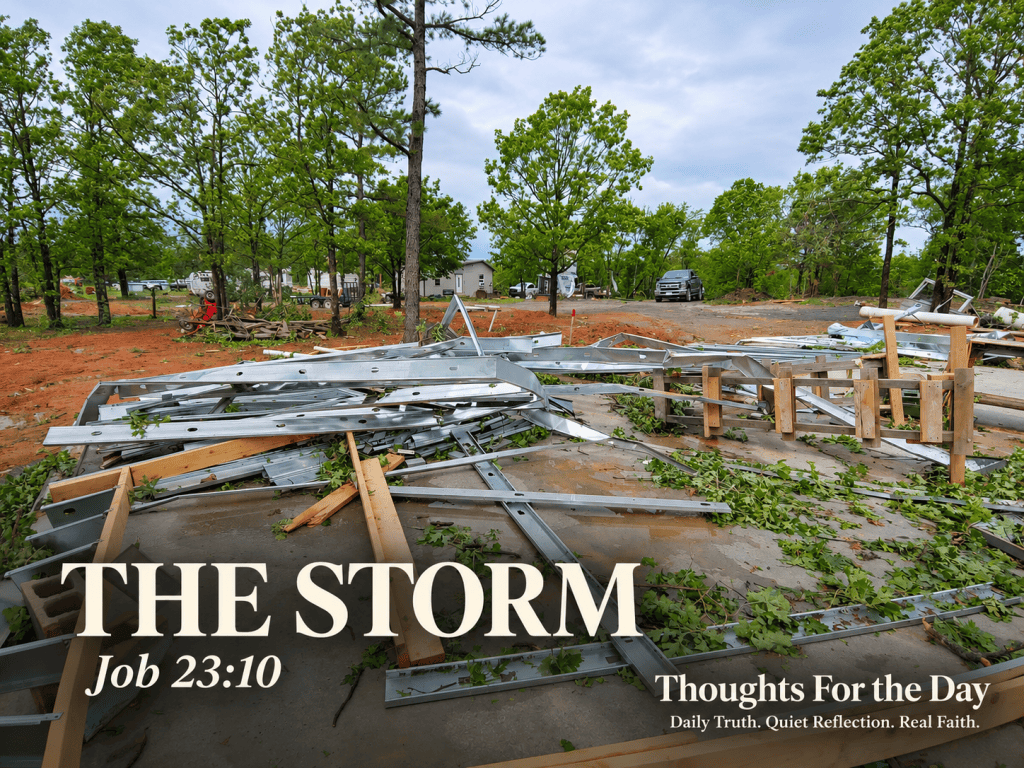
    One home was still under construction. It had been framed with metal studs, the metal siding was just going on, and the windows had been installed the Friday before the tornado. Now the framing lay bent and collapsed across the concrete slab, with window units scattered among the wreckage. Work completed only days earlier had been undone in a matter of moments.

    An antique store operating out of a repurposed home had been lifted from its foundation. The anchor bolts had ripped through the wooden sill plate as the structure was picked up nearly intact and deposited about fifteen feet behind its original location.

    For the people who lived and worked in Haileyville, those buildings held years of effort, memories, and plans. In a matter of moments, so much of what had seemed secure had been torn apart.

    I took photographs during that visit, with permission from the business owners and homeowners. At the time, I was focused on the work in front of me. People had immediate needs, and I was trying to figure out how we could help. I didn’t stop to draw a spiritual lesson from what I was seeing.

    That connection came more than seven years later.

    I’d discovered Adobe Premiere on my iPhone and started going through photographs to see what I could create. I added a picture, then some words, then looked for other photographs that fit the thought as it developed.

    As the images and words took shape, I began connecting the destruction I’d witnessed with the ways life can leave us shaken, disoriented, and wondering where God is.

    Some storms give us enough warning to hear the sirens and find shelter. Others arrive through a phone call, a difficult conversation, or news we never expected. They shake our confidence, disrupt our plans, and leave us struggling to understand what comes next.

    And sometimes, in the middle of it all, we struggle to find God.

    That thought brought me to Job 23.

    In the verses leading up to Job 23:10, Job describes searching for God and being unable to perceive Him. Yet even there, with his questions still unanswered in the wake of utter devastation, he says:

    “But He knows the way that I take;
    When He has tested me, I shall come forth as gold.”

    —Job 23:10, NKJV

    Job couldn’t see what God was doing, but he trusted that God knew where he was.

    We can find ourselves unable to perceive God in the middle of our circumstances and still trust that He knows the way we take.

    As I continued looking through the photographs, another image caught my attention differently.

    At least three rafters had been pulled from beneath the roof of a house. The wall was damaged, and the structure had been destabilized. Yet the house remained standing.

    Looking at that picture now, I think about what it means to endure the storms of life.

    We can suffer real damage. We can grieve, struggle, and find ourselves uncertain about how to move forward. Our lives may look very different from what we’d planned.

    And still, we can stand.

    In Matthew 7:24–27, Jesus describes a wise man who built his house on the rock. The rain fell, the floods came, and the winds beat against it. The house stood because of its foundation.

    Jesus also describes a house built on sand. The rain, floods, and wind came against that house, and it fell.

    Both houses faced the storm. The foundation they were built on mattered.

    Jesus connects building on the rock to hearing His words and putting them into practice. That brings the question close to home:

    What have I chosen to build my life on?

    It’s a question worth considering before the wind begins to blow—and one we may find ourselves answering again while standing among the pieces of what has been damaged.

    Building on Christ means learning to depend on Him and live by His words. That trust takes shape in the choices we make, the prayers we bring, and the steps of obedience we take while our questions remain unanswered.

    Sometimes that prayer comes through tears. Sometimes the next step feels small. Sometimes we need someone beside us to help us take it.

    Standing may look like praying again, accepting help, or taking one faithful step through a day we’re struggling to face.

    We may come through a storm carrying wounds. We may need time, help, and healing. We may have a great deal of rebuilding ahead of us.

    Through all of it, Christ remains worthy of our trust.

    That’s where these photographs bring me now: to Job’s assurance that God knows the way we take, and to Jesus’ invitation to build our lives on His words.

    You may be looking at circumstances you don’t understand. You may be grieving something you spent years building. You may be praying and wondering why the answers haven’t come.

    You can bring those questions to God. You can tell Him how much it hurts. And you can trust Him with the next step, even while the way ahead is unclear.

    When you can’t seem to find Him, He still knows exactly where you are.

    And when your life has been shaken, you can keep placing your trust in Christ—the foundation on whom you can stand.

  • How Long, O Lord

    How Long, O Lord

    Psalm 13:1–6; Luke 18:1 NKJV

    Some prayers remain tender long after we first prayed them. Even after we’ve been faithful, prayed earnestly, waited expectantly, and continued believing that God could intervene, we may still wake up to yet another morning with the need unresolved.

    We bring it to God again because it is still there.

    The relationship has not been restored. The diagnosis has not changed. The opportunity has not come. The grief still catches us off guard. The person we love is still struggling. The question remains unanswered.

    We have prayed about it before—perhaps more times than we can count—and we may no longer know what else to say.

    David knew the weariness of waiting. He began Psalm 13 with a question he repeated four times:

    “How long, O Lord? Will You forget me forever?
    How long will You hide Your face from me?
    How long shall I take counsel in my soul,
    Having sorrow in my heart daily?”

    — Psalm 13:1–2 NKJV

    David did not hide his distress behind carefully chosen religious language. He felt forgotten. He carried sorrow every day. He wanted to know how much longer he would have to live with what was hurting him.

    And Scripture does not condemn him for asking.

    “How long?” is not necessarily the question of someone who has stopped believing. It can be the cry of someone who still believes God hears, still believes He can intervene, and still cannot understand why He has not intervened.

    Lament is not the absence of faith. It is faith refusing to suffer in silence.

    Sometimes we think trusting God means we should no longer feel the ache of waiting. We may pressure ourselves to sound more confident than we feel or hurry toward words of celebration before we have had room to grieve.

    But David let the lament breathe. He told God that the waiting hurt.

    We can do the same.

    We can tell God that we are tired of carrying the same need into another day. We can admit that silence feels like absence. We can ask why help has not come and how much longer we must wait.

    Faith does not require us to pretend the question no longer hurts.

    Some answers never come in the way we hoped. Some questions remain even after life moves forward. We may receive something beautiful and still grieve what was lost. We may continue trusting God without ever receiving an explanation that makes the suffering understandable.

    Psalm 13 does not tell us that David’s circumstances changed while he was praying. Yet before the psalm ends, David turns toward what he knows about God:

    “But I have trusted in Your mercy;
    My heart shall rejoice in Your salvation.”

    — Psalm 13:5 NKJV

    That word “but” does not erase everything David said before it. His sorrow was still real. His questions were still unanswered. He had not suddenly discovered that the waiting did not matter.

    He remembered God’s mercy while he was still hurting.

    Sorrow and trust can exist in the same prayer. We can believe that God is faithful while admitting that we do not understand His ways. We can remember what He has done before while asking why He has not acted now.

    Jesus understood how easily prolonged waiting can discourage us. Luke tells us that He spoke a parable teaching that we “always ought to pray and not lose heart.”

    Persistent prayer does not force God’s hand, and it does not earn an answer through repetition. It keeps bringing our weary hearts into His presence when discouragement tells us to stop coming.

    Sometimes we pray again because the need is still real—and because, beneath all our questions, we still believe God is listening.

    We may come with fewer words than we once had. We may come with tears, disappointment, or questions we are afraid to say aloud. We may only be able to whisper, “How long, O Lord?”

    That is still prayer.

    God can be trusted with the question as well as the request. He can receive our weariness without turning us away. And when we do not have an answer, we can ask Him for enough strength to carry today’s portion of the waiting.

    Lord, I have brought this to You before, and I am bringing it again. You know how long I have waited and how deeply this still hurts. Hear me, sustain me, and help me not to lose heart.

  • Help My Unbelief

    Help My Unbelief

    Mark 9:17–27; Psalm 62:8 NKJV

    Have you ever felt that you needed to sound more confident in prayer than you actually felt?

    You believe God is able. You know He is faithful. Yet the situation in front of you leaves you wondering how things could possibly come together.

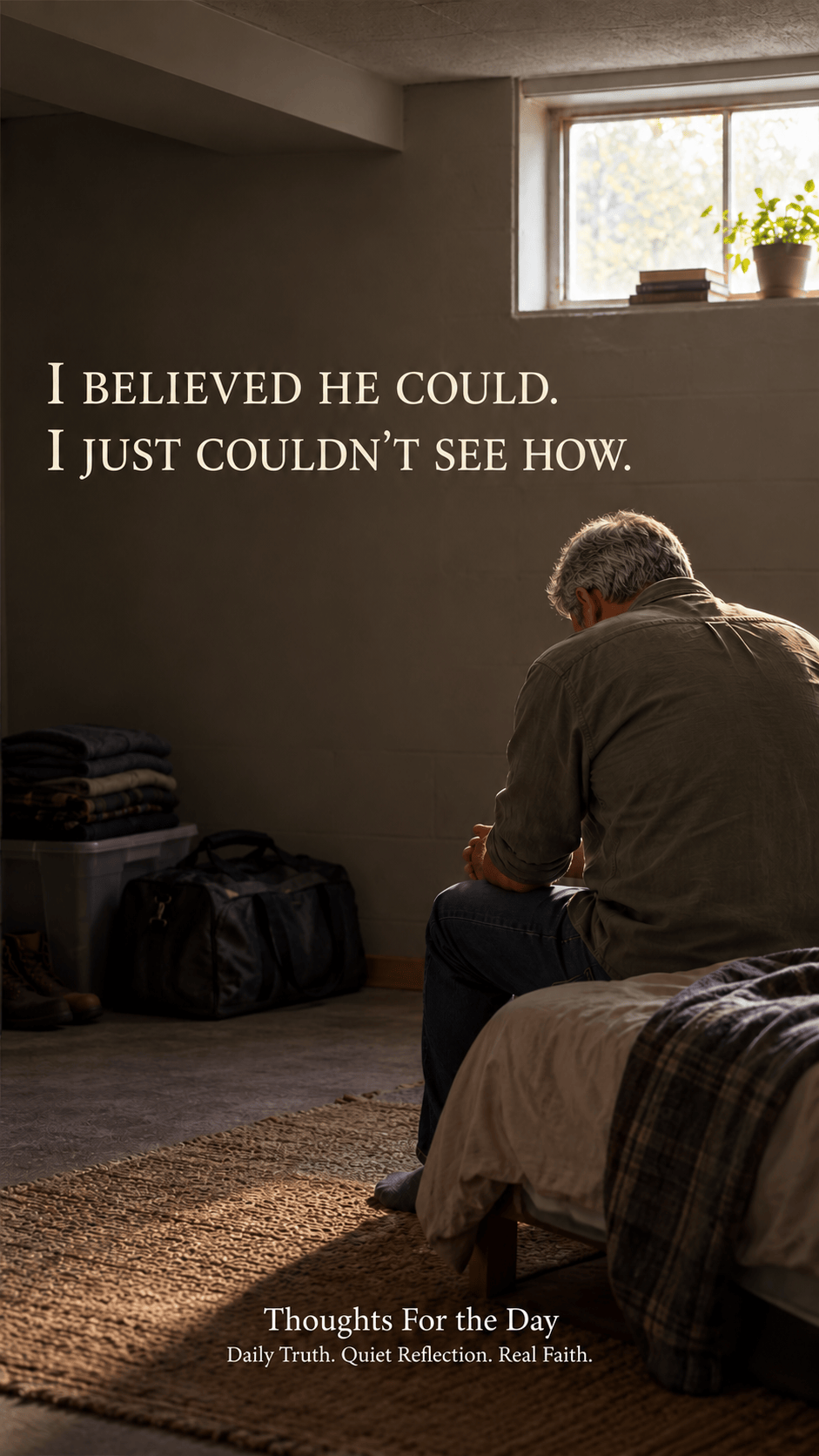
    A few years ago, I found myself at the end of my rope—the end of myself. I was living in my cousin’s basement, money was scarce, and I couldn’t see how I was going to get back on my feet.

    I was doing what I could to move forward, but even the immediate needs felt overwhelming. Could I afford enough gas to get to work? How would I pay my bills? When would I be able to find a place of my own?

    I believed God could and would direct my circumstances. I just couldn’t see how.

    I had hope. I also had worries that followed me through the day. The needs were immediate, and I couldn’t see how I was going to meet them.

    I reached a place where about all I could say was, “I believe; help my unbelief.”

    When I read the father’s plea in Mark 9, I recognize something of that struggle.

    He had watched his son suffer since childhood. He brought him to the disciples, but they had been unable to help. Now he stood before Jesus with his son’s need still unresolved.

    As Jesus called him to believe, the father cried out with tears:

    “Lord, I believe; help my unbelief!” — Mark 9:24 NKJV

    There is an expression of faith and an admission of need in the same prayer.

    He believed, and he recognized that he needed help believing. He brought Jesus his son’s suffering and his own struggling faith.

    That honesty speaks to me.

    Sometimes I know what I believe about God, but I struggle to trust Him with what I cannot see. I can speak confidently about His faithfulness and still become frightened when I think about tomorrow.

    That was where I found myself in that basement. I believed He could make a way. I needed His help while I was looking at needs I couldn’t meet and a future I couldn’t figure out.

    The father’s prayer gives us words for that place.

    We can tell God that we believe Him and ask Him to help us where trust is difficult. We can bring Him the fear we’re reluctant to admit, the disappointment we don’t know how to explain, and the questions we’re afraid might make us sound faithless.

    Psalm 62:8 invites us to:

    “Pour out your heart before Him.”

    The same verse calls us to trust Him at all times and reminds us that God is our refuge. We can come to Him with what is actually in our hearts.

    And we should keep reading the account in Mark. Jesus intervened in the boy’s suffering. He cast out the spirit that tormented him, took him by the hand, and lifted him up.

    The father had brought a real need to Jesus, and Jesus delivered his son.

    We can bring Him real needs, too. We can ask boldly for His help with the circumstances while also asking Him to strengthen our trust.

    Perhaps today you believe God is able, but you cannot see how things will come together. Perhaps hope and worry are sharing the same space.

    You can bring Him that struggle. You can keep coming while your voice shakes and your questions remain.

    Lord, I believe. Help me trust You with what I cannot yet see.

  • Until Prayer Changes Me

    Until Prayer Changes Me

    Philippians 4:6–7; Luke 22:41–42 NKJV

    How often have I worn myself out carrying something God had already invited me to bring Him?

    Sometimes I bring Him a problem I don’t understand, yet I convince myself that I know how He ought to resolve it. I’ve thought about what needs to happen, who needs to change, and how quickly everything ought to come together.

    Then I pray, asking God to help, while holding tightly to the outcome I’ve already chosen.

    The Kingdom Heirs song “Until Prayer Changes Me” has given me reason to examine that tendency in my own prayers.

    I can recognize that a situation is beyond my ability to fix and still struggle to entrust God with how it gets resolved. I want His help. I also want an answer that makes sense to me, a path I can understand, and an outcome I would have chosen.

    Trusting someone we know and can see is hard enough. They may be a close friend or family member who has proven trustworthy over the years. Even then, placing something that matters deeply to us in their hands can be difficult. We can have confidence in them and still struggle to release control.

    Trusting God, whom we cannot see, can make that struggle even more difficult. We naturally reach for something we can measure, anticipate, or influence. When circumstances become uncertain, our grip can tighten.

    Sometimes we keep carrying the weight until we reach the end of what we can figure out, arrange, or endure. Often, desperation reveals just how much we’ve still been trying to manage on our own.

    But God welcomes us long before we reach that point. We don’t have to exhaust ourselves before bringing Him the burden.

    Remembering whom we’re speaking to gives us reason to loosen our grip. The God who created us sees beyond the portion of the situation we can see. His wisdom reaches beyond our understanding. His faithfulness gives us reason to trust Him with what remains unknown.

    How much room have I left in my prayer for God to know something I don’t?

    In Gethsemane, Jesus expressed His desire openly:

    “Father, if it is Your will, take this cup away from Me; nevertheless not My will, but Yours, be done.” — Luke 22:42 NKJV

    There is room in prayer to ask honestly for relief. Jesus did. He also willingly submitted to the Father’s will in the midst of profound anguish.

    His surrender helps us understand how costly trust can be. Placing something in God’s hands may still hurt. We may surrender with tears. We may need to renew that surrender tomorrow when the fear rises again.

    In Philippians 4, Paul directs us to bring our requests to God through prayer and supplication, with thanksgiving. Then he gives this assurance:

    “and the peace of God, which surpasses all understanding, will guard your hearts and minds through Christ Jesus.” — Philippians 4:7 NKJV

    God’s peace can guard us while questions remain unanswered. We can be held by Him before we understand what He will do.

    We may still feel afraid. We may still grieve, struggle, or need help. Continued distress does not prove that our faith has failed.

    But as we keep coming to Him, we can become more willing to receive His direction. We can recognize expectations we’ve held too tightly. We can find enough steadiness to take the next faithful step.

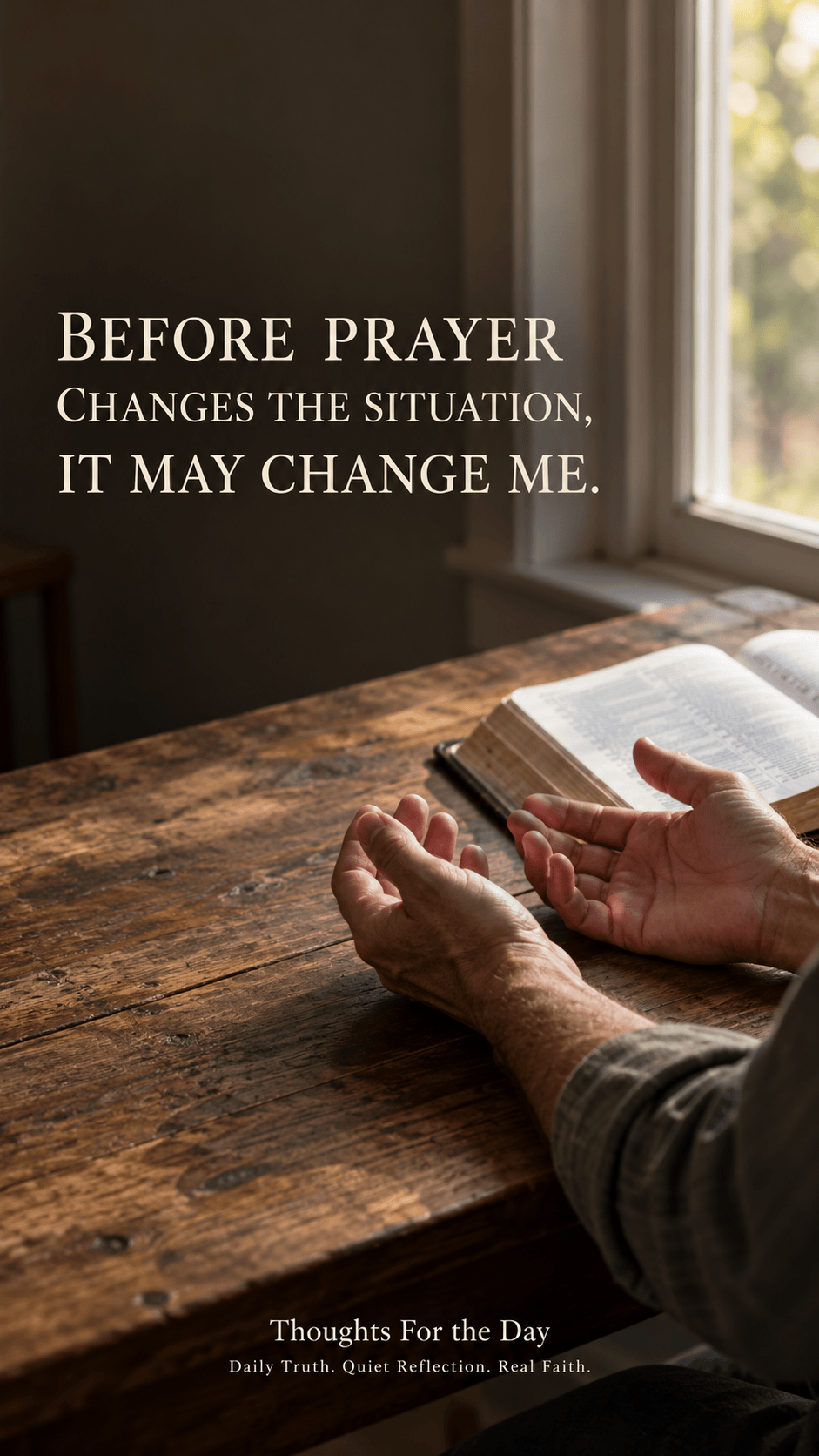
    God can change the circumstances, and we can keep asking Him to do so. As we pray, we can also open our hearts to the work He wants to do within us.

    Lord, if the situation does not change today, continue changing me within it.

  • Still Carrying the Weight

    Still Carrying the Weight

    Have you ever offered to help someone carry something, only to discover they wouldn’t let go?

    You’ve got your hands underneath it. You’re ready to take the weight. But they’re still gripping it, explaining how heavy it is.

    Sometimes, I wonder how often I’ve done that with God.

    I ask Him to help me. I tell Him I’m tired. I pray about the situation, sometimes more than once in the same conversation.

    Then I get up and go right back to carrying it as though I never asked.

    Jesus said:

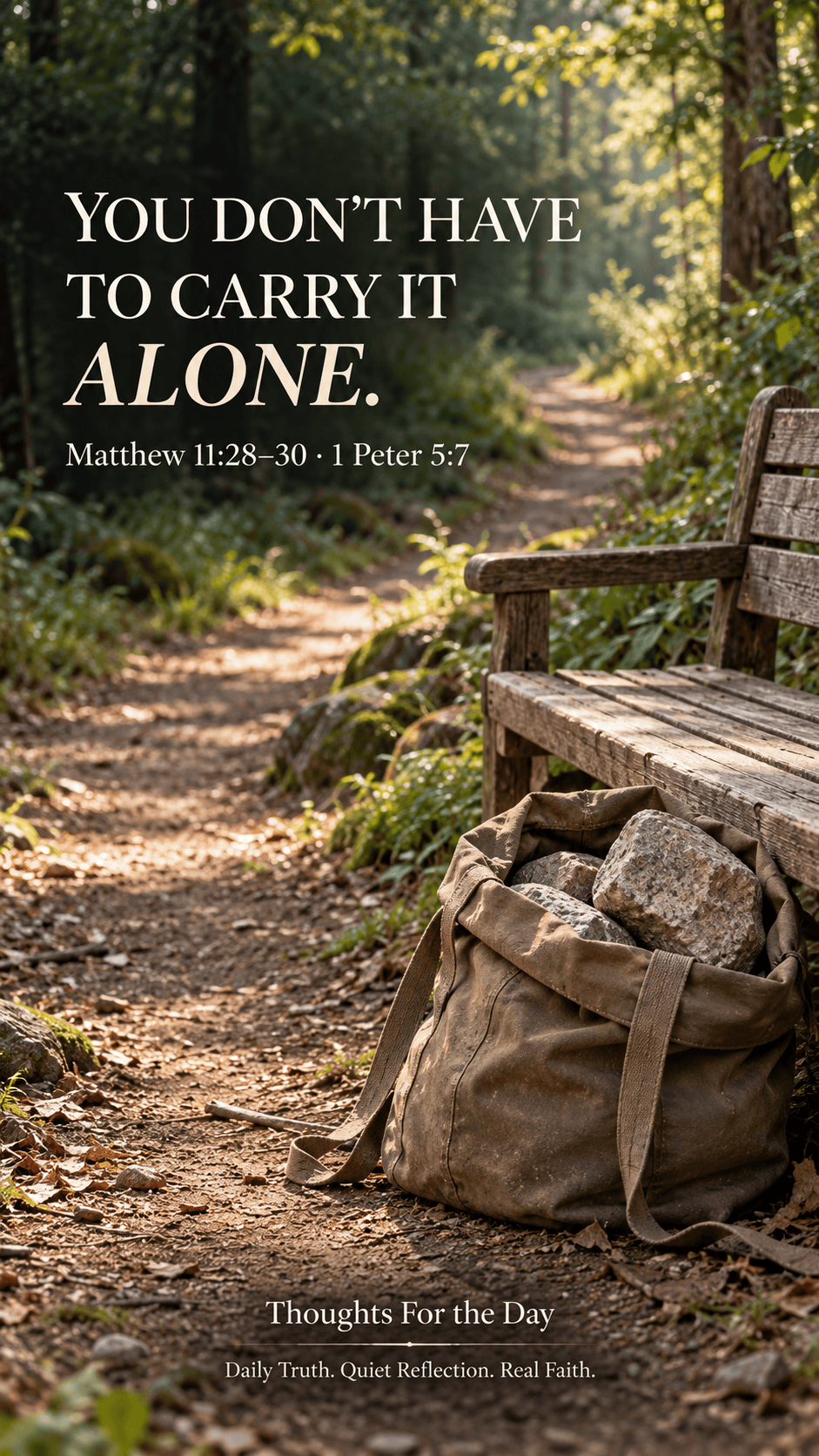
    “Come to Me, all you who labor and are heavy laden, and I will give you rest.”
    — Matthew 11:28, NKJV

    He knows we’re tired. He knows what we’ve been carrying, including the things we haven’t figured out how to explain to anyone else.

    Some of that weight comes from responsibilities we can’t simply walk away from. There are bills to pay, people to care for, decisions to make, and difficult conversations we’ve put off long enough.

    But somewhere along the way, responsibility can become tangled up with the belief that everything depends upon us.

    If I don’t stay worried, something will go wrong.
    If I don’t keep checking, everything will fall apart.
    If I can just think about it a little longer, maybe I can make certain it ends the way it should.

    We can spend so much energy trying to control the outcome that we have very little left for the next thing we actually need to do.

    There’s a difference between being responsible and believing we have to hold the whole world together.

    God may ask me to make the phone call. He hasn’t given me control over how the other person responds.

    I may need to apologize, tell the truth, or make a necessary change. I can take those steps without being able to guarantee what happens afterward.

    And some of what we carry isn’t about tomorrow at all.

    It’s yesterday.

    The failure we’ve confessed but keep rehearsing. The shame that follows us into every prayer. The fear that our worst moment has permanently settled who we are.

    Yesterday, we considered the truth that sin no longer has the right to rule those who belong to Christ. But sometimes we’re still carrying the shame of serving that old master, even as we’re learning to walk in freedom.

    We can repent, make amends where we can, and accept God’s forgiveness. We don’t have to keep punishing ourselves to prove that we’re sorry.

    Peter wrote:

    “casting all your care upon Him, for He cares for you.”
    — 1 Peter 5:7, NKJV

    That last part matters.

    We’re placing our concerns into the hands of Someone who cares about us.

    And releasing them doesn’t mean pretending they don’t hurt. You can trust God and still cry. You can surrender a situation and still need treatment, counsel, practical help, or the courage to face another difficult day.

    Feeling the weight again doesn’t automatically mean your surrender wasn’t sincere. Sometimes it’s another opportunity to bring that care back to Him.

    In Matthew 11, Jesus connects His invitation to rest with taking His yoke and learning from Him. There’s still a life to live and obedience to practice, but we’re learning to live under His direction.

    We can ask Him what faithfulness requires of us today, do what He gives us to do, and entrust what we can’t control to His care.

    Maybe tonight’s prayer can be simple:

    “Lord, this matters to me. It hurts, and I don’t know how it’s going to turn out. Help me take the next right step and leave the outcome with You.”

    Then, when we notice our hands tightening around it again, we can gently ask ourselves:

    If I have placed it in His hands, why am I still gripping it as though everything depends upon mine?

  • No Longer the Boss of Me

    No Longer the Boss of Me

    Imagine someone from a job you left years ago starts calling and giving you instructions. You’d recognize the voice. You might even feel that familiar urge to respond.

    But recognizing their voice wouldn’t mean you still owed them your loyalty.

    Sometimes, an old habit can sound like that.

    The temptation shows up in a familiar place. An opportunity presents itself. Something inside remembers how you used to respond, and before long, you’re thinking, Here we go again. Nothing’s changed.

    But a familiar voice doesn’t establish rightful authority.

    It may sometimes feel as though you’re alone in your situation, but Paul wrote to the church in Rome on that very topic two thousand years ago:

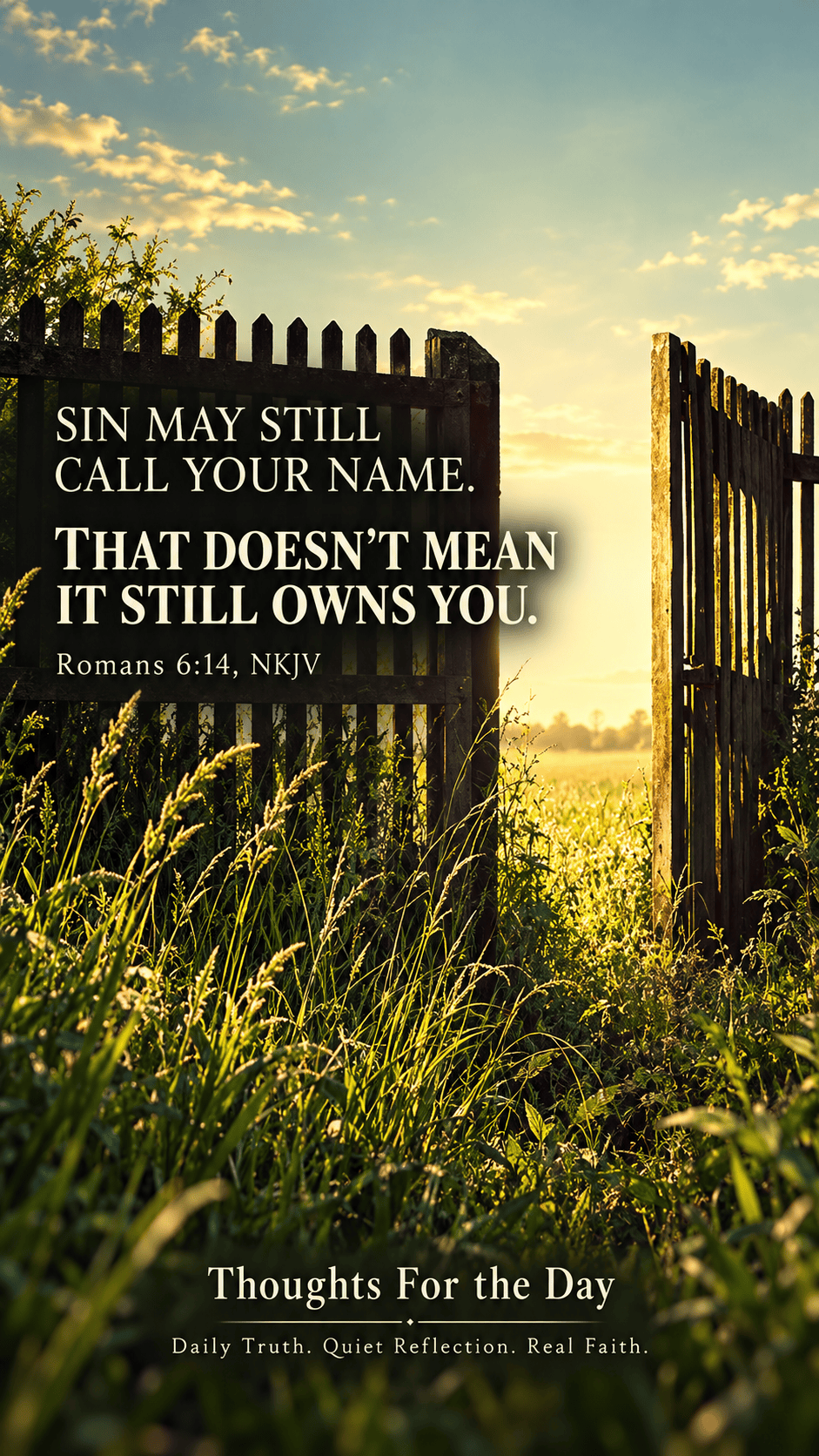
    “For sin shall not have dominion over you, for you are not under law but under grace.”
    — Romans 6:14, NKJV

    That’s a declaration worth
    slowing…
    down…
    to…
    hear.

    Paul was writing to believers. These were people who belonged to Christ, and he still needed to tell them, “do not let sin reign” (Romans 6:12, NKJV). The possibility of yielding was real then, and it’s real now. They had a responsibility to resist, and so do we.

    He wasn’t describing a life where temptation had become silent.

    He was telling them that sin no longer had the right to rule.

    There’s a difference.

    An old desire may still pull at you.
    A familiar situation may still expose a weakness.
    You may need to make difficult choices, ask for help, and establish boundaries you’ll have to keep choosing tomorrow.

    That doesn’t make the freedom Christ gives imaginary. It means learning to live in that freedom involves actual obedience.

    Grace changes our relationship to sin.

    We can bring our failures to God for forgiveness, but grace also calls us into a different way of living. We’re no longer meant to accept sin’s demands as though obedience to them is inevitable.

    “That’s just how I am,” doesn’t have to settle the matter.

    In verse 13, Paul makes our response practical. He tells believers to offer themselves to God and use their bodies in His service. Our hands, our words, our attention, and our choices belong in that surrender.

    That might mean ending a conversation that’s taking you somewhere you shouldn’t go.

    It might mean putting the phone down and reaching out to someone who’ll help you stay accountable.

    Those choices can be hard, but God’s grace gives us reason to make them with hope.

    And if you’ve given in, bring that honestly to God in repentance.
    Take responsibility.
    Receive help.
    Accept His grace.
    Make the changes you need to make.

    You don’t have to turn a failure into a declaration that surrendering to sin is all you’ll ever be capable of doing.

    The old voice may insist that it knows who you are. It may remind you how many times you’ve answered before.

    But your past doesn’t get to cancel what Christ has done.

    There’s an old saying that I think applies here:

    “When the enemy reminds you of your past, remind him of his future.”

    Sin may still call your name. That doesn’t mean it still owns you.

    If you belong to Christ, you can face today’s choices with this declaration:

    I belong to Jesus. By His grace, I don’t have to obey my former master.

  • Thirty Pieces At A Time

    Thirty Pieces At A Time

    “Then Jesus spoke to them again, saying, ‘I am the light of the world. He who follows Me shall not walk in darkness, but have the light of life.’”
    —John 8:12, NKJV

    A statement appeared in my Facebook feed on Sunday, and I was immediately convicted:

    The sin you refuse to depart from is your thirty pieces of silver. The more you entertain that sin, the more you are trading Jesus for it.

    The wording is severe.

    Perhaps it is supposed to be.

    We have become accustomed to softening difficult truths. We cushion the warning, qualify the consequences, and reassure people that everyone struggles. All of that may be true, but sometimes truth is supposed to hurt. Sometimes the sharpness of conviction is what awakens us from spiritual slumber.

    Jesus could be gentle with the broken, patient with the confused, and compassionate toward those trapped in sin. But He also called religious hypocrites “whitewashed tombs,” “blind guides,” and a “brood of vipers.” He spoke of cutting off a hand and plucking out an eye—not as instructions for physical mutilation, but as deliberately severe language about the danger of tolerated sin.

    Jesus was not cruel, but neither did He make truth comfortable for people who had become comfortable in their compromise.

    The statement about thirty pieces of silver is not directed toward someone who hates their sin, falls, repents, and continues fighting. It confronts the person who has stopped fighting—the professing follower of Jesus who has decided there is something they will not surrender.

    There is a difference between struggling against sin and protecting it.

    There is a difference between falling and arranging to return.

    There is a difference between being tempted and pulling out a chair, setting the table, and inviting temptation to stay.

    The danger is not merely the sin that catches us off guard. It is the sin we entertain, accommodate, excuse, and eventually defend.

    Before the Thirty Pieces

    Judas did not suddenly become a betrayer when the chief priests placed silver in his hand. The betrayal had begun long before that moment.

    John tells us that Judas was already stealing from the disciples’ money box. When Mary poured expensive oil on the feet of Jesus, Judas objected:

    “Why was this fragrant oil not sold for three hundred denarii and given to the poor?”
    —John 12:5, NKJV

    His protest sounded compassionate, but Scripture exposes what was hiding underneath it:

    “This he said, not that he cared for the poor, but because he was a thief, and had the money box; and he used to take what was put in it.”
    —John 12:6, NKJV

    The thirty pieces did not create Judas’s divided loyalty. They revealed it.

    In an earlier reflection, “Divided Loyalties,” we considered the impossibility of following Christ while preserving something within us that refuses His authority. Judas shows us where that division can eventually lead.

    Before there was open betrayal, there had been private theft. Before Judas sold Jesus publicly, he had repeatedly chosen greed privately. One concealed compromise prepared him for another until something that may once have been unthinkable became negotiable.

    That is how tolerated sin works.

    What was once unthinkable becomes negotiable.

    What becomes negotiable eventually becomes permissible.

    What becomes permissible eventually becomes normal.

    And what becomes normal eventually stops producing conviction.

    Public betrayal is often the final expression of a private compromise.

    The Doorway in the Alley

    Yesterday, in “The Same Dark Alley”, I wrote about an image Lisa sent me of a dark alley with light visible at the far end. We saw the same image from two different perspectives.

    Lisa immediately saw the light.

    She saw the destination. No matter how dark the alley became, if we kept our eyes fixed on the light and continued walking toward it, we would eventually make it through.

    I noticed the dangers along the way—the twists, shadows, dark corners, hidden passages, and doorways.

    Both perspectives were true.

    The alley itself is life. Christ is the light at its end. As we travel through life, we encounter temptations, disappointments, wounds, complications, and countless opportunities to become distracted. If we keep our eyes on the Light, He will guide us through.

    But it is easy to take a detour into one of the alley’s dark doorways.

    Most people do not step through such a doorway intending to abandon Christ. It may begin with curiosity. Loneliness. Anger. Wounded pride. The desire for pleasure, relief, approval, or control.

    We tell ourselves we are only stepping aside for a moment. We still intend to follow Jesus. We simply want to investigate something beside the path.

    But once inside, it is easy to become disoriented.

    The deeper we wander, the harder it becomes to remember where the opening was. Our eyes adjust to the darkness. Things that once appeared dangerous begin to look ordinary. Things we would once have immediately rejected begin to appear harmless.

    The enemy does not need us to renounce Jesus at the entrance. He only needs us to step through one doorway and remain there long enough for our eyes to adjust.

    Paul warned:

    “Nor give place to the devil.”
    —Ephesians 4:27, NKJV

    A foothold is not the complete surrender of territory. It is one small place yielded to the enemy.

    But the enemy never intends to remain confined to the small space we initially surrender. He uses that position to press farther inward.

    What begins as a foothold becomes a stronghold.

    What begins as a detour becomes a new direction.

    What begins as something we control eventually takes control of us.

    Judas Walked With the Light

    Judas did not merely walk toward the Light. He walked beside Him.

    He heard Jesus teach. He witnessed miracles. He watched blinded eyes open and the dead raised to life. He traveled, ministered, and prayed alongside the other disciples. Jesus washed his feet and gave him a place at the table.

    Yet proximity to Jesus never became complete surrender to Jesus.

    Somewhere along the alley, money caught Judas’s attention. Perhaps the first theft seemed insignificant. He could take a little from the money box and continue following Jesus. For a while, he may have believed he could accommodate both discipleship and greed.

    But greed became a doorway.

    Once Judas entered it, his spiritual vision began adjusting to the darkness. Stealing became normal. Mary’s worship began to look wasteful. The chief priests began to look like potential business partners. Eventually, betraying Jesus—something he may never have imagined at the beginning—became worth considering for the right price.

    Thirty pieces of silver echoed the value assigned to a slave. Judas did not simply sell Jesus; he valued Him cheaply.

    Every protected sin makes a similar statement about value:

    This pleasure is worth disobeying Him for.

    This resentment is worth withholding forgiveness for.

    This pride is worth resisting correction for.

    This secret is worth weakening my relationship with Him for.

    We would never stand in church and say those words aloud. But deliberate disobedience says them through our choices.

    Sin Changes What We Can See

    Judas may have considered greed his private weakness, but protected sin never remains confined to one compartment of life.

    His greed affected how he viewed Mary’s worship. Because he wanted access to the value of the oil, her sacrifice looked irresponsible. The sin he protected began interpreting what he saw.

    That still happens.

    Pride makes correction look like persecution.

    Bitterness makes mercy look unjust.

    Lust makes boundaries look unreasonable.

    Greed makes generosity look wasteful.

    Resentment makes reconciliation look like weakness.

    The darkness does not always hide what is in front of us. Sometimes it changes the way we see it.

    James described the progression:

    “But each one is tempted when he is drawn away by his own desires and enticed. Then, when desire has conceived, it gives birth to sin; and sin, when it is full-grown, brings forth death.”
    —James 1:14–15, NKJV

    The destination visible from the entrance is never the destination sin ultimately has in mind.

    The Light Has Not Moved

    There is mercy even in this severe warning.

    Jesus knew what Judas had done and what he was preparing to do. Yet He still washed Judas’s feet, seated him at the table, and gave him opportunities to turn back.

    Conviction is evidence that the Light is still reaching into the darkness.

    When God puts His finger on something we have been protecting, He is not merely exposing us. He is warning us about what is attempting to destroy us while there is still time to turn around.

    Exposure is not rejection.

    Conviction is an invitation to return.

    Judas eventually returned the silver and admitted that he had betrayed innocent blood. But he carried his remorse back to the religious leaders rather than carrying his sin to Jesus. He discarded the payment, but he did not return to the Savior.

    Peter also became disoriented in the alley. Fear drew him into a dark corner where denying Jesus suddenly appeared safer than confessing Him. But when Jesus looked at Peter, he remembered. He wept, turned, and remained within reach of restoration.

    Both men failed Jesus.

    One turned back toward the Light.

    The other surrendered to the darkness.

    What Are We Choosing?

    Every day, our choices assign value. They reveal what we believe Jesus is worth.

    The question is not merely, “Would I sell Jesus for thirty pieces of silver?” Almost every professing Christian would immediately answer no.

    The harder question is:

    What have I already begun choosing over Him in smaller amounts?

    Because what begins in smaller amounts does not remain small.

    One compromise becomes another. What we entertain, we eventually accommodate. What we accommodate, we begin to protect. What we continually protect begins to claim territory within us.

    And what we repeatedly choose over Jesus will eventually displace Him entirely.

    Judas did not trade Jesus all at once.

    He entered a doorway in the alley and continued walking, one decision at a time.

    Keep your eyes on the Light. Be careful which doors you enter. And if you realize that you have lost your bearings, do not continue deeper simply because you are ashamed that you wandered.

    Turn around.

    The Light is still there.