Tag: Job 23

  • Shaken, but Still Standing

    Shaken, but Still Standing

    Job 23:8–10; Matthew 7:24–27

    On the night of April 30, 2019, tornado sirens sounded in the small town of Haileyville, Oklahoma. An EF2 tornado swept through the area, damaging homes, vehicles, and businesses. The far northwestern corner of neighboring Hartshorne was also affected, but to a lesser degree.

    At the time, I was managing TH Rogers Lumber in Hartshorne. I’d heard reports as I was getting ready to leave the house the next morning, Wednesday, May 1, but what I heard hadn’t prepared me for what I saw as I approached Haileyville on my way to work.

    I drove slowly through town without stopping while emergency workers and first responders worked to ensure everyone was accounted for. Later that morning, I went out to survey the damage, assess what people needed, and determine what our store could provide.

    The devastation was mind-boggling.

    The roof had been torn off the back two-thirds of a secondhand resale store, leaving the front relatively undamaged. At another small shop, the front half was gone while the back portion appeared unscathed.

    A highway directional sign had been twisted nearly 270 degrees. The sign directing travelers toward Highway 270 East now pointed south-southwest.

    The post office roof was shredded. The roof and kitchen exhaust equipment from my favorite café were lying about a hundred yards away in someone’s backyard.

    At an auto body shop, the tornado had torn through the middle of the building, leaving damage that looked as though a semi had been driven straight through it.

    Dozens of homes were damaged, several beyond repair.

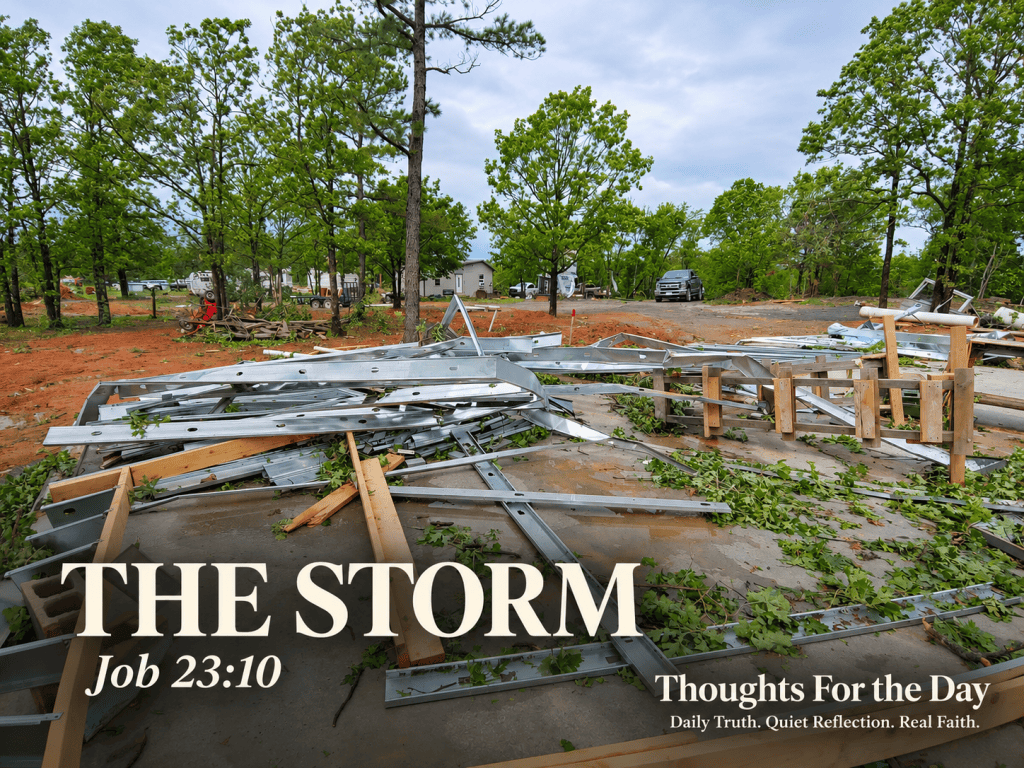
    One home was still under construction. It had been framed with metal studs, the metal siding was just going on, and the windows had been installed the Friday before the tornado. Now the framing lay bent and collapsed across the concrete slab, with window units scattered among the wreckage. Work completed only days earlier had been undone in a matter of moments.

    An antique store operating out of a repurposed home had been lifted from its foundation. The anchor bolts had ripped through the wooden sill plate as the structure was picked up nearly intact and deposited about fifteen feet behind its original location.

    For the people who lived and worked in Haileyville, those buildings held years of effort, memories, and plans. In a matter of moments, so much of what had seemed secure had been torn apart.

    I took photographs during that visit, with permission from the business owners and homeowners. At the time, I was focused on the work in front of me. People had immediate needs, and I was trying to figure out how we could help. I didn’t stop to draw a spiritual lesson from what I was seeing.

    That connection came more than seven years later.

    I’d discovered Adobe Premiere on my iPhone and started going through photographs to see what I could create. I added a picture, then some words, then looked for other photographs that fit the thought as it developed.

    As the images and words took shape, I began connecting the destruction I’d witnessed with the ways life can leave us shaken, disoriented, and wondering where God is.

    Some storms give us enough warning to hear the sirens and find shelter. Others arrive through a phone call, a difficult conversation, or news we never expected. They shake our confidence, disrupt our plans, and leave us struggling to understand what comes next.

    And sometimes, in the middle of it all, we struggle to find God.

    That thought brought me to Job 23.

    In the verses leading up to Job 23:10, Job describes searching for God and being unable to perceive Him. Yet even there, with his questions still unanswered in the wake of utter devastation, he says:

    “But He knows the way that I take;
    When He has tested me, I shall come forth as gold.”

    —Job 23:10, NKJV

    Job couldn’t see what God was doing, but he trusted that God knew where he was.

    We can find ourselves unable to perceive God in the middle of our circumstances and still trust that He knows the way we take.

    As I continued looking through the photographs, another image caught my attention differently.

    At least three rafters had been pulled from beneath the roof of a house. The wall was damaged, and the structure had been destabilized. Yet the house remained standing.

    Looking at that picture now, I think about what it means to endure the storms of life.

    We can suffer real damage. We can grieve, struggle, and find ourselves uncertain about how to move forward. Our lives may look very different from what we’d planned.

    And still, we can stand.

    In Matthew 7:24–27, Jesus describes a wise man who built his house on the rock. The rain fell, the floods came, and the winds beat against it. The house stood because of its foundation.

    Jesus also describes a house built on sand. The rain, floods, and wind came against that house, and it fell.

    Both houses faced the storm. The foundation they were built on mattered.

    Jesus connects building on the rock to hearing His words and putting them into practice. That brings the question close to home:

    What have I chosen to build my life on?

    It’s a question worth considering before the wind begins to blow—and one we may find ourselves answering again while standing among the pieces of what has been damaged.

    Building on Christ means learning to depend on Him and live by His words. That trust takes shape in the choices we make, the prayers we bring, and the steps of obedience we take while our questions remain unanswered.

    Sometimes that prayer comes through tears. Sometimes the next step feels small. Sometimes we need someone beside us to help us take it.

    Standing may look like praying again, accepting help, or taking one faithful step through a day we’re struggling to face.

    We may come through a storm carrying wounds. We may need time, help, and healing. We may have a great deal of rebuilding ahead of us.

    Through all of it, Christ remains worthy of our trust.

    That’s where these photographs bring me now: to Job’s assurance that God knows the way we take, and to Jesus’ invitation to build our lives on His words.

    You may be looking at circumstances you don’t understand. You may be grieving something you spent years building. You may be praying and wondering why the answers haven’t come.

    You can bring those questions to God. You can tell Him how much it hurts. And you can trust Him with the next step, even while the way ahead is unclear.

    When you can’t seem to find Him, He still knows exactly where you are.

    And when your life has been shaken, you can keep placing your trust in Christ—the foundation on whom you can stand.

  • He Knows the Way

    He Knows the Way

    “Behold, I go forward, but he is not there; and backward, but I cannot perceive him: On the left hand, where he doth work, but I cannot behold him: he hideth himself on the right hand, that I cannot see him: But he knoweth the way that I take: when he hath tried me, I shall come forth as gold.” ~Job 23:8-10~

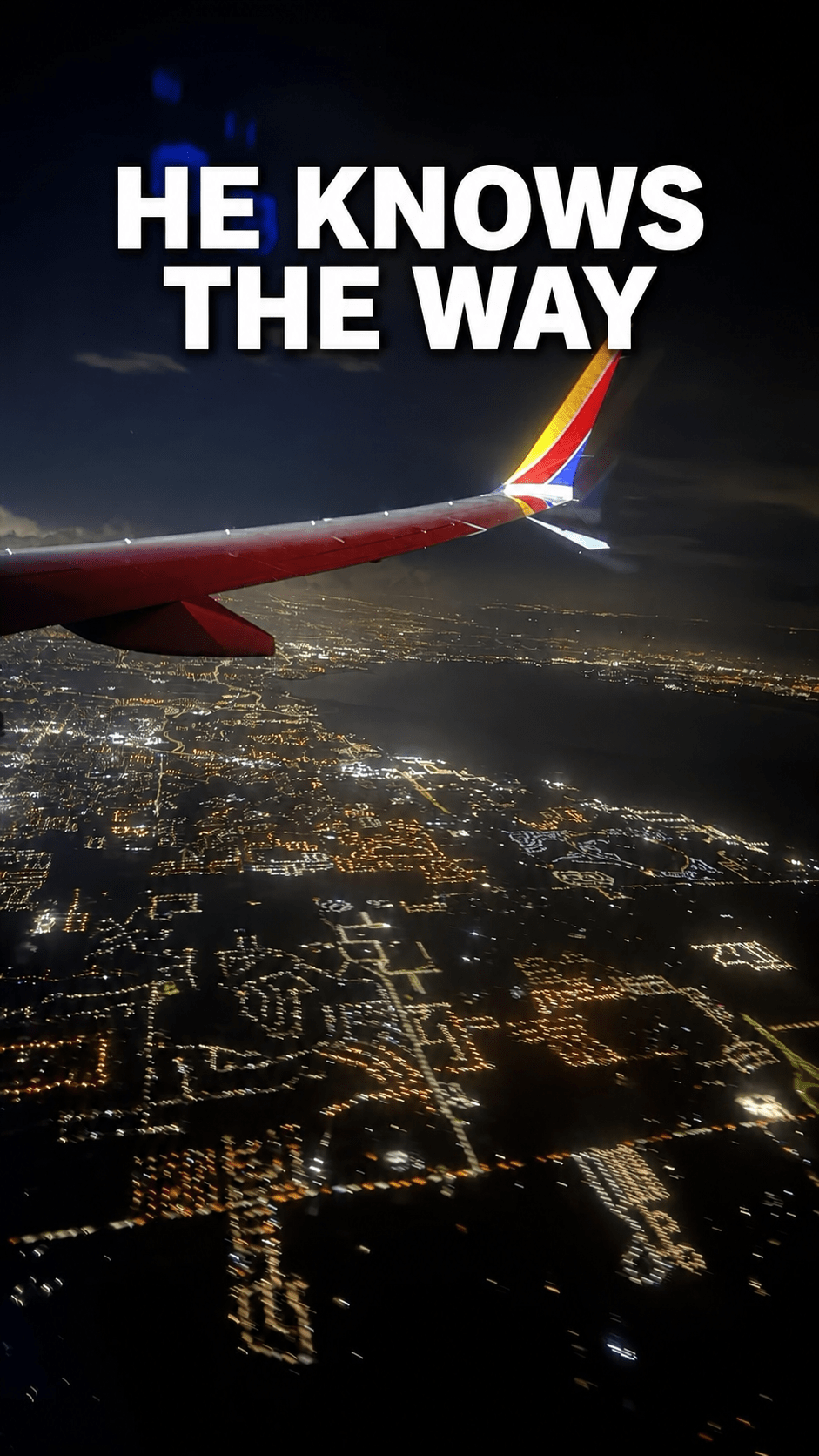
    At 35,000 feet, it is nearly impossible to sense how quickly an airplane is moving.

    On my return flight from San Juan, I sat in an aisle seat while nearly every window shade around me remained closed. I knew we were traveling generally north and northwest toward Atlanta, but I could not see the ocean beneath us. I could not watch the clouds pass. I could not identify a coastline, city, or landmark.

    There was no visible evidence of our speed, progress, or direction.

    From inside the darkened cabin, we could have been flying more than five hundred miles per hour or sitting completely still. Unless I looked at the flight tracker, I had no way of knowing where we were, how far we had traveled, or how much farther remained.

    Yet I was not empty-handed.

    I was returning with memories of people I love, photographs of places I had seen, roads I had walked, and lessons I did not want to forget. I carried mementos of where I had been and memories of those who had walked beside me.

    But none of them could show me the way ahead.

    There are seasons when faith feels much the same.

    We can remember what God has done before. We can look back at prayers He answered, doors He opened, and places where His hand was unmistakable. We carry photographs in our minds and testimonies in our hearts.

    But memories of yesterday do not always provide a map for tomorrow.

    Sometimes the shades are closed.

    We cannot see where we are going. We cannot sense progress. We may feel changes taking place without understanding where they are leading. Something shifts. The aircraft banks. A familiar season begins to turn, but we cannot identify the new direction.

    We know we are no longer where we were, but we have not yet arrived where we are going.

    Job understood that disorientation.

    He looked forward, but God did not appear to be there. He looked backward and could not perceive Him. He searched to the left, where he knew God was working, but could not behold Him. He looked to the right, and God remained hidden.

    Every direction Job searched seemed empty.

    Yet notice what Job said about the left hand:

    “Where he doth work.”

    Job could not see God, but he still acknowledged that God was working.

    That is faith in its most honest form. It does not pretend the window is open when it is closed. It does not deny the darkness, disguise the uncertainty, or claim to understand a route that remains hidden.

    Faith simply refuses to interpret limited visibility as divine absence.

    Job could not perceive God—but God had not lost sight of Job.

    “But he knoweth the way that I take.”

    Job did not know the way, but God did.

    Job could not see the route, but God could.

    Job could not identify his present location or understand the purpose of the journey, but heaven had not misplaced him.

    The same is true for us.

    There will be times when we cannot see what God is doing. We may not understand why a familiar path changed, why a door closed, why a season ended, or why the next destination has not yet appeared. We may feel the turn long before we understand the direction.

    But our inability to see the route never means the Pilot has lost it.

    God does not need us to understand the flight plan in order to complete it. He sees beyond the closed shade. He knows our present position, the conditions ahead, and the destination He has appointed.

    The silence does not mean He has left the cockpit.

    The darkness does not mean the aircraft has stopped moving.

    And the absence of visible landmarks does not mean we are lost.

    You may not know where this season is taking you. You may look forward, backward, left, and right without finding the answers you desperately want.

    But God knows the way that you take.

    For now, that may have to be enough.

    And faith says that it is.

    Final Word:

    When I cannot see the way ahead, I can still trust the One who already knows it.

  • Before and After

    Before and After

    📖 “Behold, I go forward, but He is not there; and backward, but I cannot perceive Him… But He knoweth the way that I take…” — Job 23:8-10

    It started as an ordinary Thursday.

    You weren’t looking for your life to change.

    You were just going to work.

    Going to the doctor.

    Going home.

    Then one conversation.

    One phone call.

    One sentence.

    …and suddenly your life had a before and an after.

    At first, it didn’t seem real.

    Surely there had been a misunderstanding.

    Maybe the tests were wrong.

    Maybe they meant someone else.

    Maybe tomorrow would somehow put everything back the way it was.

    But tomorrow came.

    And so did the questions.

    “What happens now?”

    “How am I going to get through this?”

    “What if everything changes?”

    The future that once seemed so certain suddenly became filled with uncertainty.

    The plans you had carefully made no longer seemed guaranteed.

    You found yourself lying awake at night, replaying conversations, imagining outcomes, searching for answers that refused to come.

    So you did what believers have always done.

    You prayed.
    You searched the Scriptures.
    You waited.
    You listened.

    And if you’re honest…

    heaven seemed painfully quiet.

    Not because you stopped believing.

    Not because you walked away.

    But because you couldn’t understand how God could feel so silent when your world had become so loud.

    Job understood that feeling.

    He searched in every direction.

    Forward.
    Backward.
    To the left.
    To the right.

    Everywhere he expected to find God…

    he found silence instead.

    Yet in the middle of his searching, Job spoke words that have comforted weary hearts for thousands of years.

    He didn’t say, “Now I understand.”

    He didn’t say, “Everything is going to be all right.”

    He didn’t even say, “I know where God is.”

    He simply declared what he knew to be true.

    “But He knoweth the way that I take.”

    What a remarkable statement.

    Job couldn’t see God.

    But he believed God could still see him.

    He couldn’t trace God’s hand.

    But he trusted God’s heart.

    Maybe that’s exactly where you are today.

    You’ve looked in every direction you know to look.

    You’re still waiting.
    Still praying.
    Still hoping.
    Still wondering.

    If that’s your story…

    hold on to Job’s.

    Your ability to see God has never determined His ability to see you.

    He knows where you are.

    He knows what you’re carrying.

    He knows every question you haven’t spoken aloud.

    He knows every tear that no one else has seen.

    He knows every burden you’ve tried to carry by yourself.

    And even if today you cannot say, “I know the way He is taking…”

    you can still rest in this unchanging truth:

    But He knows the way I take.