Tag: King David

  • Learning To Lean

    Learning To Lean

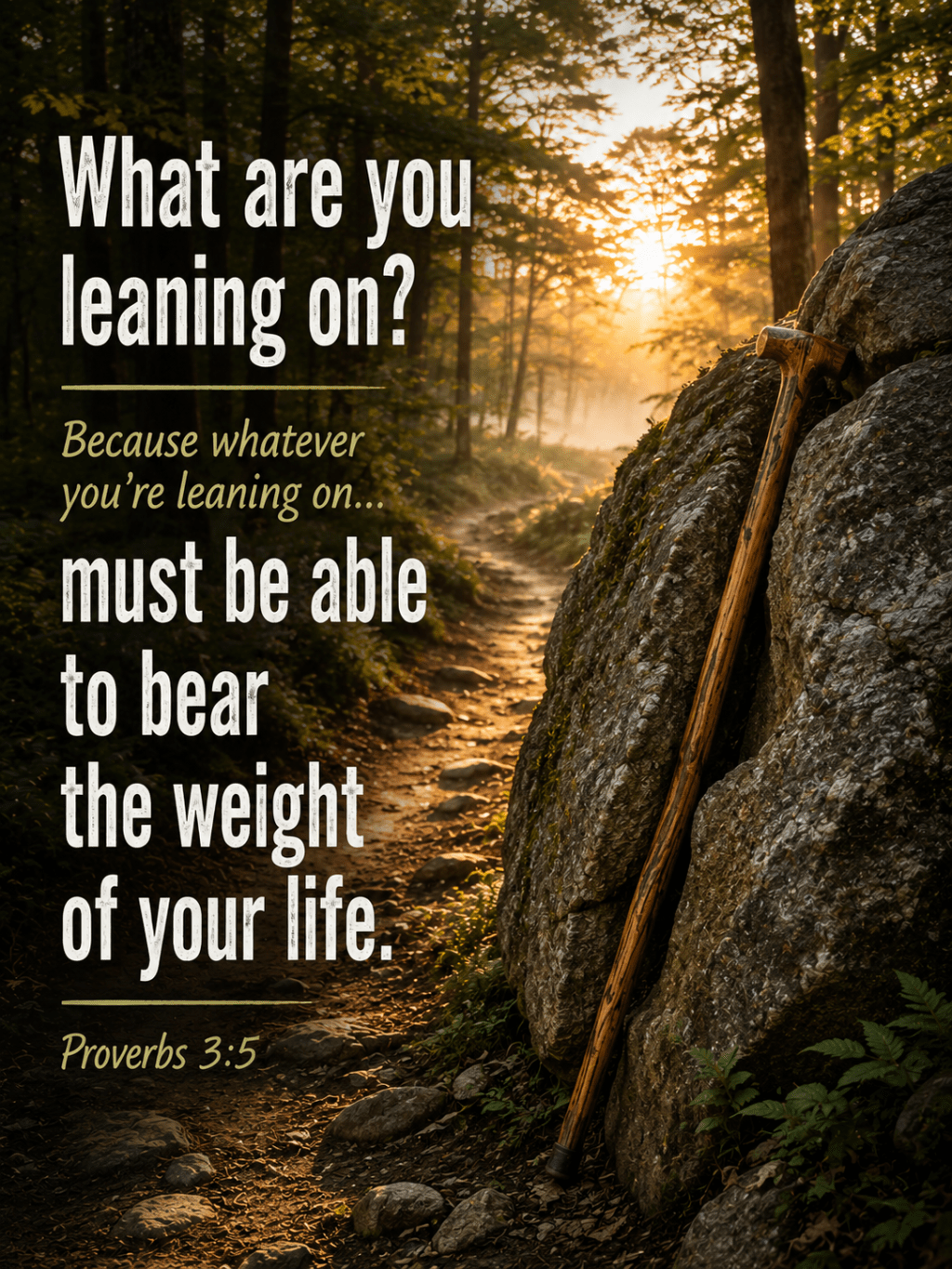
    “Trust in the LORD with all thine heart; and lean not unto thine own understanding.” — Proverbs 3:5

    I woke before sunrise with an old hymn running through my mind.

    Learning to lean…
    Learning to lean…
    I’m learning to lean on Jesus…

    At first, I thought it was simply an encouraging song.

    But as I spent time in Scripture, I realized it was asking me a deeper question.

    What am I leaning on?

    We all lean on something.

    Some lean on their own abilities.
    Some lean on financial security.
    Some lean on relationships, reputation, influence, or strength.
    Some lean on determination, believing that if they just try harder, they can make it through.

    Others lean on things that promise relief but never truly heal—addictions, distractions, habits, or anything else that numbs the weight they are carrying.

    But there is a second question we must ask.

    Why am I leaning on it?

    Because we do not lean on these things for no reason.

    We lean on money because we want security.
    We lean on people because we want acceptance.
    We lean on control because we want peace.
    We lean on success because we want significance.
    We lean on escape because we want relief.

    Every false support is promising something to the soul that only God can truly give.

    David faced that very test in a cave.

    King Saul, who had hunted him relentlessly, unknowingly walked in alone. David’s men saw the opportunity of a lifetime. One swing of the sword, and years of fear could be over.

    But David saw something else.

    He saw a promise that did not need his manipulation.

    He refused to take by force what God had promised by grace.

    David did not lean on his sword.
    He leaned on God.

    And because David was leaning on God, he did not need the throne to satisfy his soul.

    That is the difference.

    David still desired what God had promised.
    But he did not need to sin in order to obtain it.

    Perhaps that is why Solomon wrote,

    “Trust in the LORD with all thine heart; and lean not unto thine own understanding.”

    Those are not two separate commands.

    They are one.

    The first half tells us what God is calling us to do.

    The second half tells us how.

    We trust Him by refusing to lean on ourselves.

    Faith is not simply believing that God exists.

    Faith is transferring the weight of our confidence from our own understanding to His wisdom, and from our own strength to His faithfulness.

    And that brings us to the other hymn that came to mind today:

    Only Jesus can satisfy your soul…

    That is the full equation.

    What am I leaning on?

    And…

    What am I expecting it to give me?

    Because whatever we lean on must be able to bear the weight of our lives.

    And whatever we look to for satisfaction must be able to reach the deepest place in our souls.

    Only Christ can do both.

    He alone can carry the weight.
    He alone can satisfy the longing.

    So maybe the question today is not just whether we believe in Jesus.

    Maybe the question is more personal than that.

    Am I leaning on Him?

    And am I trusting Him to be enough?

  • The Power of Prayer and Hope in Difficult Times: A Reflection on II Samuel 12:16-23

    8 March, 2024

    In our daily lives, we often encounter experiences that challenge our faith and shake our spirits. The story found in II Samuel 12:16-23 captures a poignant moment in King David’s life, revealing profound lessons about prayer, hope, and the unyielding nature of God’s love.

    In this passage, we find King David in a state of deep sorrow, pleading with God for the life of his sick child. Healthy communication with God through prayer is a universal theme throughout the Bible, and David’s fervent prayers highlight the power of reaching out in desperation. Even in our darkest moments, prayer can help us feel connected to something…someone…greater than ourselves, offering comfort and strength.

    Despite David’s heartfelt prayers and fasting, the child’s condition did not improve, resulting in his servant’s fearful delivery of the heartbreaking news of the child’s death. At this point, many of us could understand David’s feelings of loss and helplessness. It’s a painful reminder that, sometimes, despite our hopes and wishes, outcomes can be unfathomable. However, even amid grief, there lies a glimmer of encouragement. When David learned of the child’s death, rather than remaining in despair, he chose to wash and worship, demonstrating his profound trust in God’s ultimate plan.

    This passage invites us to embrace resilience and faith amid disappointment. David’s response teaches us that even in the most difficult circumstances, we have the power to choose how we react. Whatever our struggles may be, we can take away hope and a reminder of the importance of finding peace in God. When faced with obstacles, reflecting on our blessings, and cherishing the connections we have can ignite a sense of gratitude, enabling a positive outlook on life.

    For many, II Samuel 12:16-23 also emphasizes a critical lesson about embracing and processing our emotions—whether it be sadness, anger, or confusion. It’s essential to acknowledge these feelings while also seeking solace in our faith, community, and personal beliefs, for we are never alone in our struggles.

    In our lives, we can find comfort in knowing that hope and healing come in many forms. Just like David, we can discover strength in our own vulnerabilities and trust that there is a purpose behind every experience we endure. In sharing such chapters from our lives, we foster empathy, compassion, and unity with one another, reminding us, and others thru our testimony, that we can weather any storm, guided by love, prayer, and hope.