Six years ago, while managing the TH Rogers Lumber Company store in Hartshorne, Oklahoma, I was helping a customer with a propane torch.
During our conversation, he looked at me and said:
“Light me up!”
Immediately, an old song came to mind:
Lord, set me afire,
Make me a flame for Thee.
And because I apparently possessed neither restraint nor concern for what the customer might think, I began singing it—out loud—right there in the store.
It was funny then, and it is still funny now.
But when that memory resurfaced on Facebook, I began to recognize something deeper within it.
Jeremiah once reached a place where he no longer wanted to speak for God. His message had brought him ridicule, rejection, and pain. He decided he would remain silent.
But he couldn’t.
“Then I said, ‘I will not make mention of Him,
Nor speak anymore in His name.’
But His word was in my heart like a burning fire
Shut up in my bones;
I was weary of holding it back,
And I could not.”
—Jeremiah 20:9
The fire within Jeremiah would not allow him to remain silent.
Jesus later told His disciples:
“You are the light of the world. A city that is set on a hill cannot be hidden.”
—Matthew 5:14
The fire is inward.
The light is outward.
God places His Word within us. His Spirit supplies the power. Our lives become the lamps through which His truth, love, mercy, and grace are made visible to the world around us.
But that is where many of us encounter a problem.
We sing about wanting the fire.
We pray for revival.
We claim to be the light of the world.
But when an opportunity comes to speak—when someone is hurting, searching, struggling, or standing directly in front of us—we suddenly become concerned about what others might think.
I know because I have lived it.
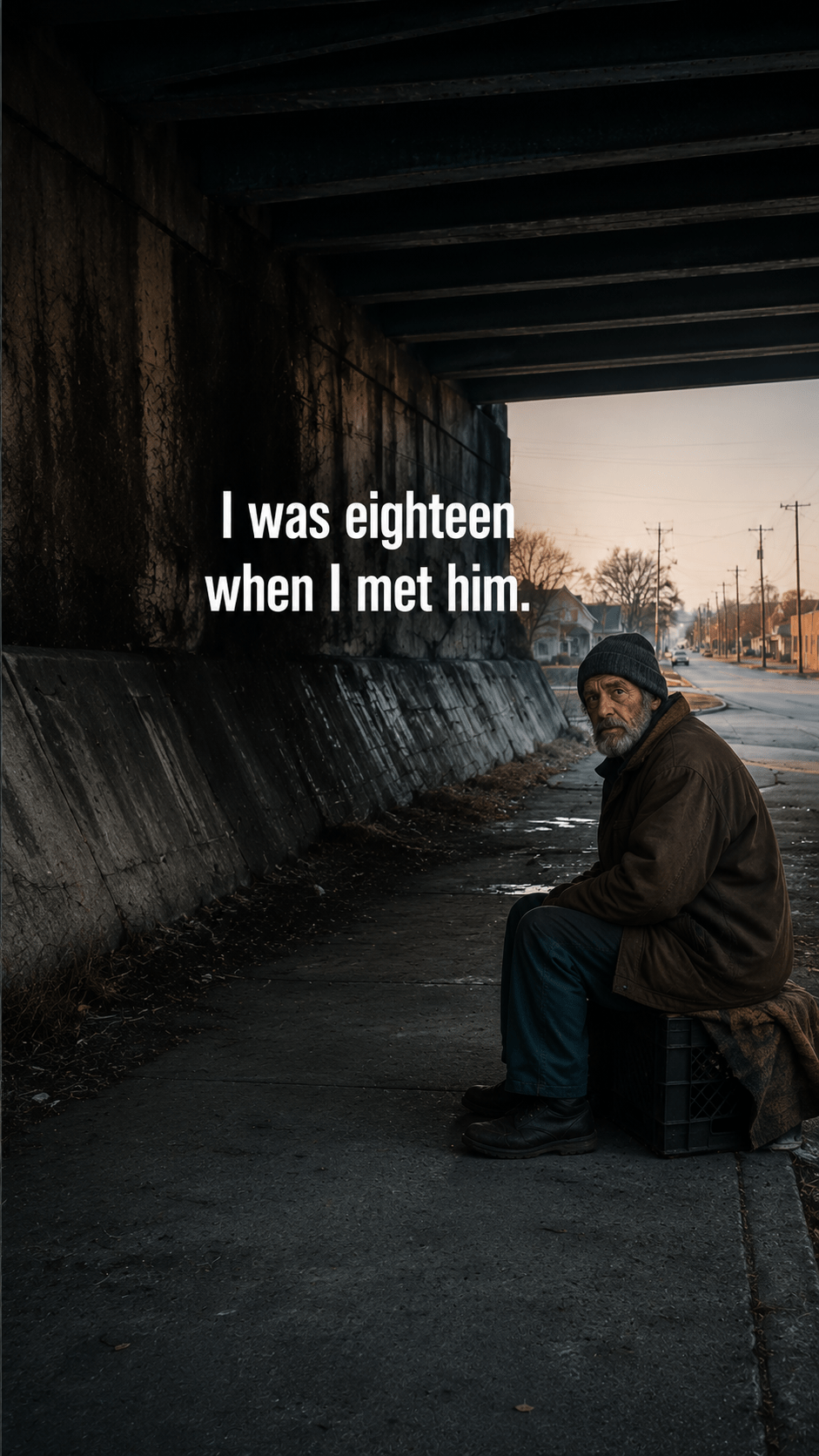
When I was eighteen years old, I attended a powerful Sunday night church service followed by a youth prayer meeting. The following morning, I encountered a homeless man beneath the railroad overpass near North Peoria Avenue and East Archer Street in Tulsa.
He asked whether I had a couple of dollars. After I gave him what I had, we began talking.
He may have been about the same age then that I am now. He told me that he had once been a worship leader and preacher at a large Assembly of God church in Tulsa.
Then he told me what had happened.
He had an affair.
His wife left him.
His children deserted him.
He began drinking heavily.
He lost his ministry position.
He lost his job.
He lost his home.
For more than an hour, we stood beneath that overpass while he told me his story.
And throughout our conversation, I kept feeling something in my spirit:
“Ask him to pray.”
But I didn’t…
We were standing in public.
On a sidewalk.
In the neighborhood where many of my friends lived.
What if they saw me?
What would they think?
What would they say?
So I said nothing.
Three days later, I learned that he had stepped off a curb in front of a city bus and had been killed.
For more than forty years, I have lived with the what-ifs of that Monday morning.
What if I had asked him to pray?
What if we had knelt together beneath that railroad overpass?
What if someone had seen us?
And what if it had made a difference?
I cannot tell you what would have happened if I had prayed with him. I was eighteen years old, and I was not his savior. I cannot assume responsibility for everything that happened after we parted ways.
But I do know that I felt prompted to pray.
I also know that fear of what other people might think kept me from obeying.
And three days later, the opportunity was gone forever.
I had carried the light into that man’s darkness, but I allowed fear to place a basket over the lamp.
That is why this message is not being written from a place of superiority or condemnation. I am not standing above anyone and saying, “You should be more courageous.”
I am speaking as someone who knows the lasting regret of recognizing an opportunity, feeling the Spirit’s prompting, and walking away without doing what I believed God was asking me to do.
Boldness does not mean being loud, argumentative, or obnoxious. It does not mean forcing a sermon into every conversation or pretending to possess every answer.
Sometimes boldness is simply saying:
“Can I pray for you?”
“God helped me through something similar.”
“There is a Scripture that carried me when I was hurting.”
“Would you like to come to church with me?”
“Let me tell you what Jesus has done in my life.”
Those words may feel small to us, but one exposed flame can light another wick.
Every believer carries light into places a preacher may never enter.
The recovering addict can reach another addict.
The former inmate can speak to someone who believes his past has permanently disqualified him.
The construction worker can carry Christ onto the jobsite.
The police officer encounters people during some of the most frightening and vulnerable moments of their lives.
The inside salesman speaks with customers, representatives, and coworkers scattered across places he may never physically visit.
The nurse enters rooms where pain has stripped away appearances and people are suddenly willing to discuss what truly matters.
The gas station attendant may regularly encounter someone everyone else overlooks.
The corporate trainer reaches people across departments, cities, and walks of life.
The housewife influences her family, her neighbors, other parents, and generations still being formed within her home.
The teacher stands before young lives still deciding what they believe, what they value, and who they will become.
These are not interruptions to ministry.
They are ministry.
We each have a circle of influence that belongs uniquely to us. We have relationships others do not have, access others may never receive, and credibility born from experiences others have never lived.
I cannot occupy your relationships.
I have not earned the trust you have earned.
I do not know all the people who cross your path each day.
You do not have to reach everyone. But there are people whom you may be uniquely positioned to reach.
God has not placed every lamp in the same room.
Over the past several days, I have shared some of the things God showed me while traveling through Puerto Rico and returning home.
The journey began with rest:
“Come ye yourselves apart into a desert place, and rest a while.”
—Mark 6:31
There were lessons in the dawn at thirty thousand feet, an unfinished building, burdened streets, a scarred beach, an ancient fortress, storm clouds over the ocean, and a darkened airplane cabin where I could not see the way home.
But every journey eventually ends.
We come home.
We return to our families, our jobs, our responsibilities, and the ordinary conversations that fill our days.
Eventually, we find ourselves back on the sidewalk, standing beside someone whose darkness may be deeper than we realize.
The question is not merely whether the journey refreshed us.
The question is what we brought home.
God does not call us apart so that we can permanently withdraw from the world. He gives us rest because there is still work to do. He renews our strength because there are still burdens to carry. He speaks to us in quiet places because there are still people who need to hear what He has placed within us.
We come apart to be renewed.
We return to shine.
The vacation ends.
The calling does not.
So perhaps we should ask ourselves:
If God has placed His fire within me, who was it meant to give light to?
Who is receiving light because of the fire I claim to possess?
Where have fear, embarrassment, comfort, or self-consciousness caused me to place a basket over the lamp?
And when the Spirit prompts me again, will I obey—or will I first look around to see who might be watching?
We have rested.
We have listened.
We have seen.
Now it is time to return to the places God has positioned us, remove the basket, and let the light shine.
Lord, set us afire.
Not merely so that we may feel the flame—
but so that someone standing in darkness may finally see the Light.