Imagine someone from a job you left years ago starts calling and giving you instructions. You’d recognize the voice. You might even feel that familiar urge to respond.
But recognizing their voice wouldn’t mean you still owed them your loyalty.
Sometimes, an old habit can sound like that.
The temptation shows up in a familiar place. An opportunity presents itself. Something inside remembers how you used to respond, and before long, you’re thinking, Here we go again. Nothing’s changed.
But a familiar voice doesn’t establish rightful authority.
It may sometimes feel as though you’re alone in your situation, but Paul wrote to the church in Rome on that very topic two thousand years ago:
“For sin shall not have dominion over you, for you are not under law but under grace.”
— Romans 6:14, NKJV
That’s a declaration worth
slowing…
down…
to…
hear.
Paul was writing to believers. These were people who belonged to Christ, and he still needed to tell them, “do not let sin reign” (Romans 6:12, NKJV). The possibility of yielding was real then, and it’s real now. They had a responsibility to resist, and so do we.
He wasn’t describing a life where temptation had become silent.
He was telling them that sin no longer had the right to rule.
There’s a difference.
An old desire may still pull at you.
A familiar situation may still expose a weakness.
You may need to make difficult choices, ask for help, and establish boundaries you’ll have to keep choosing tomorrow.
That doesn’t make the freedom Christ gives imaginary. It means learning to live in that freedom involves actual obedience.
Grace changes our relationship to sin.
We can bring our failures to God for forgiveness, but grace also calls us into a different way of living. We’re no longer meant to accept sin’s demands as though obedience to them is inevitable.
“That’s just how I am,” doesn’t have to settle the matter.
In verse 13, Paul makes our response practical. He tells believers to offer themselves to God and use their bodies in His service. Our hands, our words, our attention, and our choices belong in that surrender.
That might mean ending a conversation that’s taking you somewhere you shouldn’t go.
It might mean putting the phone down and reaching out to someone who’ll help you stay accountable.
Those choices can be hard, but God’s grace gives us reason to make them with hope.
And if you’ve given in, bring that honestly to God in repentance.
Take responsibility.
Receive help.
Accept His grace.
Make the changes you need to make.
You don’t have to turn a failure into a declaration that surrendering to sin is all you’ll ever be capable of doing.
The old voice may insist that it knows who you are. It may remind you how many times you’ve answered before.
But your past doesn’t get to cancel what Christ has done.
There’s an old saying that I think applies here:
“When the enemy reminds you of your past, remind him of his future.”
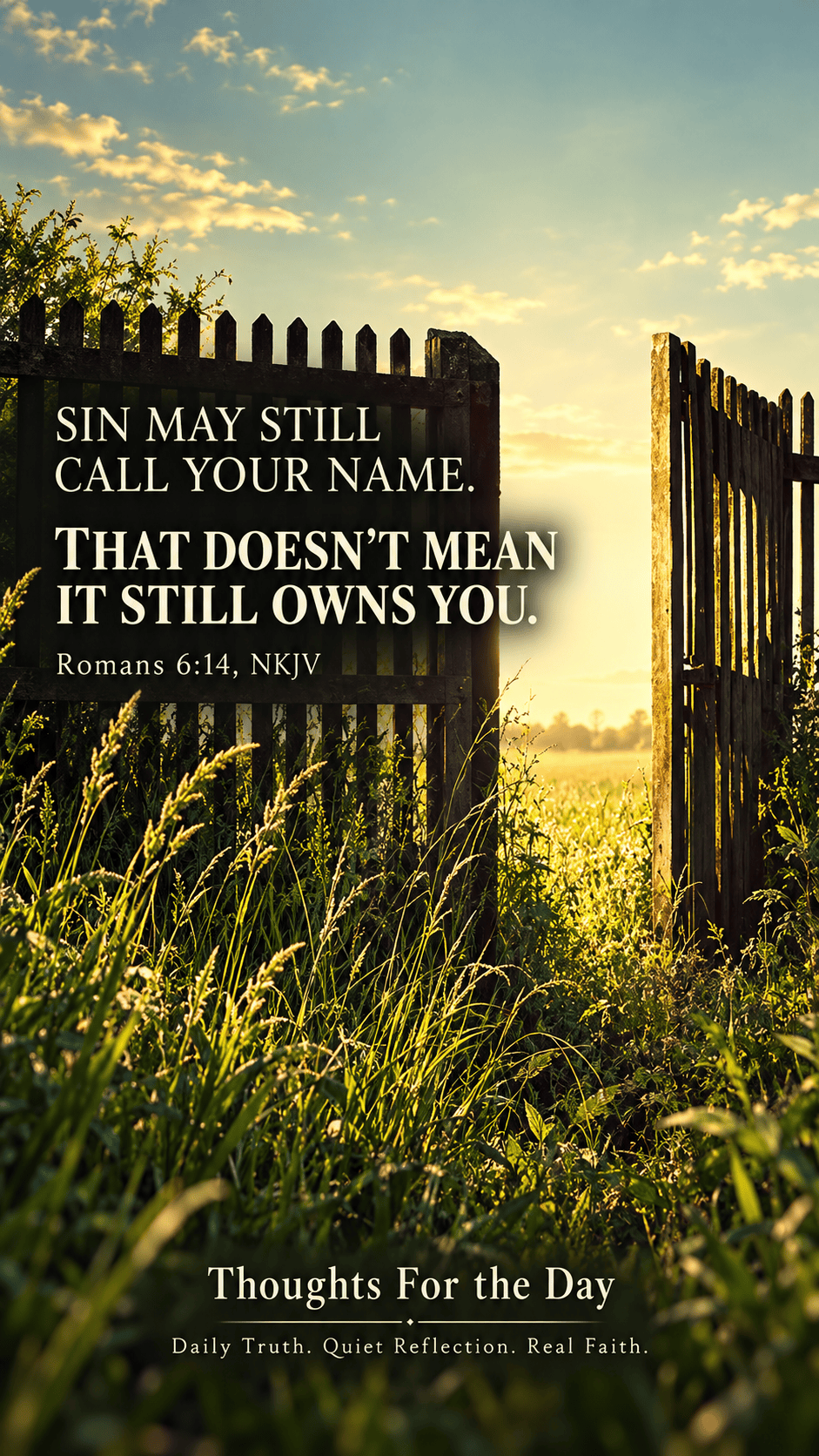
Sin may still call your name. That doesn’t mean it still owns you.
If you belong to Christ, you can face today’s choices with this declaration:
I belong to Jesus. By His grace, I don’t have to obey my former master.

