Tag: Scripture

  • Another Way In

    Another Way In

    Standing at El Morro in Old San Juan, it is difficult not to be impressed by its strength.

    For centuries, Castillo San Felipe del Morro stood guard over the entrance to San Juan Bay. Massive walls. Cannons aimed toward the sea. A commanding position overlooking the harbor.

    It was built for one purpose:

    See the enemy coming—and stop him before he gets through.

    And from the sea, El Morro was remarkably effective.

    But history teaches us something important.

    When attacking forces discovered how difficult it was to defeat San Juan through its strongest defenses, they looked for another way.

    They came from the land.

    They probed the defenses.

    They searched for the place that wasn’t as well protected.

    And our adversary hasn’t changed his strategy.

    He Doesn’t Have To Break Your Strongest Wall

    Some of us have built enormous spiritual defenses around the places where we’ve already fought battles.

    We’ve learned.

    We’ve grown.

    We’ve established boundaries.

    We’ve memorized the Scriptures.

    We’ve recognized the warning signs.

    The enemy may have attacked that wall a hundred times—and discovered that it isn’t moving.

    But don’t confuse his silence with surrender.

    If the enemy cannot get through the wall, he will start walking around it.

    Peter warned us:

    “Be sober, be vigilant; because your adversary the devil, as a roaring lion, walketh about, seeking whom he may devour.” ~1 Peter 5:8~

    Notice the language.

    Walketh about. Seeking.

    The enemy isn’t merely attacking.

    He’s looking.

    Watching.

    Searching for another way in.

    Sometimes He Sends a Scout First

    An invading army doesn’t always begin with thousands of soldiers charging the wall.

    Sometimes it begins with reconnaissance.

    Something small.

    Something seemingly insignificant.

    Something that doesn’t appear threatening enough to sound the alarm.

    And spiritually, compromise often begins the same way.

    It doesn’t announce:

    I’m here to destroy your marriage.

    I’m here to ruin your testimony.

    I’m here to pull you away from God.

    Instead, it whispers:

    There’s nothing wrong with this.

    Just this once.

    You deserve this.

    Nobody will ever know.

    You’re strong enough to handle it.

    Sometimes the scout may even look friendly.

    It may speak our language.

    It may appeal to something familiar.

    It may simply ask for a little room.

    And Paul warned:

    “Neither give place to the devil.” ~Ephesians 4:27

    He doesn’t have to possess the entire fortress to begin gaining ground.

    He only needs a place.

    Where Is Your Wall Unguarded?

    That’s the uncomfortable question El Morro asks us.

    We usually know where our strongest walls are.

    But what about the places we aren’t watching?

    Maybe it’s resentment we’ve justified.

    Attention we’ve begun enjoying a little too much.

    A friendship where boundaries have slowly moved.

    Something we’re watching that we once wouldn’t have watched.

    A private thought we’ve stopped challenging.

    A disappointment with God we’ve stopped talking to Him about.

    None of those things necessarily means the fortress has fallen.

    But they may reveal something important:

    where the wall isn’t being watched.

    The enemy doesn’t need to destroy your strongest wall if you’ll leave another gate unguarded.

    Keep Watch

    Peter’s warning doesn’t end with the enemy.

    Neither should ours.

    “Whom resist stedfast in the faith…” ~1 Peter 5:9

    The answer isn’t paranoia.

    It’s vigilance.

    We don’t have to spend our lives frightened of Satan or suspicious of everyone around us.

    We simply need to remain sober.

    Watchful.

    Prayerful.

    Honest enough to recognize our vulnerabilities—and humble enough to guard them.

    El Morro didn’t survive centuries because nobody attacked it.

    It survived because somebody kept watch.

    Don’t mistake the absence of an attack for the absence of an enemy.

    The enemy may simply be walking around the wall.

    Keep watch.

  • Scripture Is Not About Me… But It Still Reveals Me

    Scripture Is Not About Me… But It Still Reveals Me

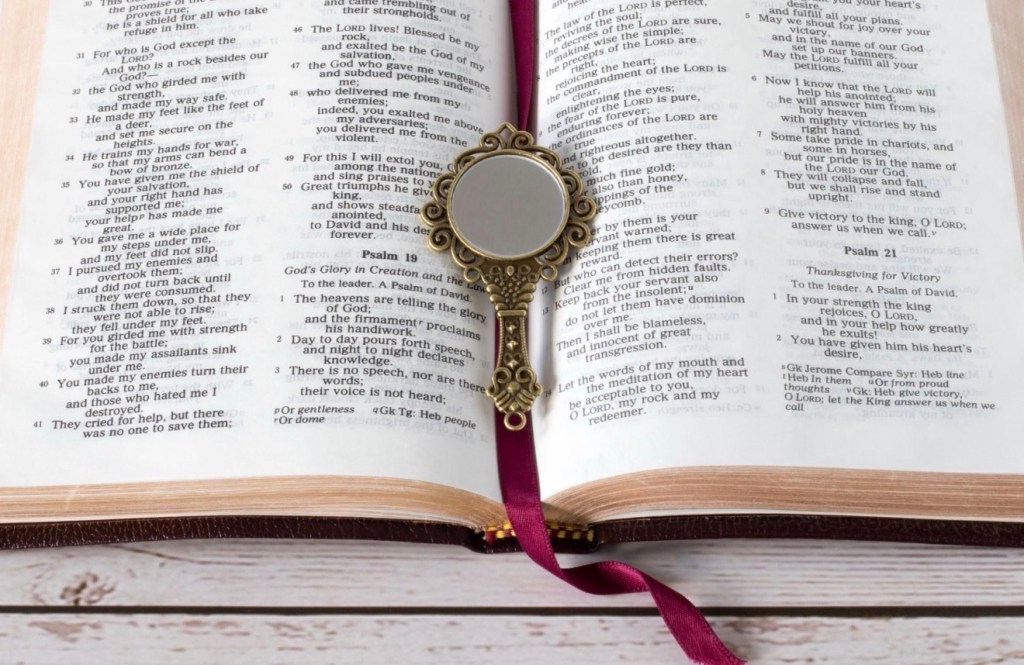
    Yesterday, we talked about James describing God’s Word as a mirror.

    That thought sparked some interesting discussion.

    One person commented that the Bible is written so we can see Christ and follow God—not so we can see ourselves.

    In one sense, I completely agree.

    The Bible is not primarily a self-help book. It is the revelation of God. From Genesis to Revelation, Scripture points us to God’s character, God’s promises, God’s mercy, God’s judgment, and ultimately God’s plan of redemption through Jesus Christ.

    Christ is the center of Scripture.

    But I think we can make a mistake if we stop there.

    If Scripture reveals Christ, and Christ exposes what is in my heart, then self-examination becomes unavoidable.

    Throughout the Bible, we find people who encountered God and immediately became aware of themselves.

    When Isaiah saw the Lord high and lifted up, his first response was not to analyze the sins of the nation around him. He cried, “Woe is me! for I am undone.”

    When Peter witnessed the miraculous catch of fish, he fell at Jesus’ feet and said, “Depart from me; for I am a sinful man, O Lord.”

    At the Last Supper, when Jesus told the disciples that one of them would betray Him, they did not immediately begin pointing fingers. Instead, one by one, they asked, “Lord, is it I?”

    In every case, seeing God more clearly caused them to see themselves more clearly.

    That is why James compares God’s Word to a mirror.

    A mirror does not create flaws.

    A mirror reveals what is already there.

    The purpose of Scripture is not to make me the hero of the story. The purpose of Scripture is to reveal God. Yet when God is revealed, I begin to see myself honestly.

    We do not read David so we can pretend we are David.

    We do not read Esau so we can condemn Esau.

    We do not read Peter simply to admire Peter.

    These men often become mirrors.

    David reveals the heart of repentance.

    Esau reveals the danger of placing temporary desires above eternal blessings.

    Peter reveals how quickly passion can outrun wisdom.

    Judas reveals that it is possible to be near Jesus while withholding complete surrender.

    The goal is not identification.

    The goal is transformation.

    The question is not, “Which Bible character am I?”

    The better question is, “Lord, what are You showing me that needs to change?”

    That question requires humility.

    It is easy to read about the Pharisees and see someone else.

    It is easy to read about Judas and think of someone else’s betrayal.

    It is easy to read about Esau and think of someone else’s poor choices.

    It is much harder to ask whether traces of those same attitudes might exist in our own hearts.

    Yet that is often where real growth begins.

    The closer we draw to God, the less interested we become in evaluating everyone else and the more willing we become to examine ourselves.

    Perhaps that is why the disciples’ question still echoes through Scripture.

    Not, “Lord, is it him?”

    Not, “Lord, is it her?”

    Not, “Lord, is it them?”

    But, “Lord, is it I?”

    When we open God’s Word, may we see Christ more clearly than ever before.

    And in His light, may we have the courage to see ourselves honestly as well.