Tag: Such Were some of you

  • Cut Off the Label

    Cut Off the Label

    “There is therefore now no condemnation to those who are in Christ Jesus…”
    —Romans 8:1, NKJV

    In a sermon about labels, Bishop Tim Hill told a story from his childhood.

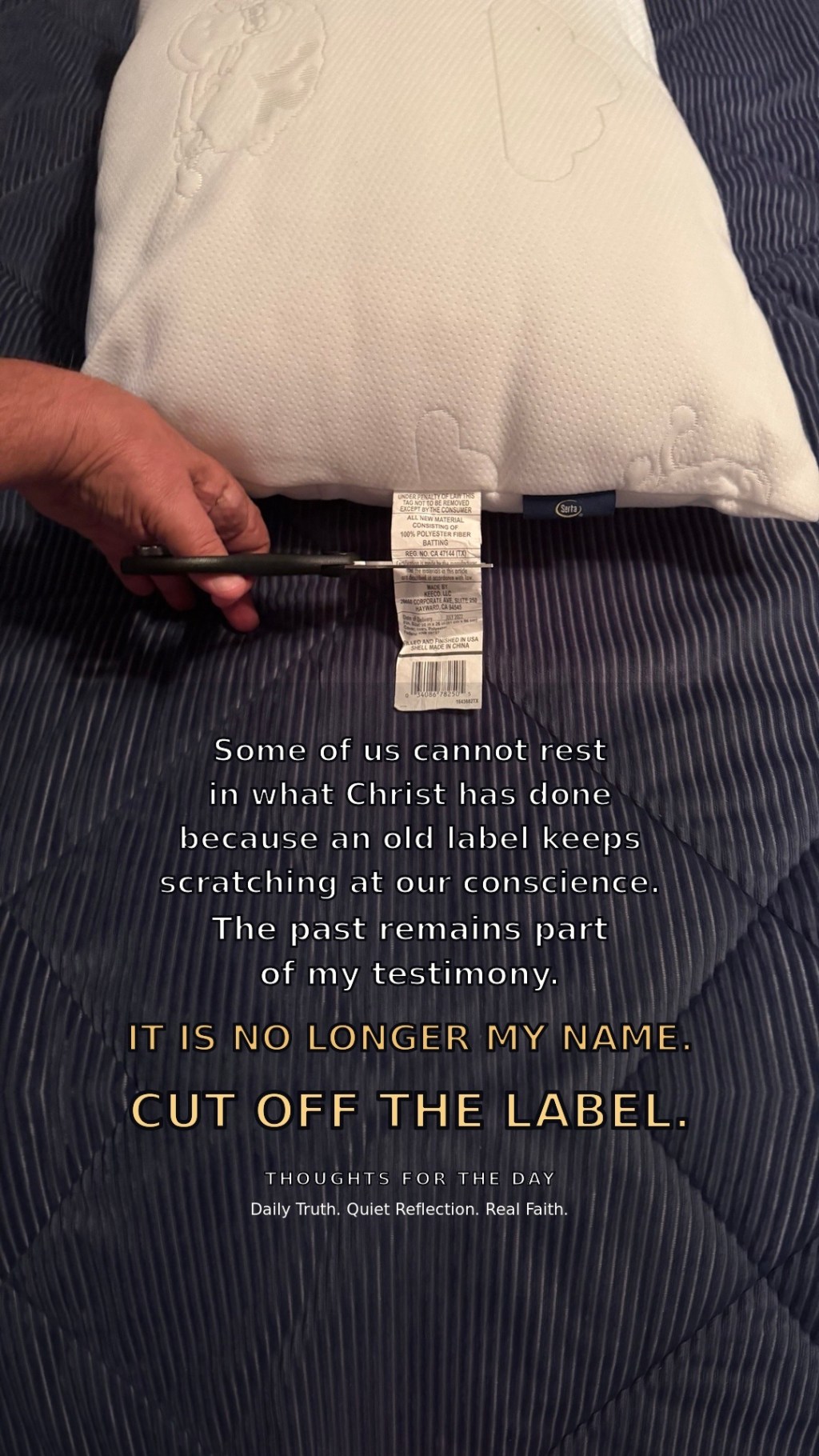
    He was six years old when he received his first pillow. That night, something kept scratching the back of his neck. He turned over, adjusted the pillow, and tried to get comfortable, but the irritation remained.

    Finally, he found the problem.

    It was the label.

    So he cut it off.

    The pillow was not defective. There was nothing wrong with what was inside it.

    The label was interfering with his rest.

    Some people cannot rest in what Christ has done because an old label keeps scratching at their conscience.

    They turn over the memories.

    They replay the failure.

    They rehearse every accusation.

    They wonder whether they were truly forgiven, whether restoration is actually possible, and whether God could ever use someone with their history.

    I know that feeling because I lived beneath those labels for years.

    Some were given to me by other people. Others grew from things I had actually done.

    That is what made them so difficult to challenge.

    I had failed.

    Therefore, I believed I was a failure.

    I had committed adultery.

    Therefore, I believed adulterer was my permanent name.

    My marriage ended.

    Therefore, I believed I was disqualified from ever being useful to God again.

    Because there was truth in the history, I assumed there must also be truth in the verdict.

    The accusations followed me everywhere:

    How can you stand on a platform and sing while separated from your wife?

    How can you stand before a classroom and teach teenagers how to live for God when you could not hold your own marriage together?

    How could God ever use an adulterer who sacrificed his family for a few moments of pleasure?

    Eventually, nobody else needed to ask those questions.

    I had learned to ask them myself.

    Other people had attached the labels, but I began introducing myself by them.

    Every opportunity was filtered through the label.

    Every prompting from God was answered by the label.

    Every evidence of grace was followed by the same question:

    Yes, but do You remember what I did?

    Of course God remembered.

    He knew the entire truth—more completely than I did.

    But He also knew what He had done with it.

    There is a difference between conviction and condemnation.

    Conviction says:

    “You sinned. Bring it into the light. Repent. Accept responsibility. Make right whatever you can, and allow God to change you.”

    Condemnation says:

    “Your sin is your name. You are permanently ruined. Stay away from God because He could never want you again.”

    Conviction tells the truth about what we have done.

    Condemnation takes the worst thing we have done and uses it to rename us.

    Conviction leads us to the cross.

    Condemnation chains us to the scene of the crime long after the blood has been applied.

    Accountability says, “I did this.”

    Condemnation says, “This is all I am.”

    I am not minimizing what happened.

    People were hurt. Trust was broken. A family was altered. Repentance did not erase every consequence or remove every scar.

    “Under the blood” is not a religious phrase that allows us to avoid responsibility.

    It does not mean the sin never happened.

    It does not mean nobody was hurt.

    It does not mean consequences disappeared.

    It means the sin was confessed, brought to God, and placed beneath the saving work of Jesus Christ.

    The event remains part of the history.

    But it no longer possesses naming rights.

    Paul did not avoid the former lives of the believers in Corinth. He named what some of them had been, and then he declared:

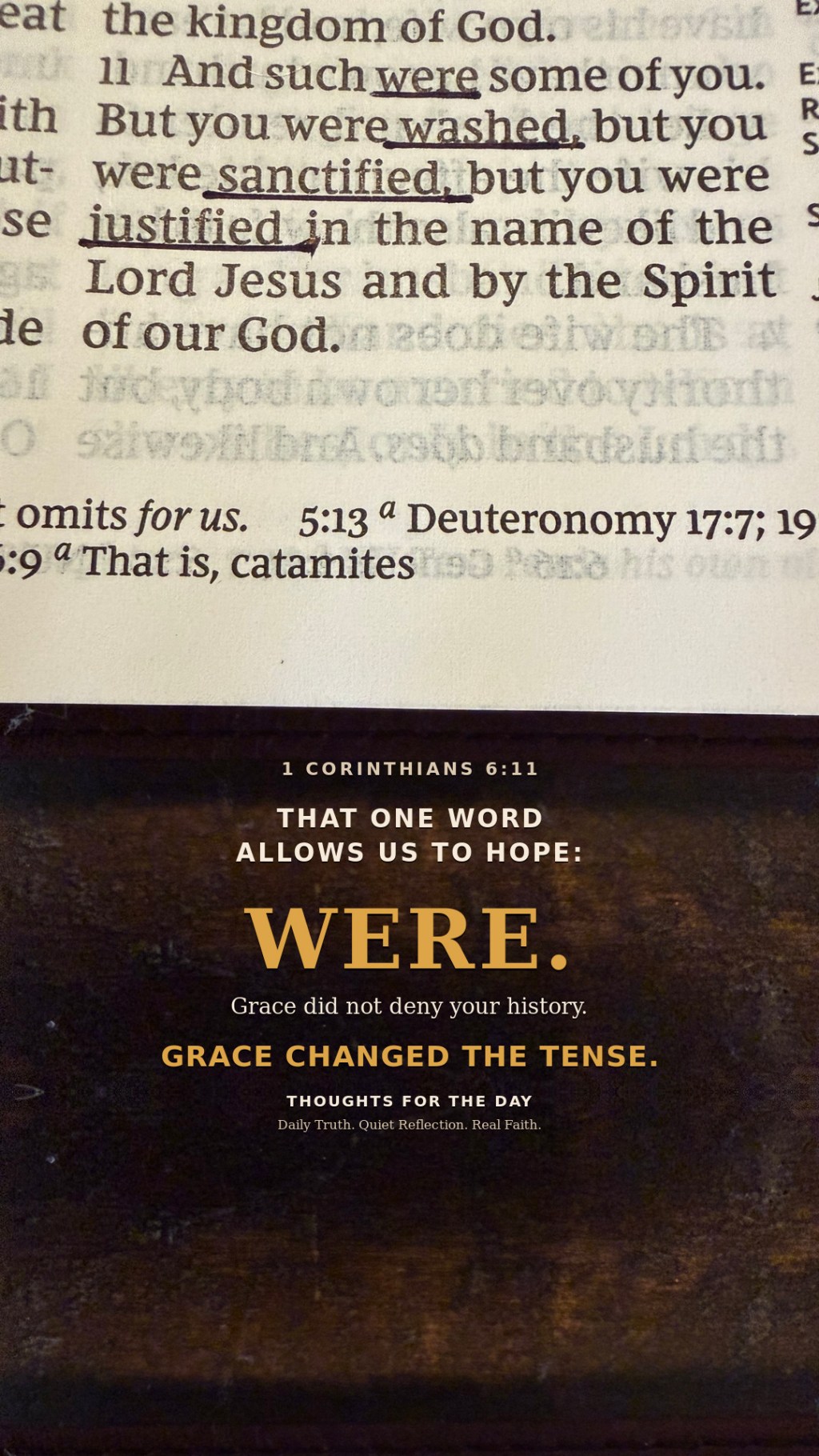
    “And such were some of you. But you were washed, but you were sanctified, but you were justified…”
    —1 Corinthians 6:11, NKJV

    What they had done remained part of their testimony.

    It was no longer their name.

    That is the difference grace makes.

    The label may accurately describe where Jesus found us.

    It does not possess the authority to describe where Jesus left us.

    So when the accusation asks:

    “Do you remember what you did?”

    Yes. I remember.

    But it is under the blood.

    “What about the people you hurt?”

    I have not forgotten them, and I do not minimize their pain.

    But it is under the blood.

    “You will always be an adulterer.”

    No. That may accurately describe what I did.

    It does not get to decide who I am after repentance, forgiveness, and the transforming work of God.

    The label says, adulterer.

    The blood says, washed.

    The label says, failure.

    Grace says, restored.

    The label says, disqualified forever.

    God says, “Such were some of you.”

    Cutting off the label does not mean tearing pages out of our testimony. Those pages reveal what grace overcame.

    The scar may remain.

    The memory may remain.

    The consequences may remain.

    But the label has to go.

    It is time to stop introducing ourselves by what Jesus died to redeem.

    It is time to stop allowing an old label to interfere with our rest in what Christ has done.

    The past remains part of my testimony.

    But it is no longer my name.

    Cut off the label.

    Keep the testimony.

    Give God the glory.

  • Grace Changed the Tense

    Grace Changed the Tense

    “And such were some of you. But you were washed, but you were sanctified, but you were justified in the name of the Lord Jesus and by the Spirit of our God.”
    —1 Corinthians 6:11, NKJV

    We all have a history.

    For some, that history is relatively quiet. For others, it is dark, painful, and overpowering. It follows them into every new season and casts a shadow over everything they might still become.

    The past begins speaking:

    This is what you did.
    This is who you are.
    This is what you will always be.

    Eventually, something that happened—or something we did—stops feeling like one chapter of our story. It becomes the title we place over the entire book.

    I know the weight of that kind of history because I have lived beneath it.

    I know what it is to look back at choices I made, people I hurt, and consequences I could not undo—and believe that my past had already determined my future.

    For a long time, I did not merely remember what I had done. I allowed it to pronounce a sentence over who I was, what I could become, and whether God could ever use me again.

    I am not writing about hopelessness as a theory.

    I have felt it.

    I know what it is to believe that the darkest chapter of your life has become the title of your entire story.

    Then I read Paul’s words to the church at Corinth.

    In the preceding verses, Paul gives an uncomfortable list of sins and destructive ways of life. He writes about sexual immorality, idolatry, adultery, theft, greed, drunkenness, reviling, and extortion.

    He does not minimize their past.

    He does not soften sin by calling it a mistake, a personality trait, or an unfortunate stage of life.

    He tells the truth.

    Then he writes one word that makes hope possible:

    Were.

    And such were some of you.”

    Not are.

    Not will always be.

    Not are, but now attend church.

    Were.

    That one word does not erase the sentence that came before it. It places the sentence where it belongs—in the past.

    Paul was not writing about hypothetical people. He was writing to a church where people could hear that list and say:

    That was me.
    That was my life.
    That was what controlled me.

    But that is not where Jesus left me.

    The word were means the darkest truth about yesterday does not have to remain the defining truth about today.

    It means history is real—but it is not destiny.

    It means the chapter happened—but the story did not have to end there.

    It means no matter how long someone has lived under the power of sin, Jesus can move that identity from the present tense into the past.

    But Paul does not stop with were. He follows it with three powerful interruptions:

    But you were washed.

    What had stained them had been cleansed.

    But you were sanctified.

    They had been set apart for God and given a new belonging.

    But you were justified.

    The charges against them no longer determined their standing before God.

    They did not change their tense through willpower, respectability, or religious performance. God intervened:

    “…in the name of the Lord Jesus and by the Spirit of our God.”

    Grace did not pretend that their former lives were harmless.

    Grace changed what possessed the authority to define them.

    That is what gave me hope.

    God did not tell me that my past did not matter. He showed me that it did not have to remain my identity.

    I could not go backward and undo my history. I could not erase every consequence, retrieve every lost opportunity, or remove every scar.

    But Jesus could do something I could never do.

    He could change the tense of my story.

    Perhaps your history has convinced you that there is no future beyond what you have done. Maybe shame continues speaking about your past in the present tense.

    But if Paul could look across a church filled with people carrying histories like these and say, “Such were some of you,” then no one has traveled so far into darkness that Jesus cannot redeem their story.

    “Were” is not permission to return to the old life.

    It is the declaration that you are no longer required to remain there.

    You can tell the truth about your past without allowing it to predict your future.

    You were bound—but you were washed.

    You were lost—but you were sanctified.

    You were guilty—but you were justified.

    Grace did not deny your history.

    Grace changed the tense.

  • “Such Were Some of You” Isn’t a Shameful Reminder. It’s a Victory Cry.

    1 Corinthians 6:11 (NKJV)“And such were some of you. But you were washed, but you were sanctified, but you were justified in the name of the Lord Jesus and by the Spirit of our God.”

    Some of y’all are walking around like you’re still wearing prison clothes—but the chains fell off ages ago.

    There’s a lie floating around modern Christianity that says once you’re saved, your past should be hidden.

    Buried.

    Never brought up again.

    That it’s somehow more “spiritual” to keep your testimony locked away like some forgotten file in heaven’s archives.

    But Scripture doesn’t agree. God doesn’t agree.

    Paul didn’t pull any punches when he wrote to the Corinthians. He gave a laundry list of what they used to be—idolaters, fornicators, drunkards, homosexuals, thieves, revilers. And then, with that bold fire only the Spirit gives, he said: “And such were some of you.”

    Not “are.”

    Not “struggling with.”

    Were.

    That one word is a declaration of war against the idea that we’re forever stuck in our sin. That one word is a line in the sand that says, “Yeah, I used to live like hell—but I met the One who kicked hell’s teeth in and bought my freedom with His blood.” And I refuse to be ashamed of that.

    Deliverance is not a dirty word. It’s a reason to rejoice.

    But we treat it like it’s taboo. We whisper around it. We sanitize our testimonies. We try to pretty them up like we’re trying to win a Christian PR award.

    Why?

    Because the enemy wants us quiet. He knows your testimony is dangerous. He knows someone drowning in the same pit God dragged you out of might finally believe there’s hope—if only they heard your story.

    Psalm 107:2 doesn’t suggest we speak—it commands it:

    “Let the redeemed of the Lord say so, whom He has redeemed from the hand of the enemy.”

    You were snatched from death.

    Rescued from addiction.

    Restored from sexual sin.

    Pulled from bitterness, pride, perversion, or whatever else had its claws in you.

    Why in the world would you keep that to yourself?

    That doesn’t glorify sin—it glorifies the God who crushed it.

    Hear me on this: your past is not your identity, but it is part of your testimony.

    And your testimony isn’t just for you—it’s for the broken, the bound, the bitter ones who think they’re too far gone.

    It’s for the teenage girl convinced her worth is in her body.

    It’s for the man trapped in pornography who thinks God’s done with him.

    It’s for the alcoholic, the self-harmer, the self-righteous, and the silent.

    And maybe—just maybe—it’s for you, too.

    To remind you that your “were” didn’t win.

    To remind you that deliverance wasn’t a moment—it’s a lifestyle.

    And to remind you that you’re still free.

    Romans 6:6 says,

    “Knowing this, that our old man was crucified with Him, that the body of sin might be done away with…”

    Done away with—not managed. Not hidden. Dead and gone.So what are we doing trying to resurrect the silence?

    Speak up.

    Someone needs to hear what you’ve been through. Not to compare scars, but to point to the Healer. Not to dwell on your mess, but to declare the mercy of the One who brought you through.You’re not who you used to be. And you’re not the only one who needs to know it.

    Here’s a challenge for you today:What part of your story are you still ashamed to share? Ask the Lord to redeem that silence. Pray for boldness. And then look for someone who needs to hear what God has done for you. Because deliverance isn’t meant to be buried—it’s meant to be broadcast.