Tag: Bible Study

  • The Potters Wheel

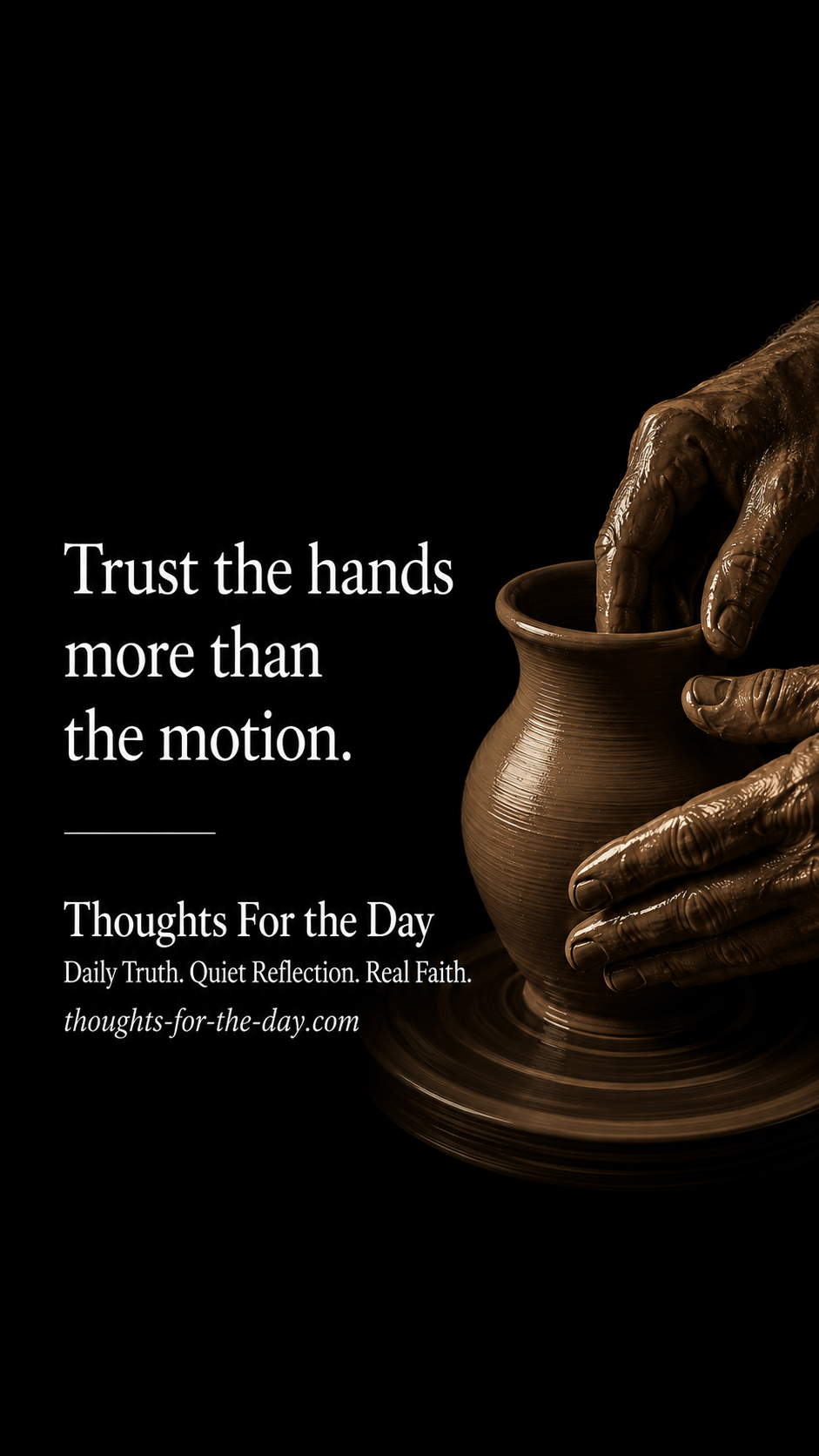
    The Potters Wheel

    Primary Text: Jeremiah 18:1–6

    “Arise, and go down to the potter’s house, and there I will cause thee to hear my words.” — Jeremiah 18:2

    When I was a kid, I had the opportunity to spend time at Philbrook Art Museum in Tulsa participating in art programs that introduced us to Native American crafts and traditions. One of the projects was pottery.

    I wasn’t very good at it.

    My attempts usually looked more like lopsided bowls than useful vessels.

    But while my own efforts left much to be desired, I never forgot watching an experienced potter at work.

    Years later, when I read Jeremiah 18, those memories came rushing back.

    God didn’t send Jeremiah to a palace or a battlefield to teach him one of Scripture’s greatest lessons. He sent him to a workshop.

    “Go to the potter’s house.”

    The lesson wouldn’t come through a sermon.

    It would come through observation.

    Sometimes God teaches us the same way.

    Instead of immediately answering our questions, He simply says, “Watch.”

    Watch how I work.

    Watch what I do.

    Watch the Potter.

    The first thing I remember about the process was how important it was to center the clay.

    Nothing else happened until that was right.

    If the clay wasn’t perfectly centered on the wheel, everything that followed would be uneven. The faster the wheel turned, the more obvious the wobble became. No amount of skill could compensate for clay that wasn’t centered.

    Life works much the same way.

    When life speeds up, whatever sits at the center of our hearts is revealed.

    Responsibilities increase.

    Schedules become full.

    Unexpected trials appear.

    Pressure mounts.

    Those seasons don’t usually create our instability. They expose it.

    Before God shapes our lives, He centers our hearts.

    Jesus said, “Seek first the kingdom of God.”

    The writer of Hebrews tells us to keep our eyes fixed on Jesus.

    Only when Christ occupies the center can everything else begin taking its proper place.

    Then came the pressure.

    Watching the potter’s hands was fascinating.

    To someone unfamiliar with pottery, the process almost looks harsh.

    The hands press firmly.

    They squeeze.

    They pull.

    They stretch.

    Yet every movement has purpose.

    Nothing is random.

    One hand supports the outside while the other shapes from within.

    Remove either hand, and the vessel collapses.

    How often is that exactly how God works in our lives?

    We notice the pressures around us—the disappointments, the delays, the hardships, the uncertainties.

    What we often fail to recognize is the quieter work taking place within us.

    While circumstances shape our character externally, the Holy Spirit is transforming our hearts internally.

    God is working from both sides at once.

    The pressure isn’t punishment.

    It’s preparation.

    I also remember the water.

    Clay without water quickly becomes stiff and brittle.

    Push too hard, and it cracks.

    Add too much water, and it loses its strength altogether.

    The potter constantly adds just enough to keep the clay workable.

    What a beautiful picture of God’s grace.

    He knows exactly when our hearts need softening.

    He comforts us without making us complacent.

    He strengthens us without making us hard.

    His grace is never excessive.

    It is always sufficient.

    Perhaps the greatest lesson, however, is this:

    The clay never shaped itself.

    Its responsibility was not to decide what kind of vessel it wanted to become.

    Its responsibility was simply to remain in the potter’s hands.

    That runs completely contrary to our culture.

    We want control.

    We want to choose the timing.

    We want to determine the outcome.

    We even try to tell God what our lives should become.

    But clay has never instructed the potter.

    It simply yields.

    Jeremiah watched as something unexpected happened.

    The vessel became marred in the potter’s hand.

    The clay resisted.

    The shape was spoiled.

    Yet the potter didn’t throw it away.

    He didn’t become frustrated.

    He didn’t walk away from the wheel.

    Scripture says, “So he made it again another vessel, as seemed good to the potter to make it.”

    Those words have always moved me.

    He made it again.

    Not repaired.

    Not patched.

    Remade.

    That is the story of redemption.

    Every one of us has been marred by sin.

    Every one of us has failed to become what we were created to be.

    Yet our failures do not surprise the Potter.

    He is able to begin again.

    He reshapes what has been broken.

    He restores what has been damaged.

    He creates something beautiful where we expected only disappointment.

    Sometimes people say they feel like life is going in circles.

    Perhaps you’ve felt that way.

    The same struggles.

    The same prayers.

    The same waiting.

    The same unanswered questions.

    May I offer another perspective?

    Perhaps you’re not going in circles.

    Perhaps you’re still on the wheel.

    The wheel keeps turning because the vessel isn’t finished.

    Every rotation places another part of our lives beneath the Potter’s hands.

    Every season brings another opportunity for Him to remove what doesn’t belong and strengthen what does.

    The clay never sees what the Potter sees.

    The clay feels the pressure.

    The Potter sees the finished vessel.

    The clay experiences the spinning.

    The Potter sees the purpose.

    The clay only knows today.

    The Potter already sees what tomorrow will require.

    That is why faith is ultimately trust.

    Not trust in the wheel.

    Not trust in the process.

    Trust in the One whose hands never leave the clay.

    If your life feels uncertain today…

    if the pressure seems greater than you expected…

    if the wheel seems to keep turning without end…

    don’t mistake movement for abandonment.

    The Potter is still at work.

    And the fact that His hands are still shaping you is evidence that He is not finished yet.

  • Doing the Truth

    Doing the Truth

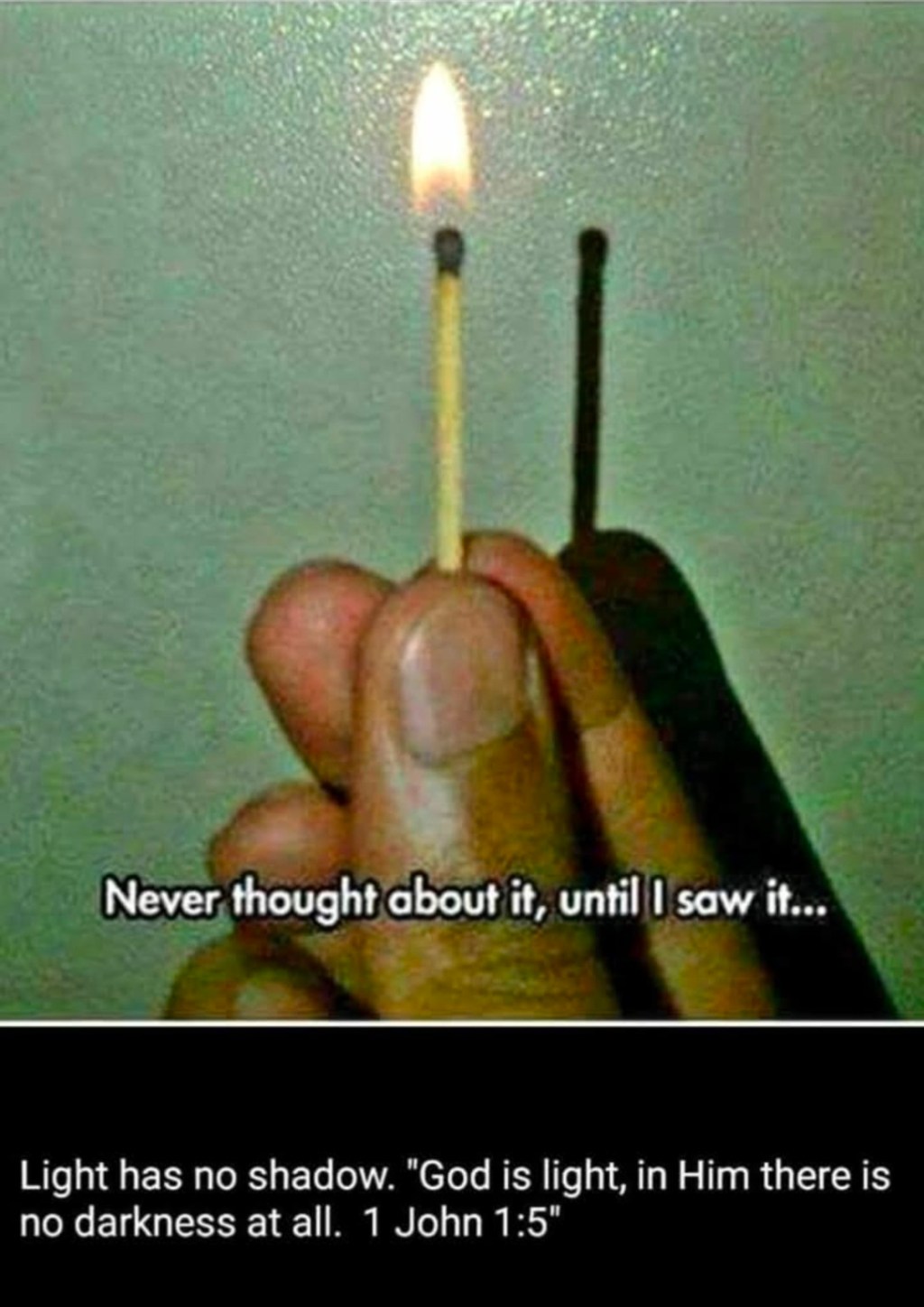
    A Facebook memory from seven years ago appeared in my feed this week. It was a simple image of a burning match with the words:

    “God is light, and in Him is no darkness at all.” (1 John 1:5)

    Years ago, that’s where I stopped reading.

    This week, I kept going.

    The very next verse says,

    “If we say that we have fellowship with Him, and walk in darkness, we lie and do not practice the truth.” (1 John 1:6, NKJV)

    Most English translations read “practice the truth,” but John’s wording is even more vivid. Literally, he says we do not “do the truth.”

    That stopped me.

    For a long time, I thought spiritual maturity was measured by how much I knew.

    I knew the doctrine.

    I knew the Scriptures.

    I knew the answers.

    But knowing the truth had not yet become doing the truth.

    Then I thought about James.

    “You believe that there is one God. You do well. Even the demons believe—and tremble!” (James 2:19)

    James reminds us that belief by itself is not the finish line. Even demons know who God is. They believe the truth about Him.

    What they do not do is submit to Him.

    Truth was never intended merely to fill our minds. It was meant to shape our lives.

    Jesus said,

    “If you know these things, blessed are you if you do them.” (John 13:17)

    Knowledge.

    Belief.

    Obedience.

    That’s the progression.

    The question isn’t simply, “Do I know the truth?”

    Or even, “Do I believe the truth?”

    The question John asks is far more personal:

    Am I doing the truth?

    Because the strongest testimony of what we believe isn’t found in what we say.

    It’s found in how we walk.

  • The Verdict Has Already Been Rendered

    The Verdict Has Already Been Rendered

    One of the enemy’s greatest weapons isn’t temptation.

    It’s accusation.

    He reminds you who you were.

    He reminds you what you did.

    He reminds you of every failure, every regret, every moment you’d rather erase.

    Sometimes he doesn’t even have to speak.

    Our own hearts do it for him.

    We replay old chapters as though they are still being written.

    We introduce ourselves by our failures.

    We define ourselves by battles Christ has already won.

    But God tells a different story.

    When Jesus cried, “It is finished” (John 19:30), He wasn’t announcing that He had merely made forgiveness possible.

    He was declaring that the price had been paid.

    Completely.

    Fully.

    Forever.

    Three days later, the empty tomb became Heaven’s declaration that the sacrifice had been accepted.

    The resurrection wasn’t God changing His mind about Jesus.

    It was God announcing His verdict over everyone who would believe.

    Paul declares that verdict in one of the most powerful verses in all of Scripture:

    “There is therefore now no condemnation to those who are in Christ Jesus…”
    — Romans 8:1 (NKJV)

    Notice what Paul doesn’t say.

    He doesn’t say there is less condemnation.

    He doesn’t say there is future condemnation if God changes His mind.

    He says there is now no condemnation for those who are in Christ.

    That verdict changes more than your eternal destination.

    It changes your identity.

    “Therefore, if anyone is in Christ, he is a new creation; old things have passed away; behold, all things have become new.”
    — 2 Corinthians 5:17 (NKJV)

    God doesn’t simply clean up the old life.

    He creates a new one.

    That’s why Paul says:

    ”…even so we also should walk in newness of life.”
    — Romans 6:4 (NKJV)

    We don’t walk in newness of life to earn God’s acceptance.

    We walk in newness of life because, through Christ, we already have it.

    The church at Corinth understood what it meant to have a past.

    Some had lived in immorality.

    Some in idolatry.

    Some in drunkenness.

    Some in greed.

    Yet Paul reminds them:

    “And such were some of you. But you were washed, but you were sanctified, but you were justified in the name of the Lord Jesus and by the Spirit of our God.”
    — 1 Corinthians 6:11 (NKJV)

    Did you catch that?

    Such were some of you.

    Not, “Such still are you.”

    Were.

    The gospel never asks us to deny where we’ve been.

    It tells us we no longer have to live there.

    Now, does that mean Christians never struggle?

    Of course not.

    The New Testament calls us to daily repentance, continual growth, and lifelong sanctification.

    We still battle the flesh.

    But the flesh is no longer our identity.

    The enemy wants you to keep introducing yourself by your old record.

    God introduces you by His Son.

    The enemy calls you condemned.

    God says, “No condemnation.”

    The enemy calls you broken.

    God says, “A new creation.”

    The enemy calls you your past.

    God says, “Walk in newness of life.”

    The enemy says you’re still who you used to be.

    God says, “Such were some of you.”

    Whose voice are you going to believe?

    Final Word

    The enemy keeps reading from your old record.

    God has already written a new one.

    So don’t stop reading too soon.

    Don’t live like Friday has the final word.

    And don’t keep introducing yourself by a name that Christ has already buried.

    Because the empty tomb didn’t simply prove Jesus conquered death.

    It declared that everyone who is in Christ has received Heaven’s verdict.

    No condemnation.

    A new creation.

    A new life.

    A new name.

    The verdict has already been rendered.

    Now…

    Live like you believe it.

  • Don’t Stop Reading Too Soon

    Don’t Stop Reading Too Soon

    “If you’re going to tell my story… tell it all. Don’t tell me about David and Goliath if you don’t tell me about Bathsheba. Don’t tell me about Peter walking on the water if you don’t tell me about him denying Christ. Don’t tell me about Saul becoming Paul if you don’t tell me about him persecuting the Church.”
    — Rev. Ronald LaCombe

    Those words have stayed with me since I first read them.

    Not because they excuse sin.

    Not because they diminish failure.

    But because they remind us of something we often forget.

    A single chapter is not the whole story.

    Imagine if the Bible had ended at some of its darkest moments.

    Moses standing over the body of an Egyptian.

    Gideon hiding in a winepress, fearful of the Midianites.

    Samson, blind and broken, grinding grain for the Philistines.

    David standing on a rooftop instead of a battlefield.

    Peter warming himself beside the fire as he denied even knowing Jesus.

    Saul of Tarsus breathing threats against the Church.

    Manasseh filling Jerusalem with idolatry and innocent blood.

    If the story stopped there, history would remember each of them very differently.

    But God didn’t stop writing.

    That’s one of the things I love most about Scripture.

    It doesn’t sanitize its heroes.

    If the Bible were merely a collection of inspiring legends, those chapters would have quietly disappeared. Noah’s drunkenness would have been omitted. Abraham’s fear would have been edited out. David’s adultery would have remained unmentioned. Peter’s denial would have been forgotten.

    Instead, God left every one of those stories in the pages of His Word.

    Why?

    Because the Bible has never been a book about flawless people.

    It is a book about a faithful God.

    Moses became the deliverer of Israel.

    Gideon led three hundred men against an army that couldn’t be counted.

    Samson’s greatest victory came after his greatest failure.

    David became known as a man after God’s own heart—not because he never sinned, but because he genuinely repented.

    Peter stood on the Day of Pentecost and boldly preached the very Christ he had once denied.

    Saul became Paul, carrying the gospel farther than he ever carried persecution.

    Even Manasseh—the most wicked king Judah had ever known—humbled himself before God, and God heard his prayer.

    Grace did not erase what they had done.

    Moses still never entered the Promised Land.

    David still endured painful consequences.

    Samson still died in Gaza.

    Peter never forgot that night around the fire.

    God doesn’t rewrite history.

    He redeems it.

    I wonder how many people have already decided your story is finished.

    Perhaps they know about the divorce, but not the healing.

    The addiction, but not the freedom.

    The rebellion, but not the repentance.

    The failure, but not the restoration.

    Maybe you’ve done the same thing to yourself.

    Maybe you’ve convinced yourself that one painful chapter has become the title of your entire life.

    Friend, don’t stop reading too soon.

    The same God who continued writing Moses’ story…

    continued writing David’s.

    Continued writing Peter’s.

    Continued writing Paul’s.

    Continued writing Manasseh’s.

    And if you’ve placed your life in His hands…

    He’s still writing yours.

    The world is quick to place a period where God places a comma.

    People often decide the ending while God is still turning the page.

    So if you’re going to tell my story…

    Tell it all.

    Tell them where I failed.

    Tell them where I fell.

    Tell them where I doubted.

    But don’t stop there.

    Tell them about the God whose mercy proved greater than my worst chapter.

    Because the greatest part of my story was never my failure.

    It was the grace of God that refused to let my failure become the end.

    Final Word

    The enemy wants you to believe your worst moment is your defining moment.

    God declares that, through repentance and His grace, your worst moment can become the place where His mercy shines the brightest.

    So don’t stop reading too soon.

    God isn’t finished writing.

  • He Already Knew

    He Already Knew

    Scripture: 2 Chronicles 33:10–13

    Yesterday while eating lunch in my car, I was listening to a new song by Westward Road called He Knew.

    As I listened, I heard these words:

    “So ashamed of my past…
    Too many failures and flaws…
    Thought I was too far away…
    But that’s what’s amazing ’bout grace…”

    Then came the line that stopped me in my tracks.

    “He knew who He was saving.”

    A few moments later came another.

    “He saw a risk worth taking.”

    I just sat there.

    It wasn’t because of the music.

    It wasn’t because I was analyzing the lyrics.

    It was because, for just a moment, I found myself standing in the shoes of every person who has ever wondered if they’d gone too far.

    Maybe you’ve been there.

    You look back over your life and see failures you’d rather forget.

    Choices you wish you could undo.

    Sins you promised would never happen again.

    And somewhere in the silence, a question begins to whisper:

    If God really knew everything about me… would He still want me?

    Almost immediately, my mind went to Manasseh.

    He wasn’t simply another king who made a few bad decisions.

    He led Judah into idolatry.

    He practiced witchcraft.

    He filled Jerusalem with innocent blood.

    By every human measure, his story looked beyond redemption.

    Yet none of it caught God by surprise.

    Before Manasseh built his first idol…

    God knew.

    Before he led a nation away from the Lord…

    God knew.

    Before he found himself in chains in Babylon…

    God knew.

    And before the desperate prayer finally escaped his lips…

    God knew.

    Everything.

    Yet Scripture tells us that when Manasseh humbled himself before the Lord,

    “He was moved by his entreaty and listened to his plea…” (2 Chronicles 33:13)

    That verse has become one of my favorites.

    Not because it tells me how bad Manasseh was.

    But because it reminds me how good God is.

    God has never discovered anything about you.

    He already knew.

    Everything.

    Your worst failure.

    Your deepest wound.

    The regret you still carry.

    The battle no one else knows about.

    None of it caught Him by surprise.

    And none of it changed His desire to redeem you.

    The cross was never God’s reaction to your sin.

    It was His answer before your sin ever happened.

    Maybe today you’re looking backward with shame.

    God isn’t.

    He has already seen every page of your story.

    Yet He still calls you by His grace.

    He already knew.

    Everything.

    And He loved you anyway.

    That’s what’s amazing about grace.

  • He Already Knew

    He Already Knew

    One of the most comforting—and humbling—truths in all of Scripture is this:

    God has never discovered anything about you.

    He has never learned a new fact.

    He has never been caught off guard by one of your failures.

    He has never looked at your life and said, “I didn’t see that coming.”

    Perhaps no one demonstrates that truth more powerfully than Manasseh.

    Scripture describes him as one of Judah’s most wicked kings. He rebuilt the high places, worshiped idols, practiced witchcraft, consulted mediums, shed innocent blood, and even sacrificed his own sons in the fire (2 Kings 21:1–16).

    By every human standard, Manasseh had gone too far.

    Yet after being taken captive by the Assyrians, everything changed.

    “And when he was in affliction, he besought the LORD his God, and humbled himself greatly before the God of his fathers, And prayed unto him: and he was intreated of him, and heard his supplication…”
    — 2 Chronicles 33:12–13 (KJV)

    The God whose temple Manasseh had defiled…

    The God whose prophets he had ignored…

    The God whose commandments he had despised…

    He still heard his prayer.

    Because God’s mercy is greater than the worst thing you’ve ever done.

    That doesn’t minimize the horror of Manasseh’s sin.

    It magnifies the greatness of God’s grace.

    And Manasseh wasn’t the exception.

    When God renamed Jacob…
    He already knew Jacob was a deceiver.

    When He anointed David…
    He already knew about Bathsheba… and Uriah.

    When Jesus restored Peter…
    He already knew about the courtyard… and the rooster.

    When He commissioned Paul…
    He already knew about Stephen… and the blood that had been shed.

    God knew every failure.
    Every compromise.
    Every moment of weakness.
    Every tear of repentance.

    Yet He still called them.

    That doesn’t mean God ignored their sin.

    David’s adultery mattered.

    Peter’s denial mattered.

    Paul’s persecution of the Church mattered.

    Manasseh’s rebellion mattered.

    Sin always matters.

    But God’s mercy proved greater.

    The Bible doesn’t hide the failures of its heroes because the Bible was never meant to be a book about impressive people.

    It’s a book about a holy God who redeems broken people.

    The enemy wants your past to become your identity.

    God wants your past to become your testimony.

    Your failures may explain where you’ve been, but they don’t have to determine where you’re going.

    If you are willing to humble yourself, repent, and turn toward Him, you’ll discover what Manasseh, David, Peter, and Paul all discovered:

    God already knew… and He loved you anyway.

    “If we confess our sins, he is faithful and just to forgive us our sins, and to cleanse us from all unrighteousness.”
    — 1 John 1:9 (KJV)

    His mercy reaches farther than your past.

  • Sunday Studies: More Than Knowing About God

    Sunday Studies: More Than Knowing About God

    Primary Texts: Philippians 3:7–10; John 5:39; John 10:27; John 17:3


    Introduction

    July 12 is a special day for me.

    Had she lived, my Mums would have celebrated her 106th birthday today. And if you’ve followed me for any length of time, you’ll know that she was my rock.

    When I was six years old, she began a routine with me that would shape the rest of my life.

    She didn’t simply read the Bible stories to me.

    She taught me the value of reading them for myself.

    Every day, before I started my homework or went outside to play, she insisted that I spend five minutes reading my Bible.

    Five minutes became ten.

    Ten became twenty.

    Twenty became thirty.

    Before I knew it, reading God’s Word had become less of a requirement and more of a desire.

    Looking back now, I realize she wasn’t just teaching me to read the Bible.

    She was helping bring it to life.

    I don’t think she could have imagined that little boy would one day teach Sunday School, write daily devotionals, or spend countless hours studying Scripture.

    She was simply planting seeds.

    Today, I realize those seeds are still bearing fruit.

    And perhaps the greatest way I can honor her isn’t simply by remembering her…

    It’s by continuing what she started and building on that legacy.


    Have You Ever Noticed?

    Have you ever picked up a book, read a page or two, and immediately known who wrote it without having to look at the cover?

    Have you ever picked up a book, read a page or two, and immediately known who wrote it without having to look at the cover?

    For me, it’s authors like Max Lucado, C.S. Lewis, and John Grisham.

    Each has a distinct voice.

    A unique rhythm.

    A recognizable way of telling a story.

    The more time you spend reading an author, the more familiar you become with the way they think.

    Eventually…

    You recognize the author before you ever see the cover.

    That made me wonder…

    Isn’t that how Bible study is supposed to work?


    More Than Information

    I think we’ve stumbled onto something that explains why some Bible studies become dry while others become life-giving.

    If my goal is simply to know the Book…
    Eventually I’ll accumulate information.

    But if my goal is to know the Author…

    Every page…
    Every reading…
    Becomes another introduction.

    That’s a lifelong pursuit.

    The purpose of Bible study isn’t merely to know the Bible.
    It’s to know the God who gave it.

    The Bible doesn’t change…

    But we do as we walk with the Author.


    Paul

    If anyone could have claimed to know the Scriptures, it was the Apostle Paul.

    Long before he became a follower of Christ, Saul of Tarsus had devoted his life to studying God’s Word.

    He wasn’t simply religious.

    He was, in his own words, “an Hebrew of the Hebrews… as touching the law, a Pharisee” (Philippians 3:5).

    A Pharisee among the Pharisees.

    Trained under Gamaliel.

    He had spent his entire life studying the Torah and the Prophets.

    He knew the Law.

    He knew the promises.

    He knew the history.

    He knew the Scriptures better than almost anyone alive.

    Yet before the Damascus Road…

    He knew the Word…

    But he did not know the Savior to whom the Word pointed.

    Everything changed that day.

    Not because Paul received a different Bible.

    But because he finally met the Author.

    Years later…

    After churches has been planted.

    After miracles had been witnessed – and experienced.

    After beatings had been endured.

    After several prison sentences.

    After writing much of what would become the New Testament…

    Paul still writes,

    «“That I may know Him…” — Philippians 3:10»

    Notice what he doesn’t say.

    He doesn’t say,

    “That I may know more.”

    He says,

    “That I may know Him.”

    Relationship had become greater than information.


    The Difference

    This may be one of the most important truths I’ve ever learned.

    You can know the Scriptures…
    without knowing the Savior.

    But once you know the Savior…
    you begin reading the Scriptures differently.

    Suddenly…

    Joseph isn’t merely a story about forgiveness.

    He’s a picture of God’s providence.

    David isn’t merely a shepherd who became king.

    He’s another glimpse of God’s faithful heart.

    The Psalms aren’t simply beautiful poetry.

    They’re invitations into a relationship.

    Everything changes because you’ve come to know the Author.


    Jesus Said the Same Thing

    Jesus confronted the religious leaders with these words:

    «”Search the scriptures; for in them ye think ye have eternal life: and they are they which testify of me.”
    — John 5:39»

    They knew the text.

    They missed the Person.

    The tragedy wasn’t that they studied too much.

    The tragedy was that they stopped at the study.


    His Sheep Know His Voice

    Jesus also said,

    «”My sheep hear my voice…”
    — John 10:27»

    I’ve often thought of that as something mysterious.

    Now I think it’s something deeply relational.

    Why do sheep recognize the shepherd’s voice?

    Not because they studied acoustics.

    Because they’ve walked with him.

    They’ve heard him call.

    They’ve learned his character.

    They know him.


    Recognizing the Author

    When you’ve walked with the Author long enough…

    You begin to recognize His heart before you’ve finished reading the story.

    Have you ever noticed that certain composers have a signature style?

    You can hear just a few measures and immediately know who wrote the music.

    Not because every song sounds the same.

    But because the composer’s fingerprints are woven throughout the melody, harmony, rhythm, and cadence.

    I think Scripture is much the same.

    Genesis doesn’t sound like Psalms.

    Psalms doesn’t sound like Isaiah.

    Isaiah doesn’t sound like John.

    John doesn’t sound like Romans.

    Different human authors.

    Different audiences.

    Different centuries.

    Yet the more time you spend with God…

    The more you begin recognizing His fingerprints.

    Mercy.

    Grace.

    Patience.

    Holiness.

    Justice.

    Truth.

    Faithfulness.

    Love.

    Those themes keep appearing throughout Scripture.

    Not because God keeps repeating Himself…

    But because His character is beautifully, consistently recognizable.

    Different movements.

    Same Composer.


    Eternal Life

    Then Jesus says something that has completely changed the way I think about salvation.

    Praying to the Father, He says:

    «“And this is life eternal, that they might know thee the only true God, and Jesus Christ, whom thou hast sent.” ~ John 17:3»

    I’ve read that verse countless times.

    For years, if someone had asked me, “What is eternal life?” I probably would have answered, “Living forever in heaven.”

    Jesus gives a different answer.

    He doesn’t begin with a place.

    He begins with a Person.

    “This is life eternal… that they might know Thee.”

    Not simply know about Him.

    Know Him.

    That one statement changes the entire purpose of Scripture.

    The Bible isn’t merely preparing us for heaven.

    It’s introducing us to the God with whom we’ll spend eternity.

    Every page reveals another glimpse of His heart.

    Every promise reveals another aspect of His faithfulness.

    Every command reveals His holiness.

    Every act of mercy reveals His love.

    Every story reveals His character.

    And every time we open His Word, we’re invited to know Him a little more than we did yesterday.

    That’s why Bible study never becomes obsolete.

    The Bible doesn’t change…

    But we do as we walk with the Author.

    The longer we walk with Him, the more familiar His voice becomes.

    The more recognizable His heart becomes.

    Until one day we find ourselves reading a passage we’ve read dozens of times before…

    And suddenly we see Him in a way we never have before.

    Not because the passage changed.

    Because we did.

    That’s the journey.

    Not merely accumulating information about God…

    But growing in a relationship with Him that will continue for all eternity.


    Closing

    As I think about my Mums today, I realize she gave me a gift far greater than I understood as a little boy.

    She taught me to open the Bible expecting to meet God.

    Not merely to learn facts.

    But to know the One who inspired every page.

    That’s the legacy she left me.

    And it’s the legacy I hope to leave others.

    Because the goal isn’t simply to know the Bible.

    The goal is to know the God who gave it.

    The Bible was never given merely so we could learn God’s works.

    It was given so that, through His works, we would come to know His heart.

    If Lessons From Samuel & the Psalms accomplishes that…

    Then we’ve done far more than study David’s life.

    We’ve introduced people to the Author who has been patiently revealing Himself from Genesis to Revelation all along.

  • Learning To Lean

    Learning To Lean

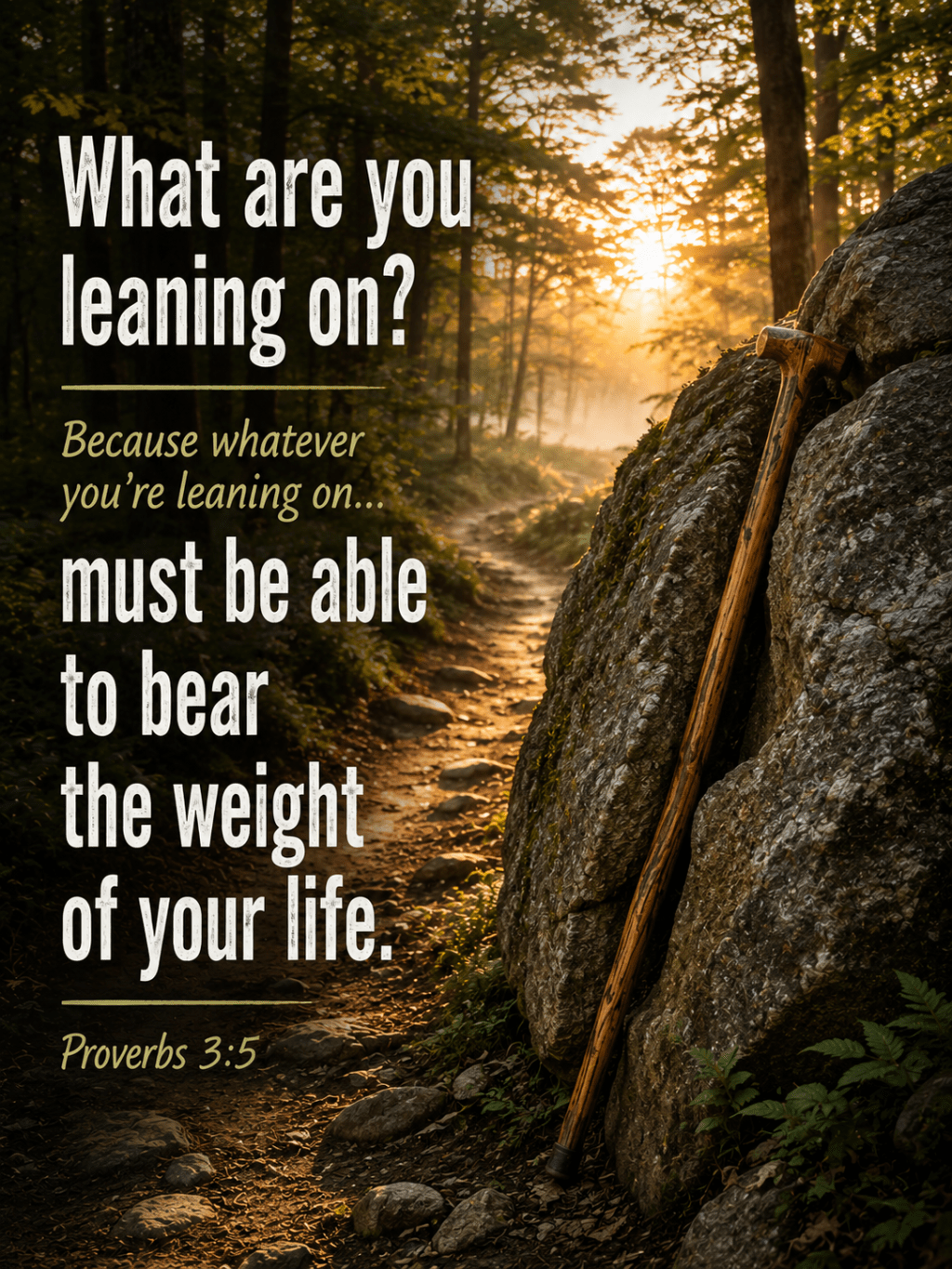
    “Trust in the LORD with all thine heart; and lean not unto thine own understanding.” — Proverbs 3:5

    I woke before sunrise with an old hymn running through my mind.

    Learning to lean…
    Learning to lean…
    I’m learning to lean on Jesus…

    At first, I thought it was simply an encouraging song.

    But as I spent time in Scripture, I realized it was asking me a deeper question.

    What am I leaning on?

    We all lean on something.

    Some lean on their own abilities.
    Some lean on financial security.
    Some lean on relationships, reputation, influence, or strength.
    Some lean on determination, believing that if they just try harder, they can make it through.

    Others lean on things that promise relief but never truly heal—addictions, distractions, habits, or anything else that numbs the weight they are carrying.

    But there is a second question we must ask.

    Why am I leaning on it?

    Because we do not lean on these things for no reason.

    We lean on money because we want security.
    We lean on people because we want acceptance.
    We lean on control because we want peace.
    We lean on success because we want significance.
    We lean on escape because we want relief.

    Every false support is promising something to the soul that only God can truly give.

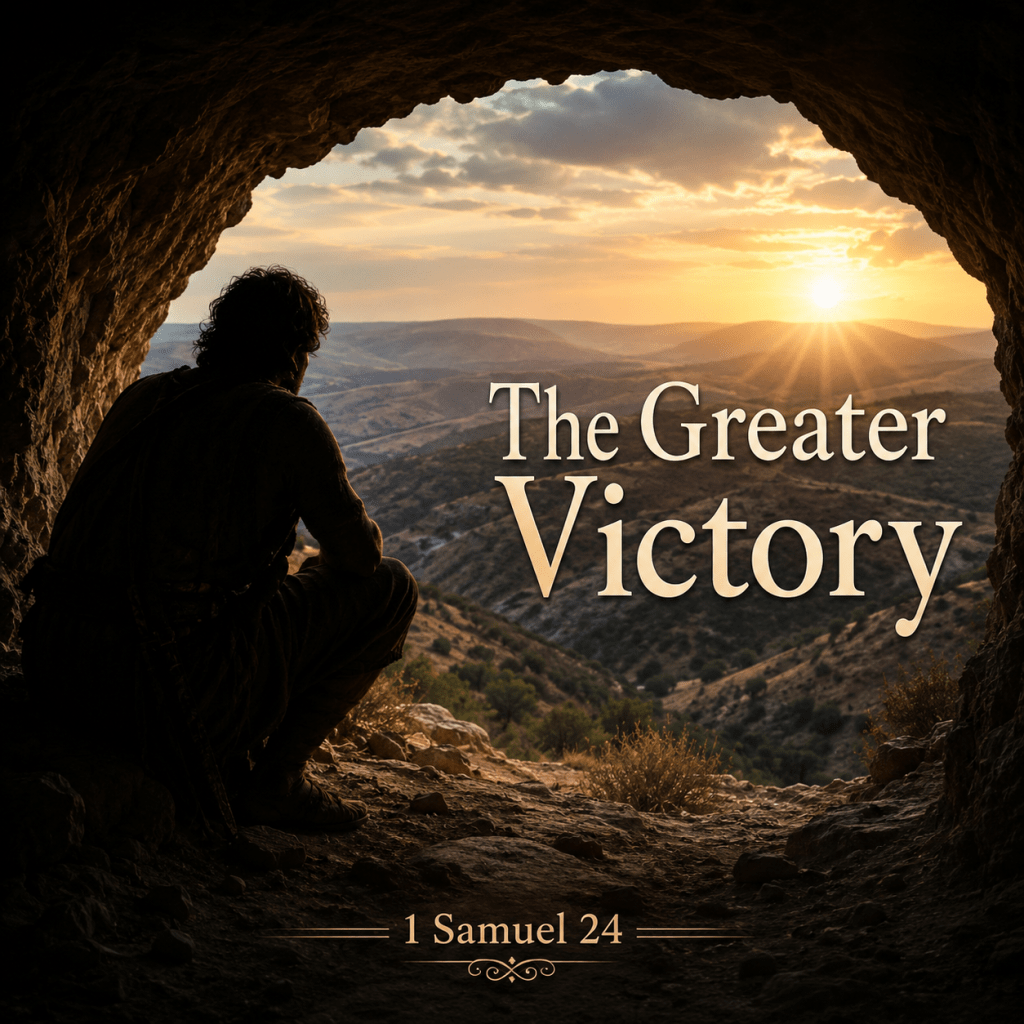
    David faced that very test in a cave.

    King Saul, who had hunted him relentlessly, unknowingly walked in alone. David’s men saw the opportunity of a lifetime. One swing of the sword, and years of fear could be over.

    But David saw something else.

    He saw a promise that did not need his manipulation.

    He refused to take by force what God had promised by grace.

    David did not lean on his sword.
    He leaned on God.

    And because David was leaning on God, he did not need the throne to satisfy his soul.

    That is the difference.

    David still desired what God had promised.
    But he did not need to sin in order to obtain it.

    Perhaps that is why Solomon wrote,

    “Trust in the LORD with all thine heart; and lean not unto thine own understanding.”

    Those are not two separate commands.

    They are one.

    The first half tells us what God is calling us to do.

    The second half tells us how.

    We trust Him by refusing to lean on ourselves.

    Faith is not simply believing that God exists.

    Faith is transferring the weight of our confidence from our own understanding to His wisdom, and from our own strength to His faithfulness.

    And that brings us to the other hymn that came to mind today:

    Only Jesus can satisfy your soul…

    That is the full equation.

    What am I leaning on?

    And…

    What am I expecting it to give me?

    Because whatever we lean on must be able to bear the weight of our lives.

    And whatever we look to for satisfaction must be able to reach the deepest place in our souls.

    Only Christ can do both.

    He alone can carry the weight.
    He alone can satisfy the longing.

    So maybe the question today is not just whether we believe in Jesus.

    Maybe the question is more personal than that.

    Am I leaning on Him?

    And am I trusting Him to be enough?

  • The Greater Victory

    The Greater Victory

    Scripture: 1 Samuel 24:1–12

    When most people think about David’s greatest victory, they immediately think of Goliath.

    It’s understandable.

    A shepherd boy walks onto a battlefield with nothing but a sling and five smooth stones. One giant falls, an army flees, and a nation celebrates.

    It is one of the greatest stories in all of Scripture.

    But I’m no longer convinced that was David’s greatest victory.

    This week has been filled with thoughts about David.

    First, Nathan confronting him.

    Then Psalm 51.

    Then, on the drive home Tuesday, Lisa read me something she had found on Facebook.

    It simply said that David’s greatest victory wasn’t defeating Goliath.

    It was sparing Saul.

    I asked her to read it again.

    Then I asked her to send it to me.

    The more I’ve reflected on it…

    The more I think there is profound truth in that statement.

    Not because Saul deserved mercy.

    But because David had become the kind of man who trusted God enough to show it.

    At first glance, it almost feels like we’re going backward in David’s story.

    After all, the cave came long before Bathsheba.

    Long before Nathan.

    Long before Psalm 51.

    But perhaps that’s exactly why this passage matters.

    Earlier this week we saw what a heart after God’s own heart looks like when it fails.

    Today we see what that same heart looked like before it failed.

    The setting couldn’t have been more dramatic.

    Saul had spent years hunting David.
    David had done nothing to deserve it.

    He had served Saul faithfully.
    He had fought Israel’s enemies.
    He had married Saul’s daughter.

    Yet now he was living as a fugitive.

    Then the opportunity came.

    Saul unknowingly entered the very cave where David and his men were hiding.

    David’s companions could hardly believe it.

    “This is the day the LORD spoke about!”

    To them, this wasn’t merely an opportunity.

    It was providence.

    David could finally take the throne God had already promised him.

    No more running.
    No more hiding.
    No more caves.

    He quietly crept toward Saul.

    Sword in hand.

    Then…

    He stopped.

    Instead of taking Saul’s life, he cut off a corner of Saul’s robe.

    Even then, Scripture says something remarkable.

    “David’s heart smote him…” (1 Samuel 24:5)

    That verse has always fascinated me.

    David wasn’t convicted after killing Saul.

    He was convicted after cutting a piece of cloth.

    Why?

    Because David understood something his men did not.

    The robe represented the office God had established.

    Saul may have failed as king.
    God had already rejected him.
    Samuel had already confronted him.

    But David understood that judgment belonged to God.

    Not to him.

    So David declared:

    “The LORD forbid that I should do this thing unto my master, the LORD’S anointed…”

    Those words have often been misunderstood.

    Some have used them to suggest that spiritual leaders should never be questioned or held accountable.

    But that’s not what David was saying.

    Saul had already been confronted.
    He had already been rebuked.
    He had already been judged by God.

    David simply refused to seize for himself what only God had the right to give.

    He would wait.
    Even when waiting hurt.
    Even when the opportunity seemed perfect.
    Even when everyone around him insisted this must be God’s will.

    God’s promises will never require us to abandon His principles.

    All too often we see an opportunity and immediately assume God has opened the door.

    But when we dig beneath the surface, we sometimes discover that walking through that door would require us to compromise the very principles God has already made clear in His Word.

    David refused to do that.

    He understood that God’s promise of the throne did not give him permission to violate God’s character in order to obtain it.

    Sometimes the greatest act of faith is walking away from something you have every human reason to take, because you trust that God’s way is always better than your own shortcut.

    As I’ve reflected on David’s life these past several weeks, one thought continues to surface.

    God wasn’t merely preparing David to wear a crown.
    He was preparing him to carry one.

    Anyone can display courage when facing a giant.

    It takes a very different kind of strength to lay down your sword when facing an enemy.

    Goliath tested David’s courage.
    Saul tested David’s character.

    One victory won Israel’s applause.
    The other revealed the heart God had been forming all along.

    Final Word

    David eventually became king.

    Not because he took the throne when he had the chance…

    But because he trusted God enough to wait until God placed him there.

    There are moments in life when we could force the outcome.

    We defend ourselves.

    We get even.

    We take what we believe is rightfully ours.

    The cave reminds us that the greatest victories are not always the ones everyone celebrates.

    Sometimes the greatest victory is trusting God enough to leave justice in His hands.

    Because a heart after God’s own heart doesn’t simply ask,

    “What can I do?”

    It first asks,

    “What would honor God?”

    And perhaps that’s one of the clearest marks of spiritual maturity.

    Not that we seize every opportunity placed before us…

    But that we trust God enough to refuse the ones that require us to abandon His principles.

  • Create In Me A Clean Heart

    Create In Me A Clean Heart

    Scripture: Psalm 51

    Yesterday we looked at one of the most uncomfortable moments in all of Scripture.

    Nathan stood before King David and uttered four unforgettable words:

    “Thou art the man.”

    David’s response was immediate.

    “I have sinned against the LORD.” (2 Samuel 12:13)

    For most of us, that’s where the story ends.

    But Scripture doesn’t leave us standing in the throne room with Nathan.

    It invites us into David’s prayer closet.

    Psalm 51 is that prayer.

    If 2 Samuel 12 records David’s confession…

    Psalm 51 reveals David’s heart.

    I’ve read Psalm 51 countless times over the years, and it has long been one of my favorite chapters in the Bible.

    But through the years I’ve discovered something.

    There are certain passages of Scripture that become more meaningful the longer you live.

    When I was younger, I admired David’s poetry.

    Today…

    I understand his tears.

    David doesn’t spend this Psalm trying to explain himself.

    He doesn’t minimize his sin.

    He doesn’t compare himself to someone worse.

    He doesn’t bargain with God.

    No… he simply throws himself entirely upon the mercy of God.

    The opening words set the tone for everything that follows.

    “Have mercy upon me, O God, according to thy lovingkindness…”

    David doesn’t appeal to his past victories.

    He doesn’t remind God that he killed Goliath.

    He doesn’t mention the years he faithfully served as king.

    He simply pleads for mercy.

    That is where genuine repentance always begins.

    The more I read this Psalm, the more one truth stands out.

    David never asks God to change his circumstances.

    Instead…

    He asks God to change him.

    That may be the clearest evidence that his repentance was genuine.

    “Wash me thoroughly from mine iniquity…”

    “Cleanse me from my sin.”

    “Purge me with hyssop…”

    “Create in me a clean heart…”

    “Renew a right spirit within me.”

    Notice the pattern.

    Wash me.

    Cleanse me.

    Purge me.

    Create in me.

    Renew me.

    Restore me.

    Those aren’t the prayers of a man trying to escape consequences.

    They’re the prayers of a man who longs to be different.

    David understood something that we sometimes forget.

    Forgiveness isn’t merely about removing guilt.

    It’s about restoring fellowship with God.

    In this chapter, there is one verse that has always stopped me in my tracks.

    “Cast me not away from thy presence; and take not thy holy spirit from me.” (Psalm 51:11)

    David had already lost peace.

    He had already lost joy.

    His family would experience heartbreaking consequences because of his choices.

    But above everything else…

    He feared losing the presence of God.

    That tells me David finally understood what mattered most.

    One word in particular has fascinated me for years.

    “Create in me a clean heart, O God…”

    David didn’t ask God to repair his heart.

    He didn’t ask Him to polish it.

    Or improve it.

    The Hebrew word translated “create” is the same word used in Genesis 1.

    It describes something only God can do.

    David wasn’t asking for self-improvement.

    He was asking for a new creation.

    Isn’t that the hope of the Gospel?

    God doesn’t simply make bad people a little better.

    He makes dead things live again.

    He gives new hearts.

    New spirits.

    New beginnings.

    As I’ve reflected on my own life over the past sixteen years, these words have taken on a depth they never had before.

    Not because I’ve learned more Hebrew.

    Not because I’ve become a better Bible student.

    But because I’ve experienced the painful reality of living with the consequences of my own failures.

    I’ve learned that repentance isn’t just feeling sorry for what I’ve done.

    It’s longing to become someone different through the grace of God.

    That’s why Psalm 51 continues to speak to me.

    David never asked God to erase the past.

    He asked Him to transform the man who would live tomorrow.

    There is a profound difference.

    Repentance isn’t trying to convince God we’re better than we are.

    It’s agreeing with God about who we really are…

    and trusting Him to make us new.

    That is the beauty of grace.

    Not that God overlooks our sin.

    But that He cleanses the sinner who comes to Him with a broken and contrite heart.

    Final Word

    David wasn’t remembered because he was the king who never failed.

    He was remembered because he was the king who knew where to go when he did.

    Every one of us will fail.

    Every one of us will need mercy.

    The question isn’t whether we’ll ever have our own Psalm 51 moment.

    The question is whether we’ll come to God with excuses…

    or with surrender.

    May our prayer never become,

    “Lord, protect my reputation.”

    May it always be,

    “Create in me a clean heart, O God; and renew a right spirit within me.”

    Because God specializes in doing what only He can do.

    He doesn’t merely forgive repentant hearts.

    He creates new ones.