“If you’re going to tell my story… tell it all. Don’t tell me about David and Goliath if you don’t tell me about Bathsheba. Don’t tell me about Peter walking on the water if you don’t tell me about him denying Christ. Don’t tell me about Saul becoming Paul if you don’t tell me about him persecuting the Church.”
— Rev. Ronald LaCombe
Those words have stayed with me since I first read them.
Not because they excuse sin.
Not because they diminish failure.
But because they remind us of something we often forget.
A single chapter is not the whole story.
Imagine if the Bible had ended at some of its darkest moments.
Moses standing over the body of an Egyptian.
Gideon hiding in a winepress, fearful of the Midianites.
Samson, blind and broken, grinding grain for the Philistines.
David standing on a rooftop instead of a battlefield.
Peter warming himself beside the fire as he denied even knowing Jesus.
Saul of Tarsus breathing threats against the Church.
Manasseh filling Jerusalem with idolatry and innocent blood.
If the story stopped there, history would remember each of them very differently.
But God didn’t stop writing.
That’s one of the things I love most about Scripture.
It doesn’t sanitize its heroes.
If the Bible were merely a collection of inspiring legends, those chapters would have quietly disappeared. Noah’s drunkenness would have been omitted. Abraham’s fear would have been edited out. David’s adultery would have remained unmentioned. Peter’s denial would have been forgotten.
Instead, God left every one of those stories in the pages of His Word.
Why?
Because the Bible has never been a book about flawless people.
It is a book about a faithful God.
Moses became the deliverer of Israel.
Gideon led three hundred men against an army that couldn’t be counted.
Samson’s greatest victory came after his greatest failure.
David became known as a man after God’s own heart—not because he never sinned, but because he genuinely repented.
Peter stood on the Day of Pentecost and boldly preached the very Christ he had once denied.
Saul became Paul, carrying the gospel farther than he ever carried persecution.
Even Manasseh—the most wicked king Judah had ever known—humbled himself before God, and God heard his prayer.
Grace did not erase what they had done.
Moses still never entered the Promised Land.
David still endured painful consequences.
Samson still died in Gaza.
Peter never forgot that night around the fire.
God doesn’t rewrite history.
He redeems it.
I wonder how many people have already decided your story is finished.
Perhaps they know about the divorce, but not the healing.
The addiction, but not the freedom.
The rebellion, but not the repentance.
The failure, but not the restoration.
Maybe you’ve done the same thing to yourself.
Maybe you’ve convinced yourself that one painful chapter has become the title of your entire life.
Friend, don’t stop reading too soon.
The same God who continued writing Moses’ story…
continued writing David’s.
Continued writing Peter’s.
Continued writing Paul’s.
Continued writing Manasseh’s.
And if you’ve placed your life in His hands…
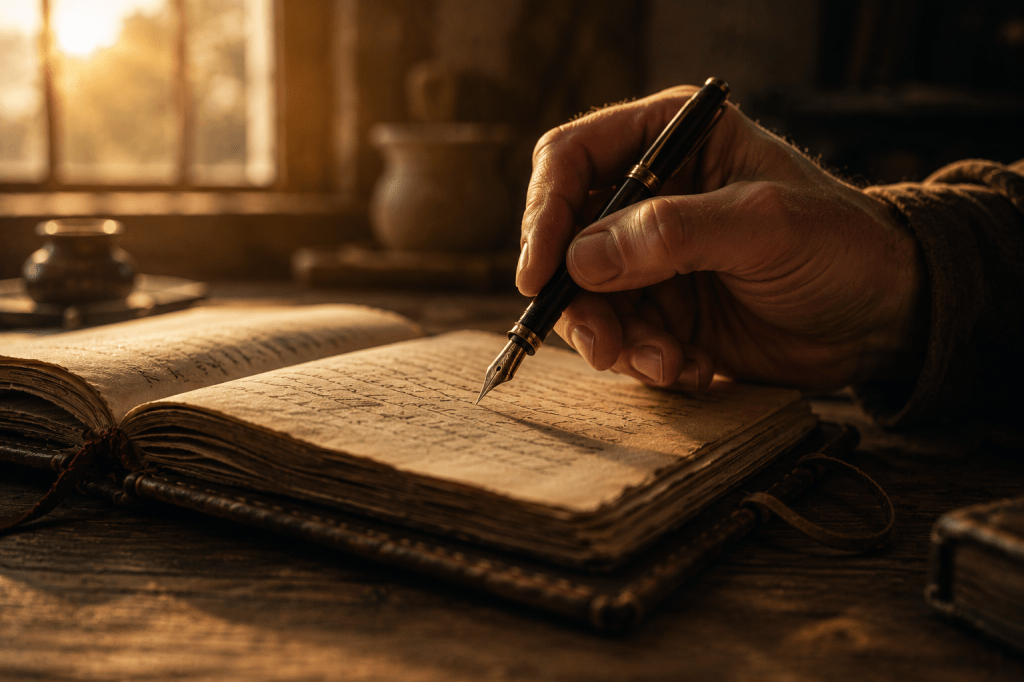
He’s still writing yours.
The world is quick to place a period where God places a comma.
People often decide the ending while God is still turning the page.
So if you’re going to tell my story…
Tell it all.
Tell them where I failed.
Tell them where I fell.
Tell them where I doubted.
But don’t stop there.
Tell them about the God whose mercy proved greater than my worst chapter.
Because the greatest part of my story was never my failure.
It was the grace of God that refused to let my failure become the end.
⸻
Final Word
The enemy wants you to believe your worst moment is your defining moment.
God declares that, through repentance and His grace, your worst moment can become the place where His mercy shines the brightest.
So don’t stop reading too soon.
God isn’t finished writing.


Leave a Reply