Tag: Daily Truth

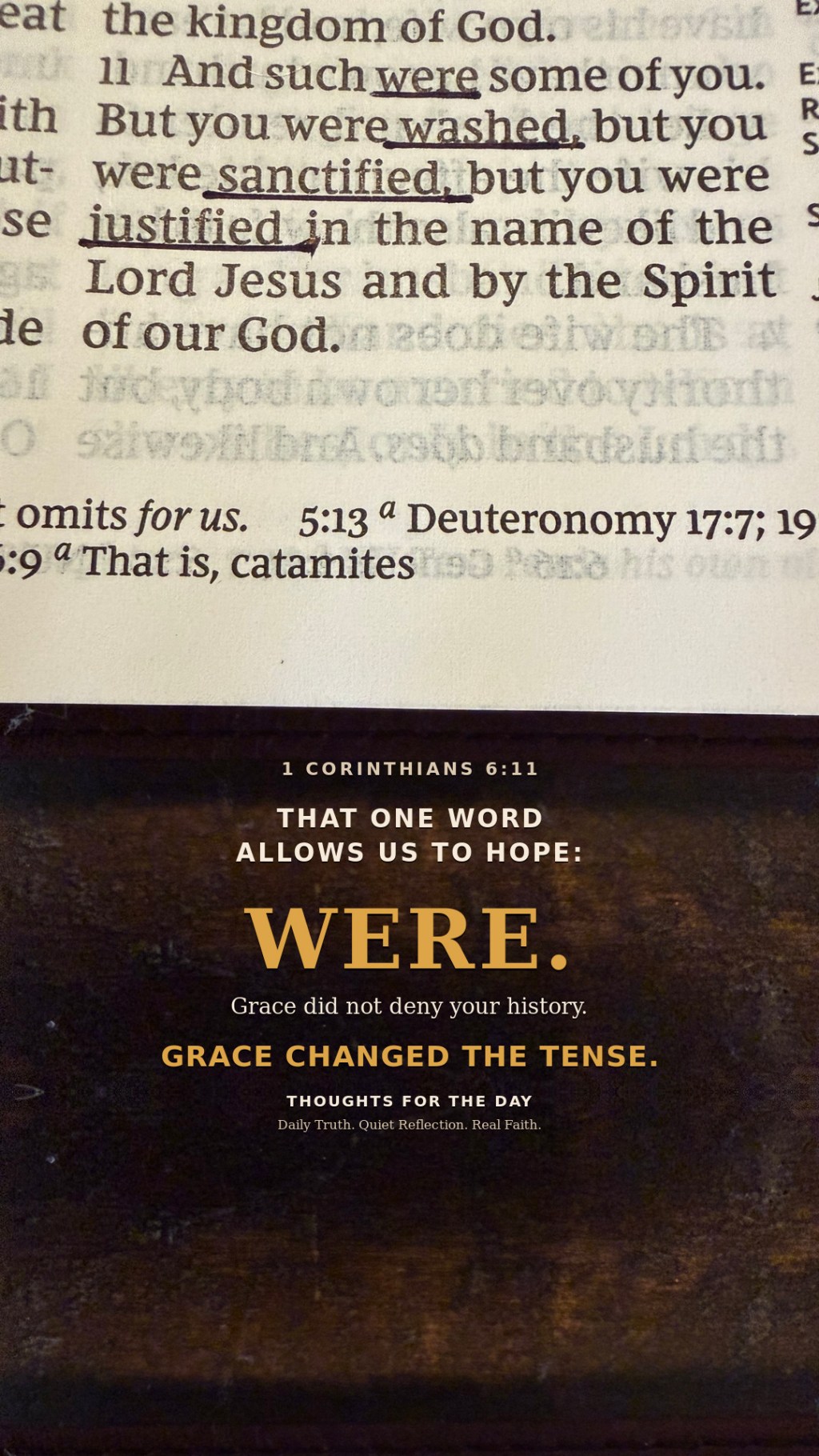
  • Grace Changed the Tense

    Grace Changed the Tense

    “And such were some of you. But you were washed, but you were sanctified, but you were justified in the name of the Lord Jesus and by the Spirit of our God.”
    —1 Corinthians 6:11, NKJV

    We all have a history.

    For some, that history is relatively quiet. For others, it is dark, painful, and overpowering. It follows them into every new season and casts a shadow over everything they might still become.

    The past begins speaking:

    This is what you did.
    This is who you are.
    This is what you will always be.

    Eventually, something that happened—or something we did—stops feeling like one chapter of our story. It becomes the title we place over the entire book.

    I know the weight of that kind of history because I have lived beneath it.

    I know what it is to look back at choices I made, people I hurt, and consequences I could not undo—and believe that my past had already determined my future.

    For a long time, I did not merely remember what I had done. I allowed it to pronounce a sentence over who I was, what I could become, and whether God could ever use me again.

    I am not writing about hopelessness as a theory.

    I have felt it.

    I know what it is to believe that the darkest chapter of your life has become the title of your entire story.

    Then I read Paul’s words to the church at Corinth.

    In the preceding verses, Paul gives an uncomfortable list of sins and destructive ways of life. He writes about sexual immorality, idolatry, adultery, theft, greed, drunkenness, reviling, and extortion.

    He does not minimize their past.

    He does not soften sin by calling it a mistake, a personality trait, or an unfortunate stage of life.

    He tells the truth.

    Then he writes one word that makes hope possible:

    Were.

    And such were some of you.”

    Not are.

    Not will always be.

    Not are, but now attend church.

    Were.

    That one word does not erase the sentence that came before it. It places the sentence where it belongs—in the past.

    Paul was not writing about hypothetical people. He was writing to a church where people could hear that list and say:

    That was me.
    That was my life.
    That was what controlled me.

    But that is not where Jesus left me.

    The word were means the darkest truth about yesterday does not have to remain the defining truth about today.

    It means history is real—but it is not destiny.

    It means the chapter happened—but the story did not have to end there.

    It means no matter how long someone has lived under the power of sin, Jesus can move that identity from the present tense into the past.

    But Paul does not stop with were. He follows it with three powerful interruptions:

    But you were washed.

    What had stained them had been cleansed.

    But you were sanctified.

    They had been set apart for God and given a new belonging.

    But you were justified.

    The charges against them no longer determined their standing before God.

    They did not change their tense through willpower, respectability, or religious performance. God intervened:

    “…in the name of the Lord Jesus and by the Spirit of our God.”

    Grace did not pretend that their former lives were harmless.

    Grace changed what possessed the authority to define them.

    That is what gave me hope.

    God did not tell me that my past did not matter. He showed me that it did not have to remain my identity.

    I could not go backward and undo my history. I could not erase every consequence, retrieve every lost opportunity, or remove every scar.

    But Jesus could do something I could never do.

    He could change the tense of my story.

    Perhaps your history has convinced you that there is no future beyond what you have done. Maybe shame continues speaking about your past in the present tense.

    But if Paul could look across a church filled with people carrying histories like these and say, “Such were some of you,” then no one has traveled so far into darkness that Jesus cannot redeem their story.

    “Were” is not permission to return to the old life.

    It is the declaration that you are no longer required to remain there.

    You can tell the truth about your past without allowing it to predict your future.

    You were bound—but you were washed.

    You were lost—but you were sanctified.

    You were guilty—but you were justified.

    Grace did not deny your history.

    Grace changed the tense.

  • Sometimes You Hear Best In the Dark

    Sometimes You Hear Best In the Dark

    One evening in Puerto Rico, Lisa came in from sitting on the balcony with Ashlee.

    We were eight floors above the ocean, with a beautiful oceanfront view. During the day, you could see the water stretching toward the horizon.

    But at night, much of that view disappeared.

    Even with moonlight, there were still shadows. Dark places. Areas where the eye simply could not make out what was there.

    Lisa said something that stayed with me.

    “Sometimes you hear best when you’re in the dark.”

    She had been sitting outside listening.

    The wind.

    The surf.

    The insects.

    Even the sound of Ashlee breathing beside her.

    None of those sounds suddenly appeared because the sun went down.

    They had been there all along.

    The darkness simply made her more aware of them.

    Her words immediately took me back many years.

    As a young man, I went on a lot of late-night horseback rides. Sometimes the moon was bright enough to give me a general idea of where I was going, but there were always shadows where my eyes could not clearly make out the trail.

    There were times when I trusted the horse’s instincts more than my own eyesight.

    And something else happened in the darkness.

    I listened differently.

    I could hear twigs snapping.

    Leaves rustling as small animals moved through them.

    Sounds that might have gone unnoticed in daylight suddenly got my attention.

    The darkness did not mean I was on the wrong trail.

    It simply meant I could not see as much of it.

    I think we sometimes confuse those two things spiritually.

    There are seasons when we cannot see where God is leading us.

    We cannot see what He is doing.

    We cannot see how the situation is going to work out.

    And because we cannot see the road ahead, we begin to wonder whether we somehow missed God altogether.

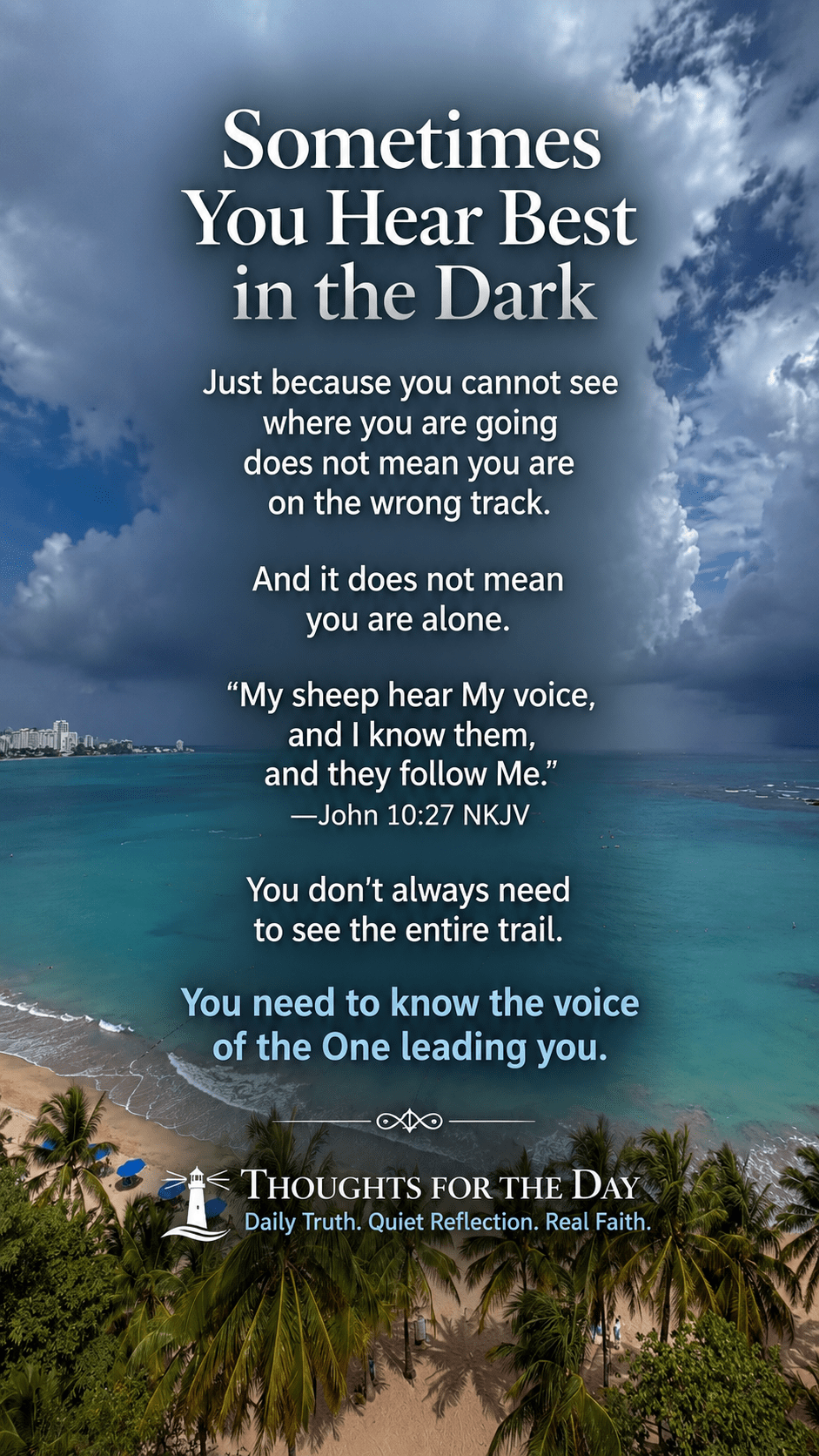
    But just because you cannot see where you are going does not mean you are on the wrong track.

    And it does not mean you are alone.

    Jesus said:

    “My sheep hear My voice, and I know them, and they follow Me.” ~ John 10:27, NKJV ~

    Notice what Jesus did not say.

    He did not say His sheep would always see the entire path.

    He said they would hear His voice.

    There is a difference.

    Sometimes we spend so much energy asking God to show us the road that we forget to listen for the One who is leading us down it.

    “Lord, show me what happens next.”

    “Show me how this is going to work.”

    “Show me where this is going.”

    “Show me what You are doing.”

    And sometimes the answer does not come as more light.

    Sometimes the answer comes as a voice in the darkness saying,

    “Follow Me.”

    David wrote:

    “Indeed, the darkness shall not hide from You,
    But the night shines as the day;
    The darkness and the light are both alike to You.”
    ~ Psalm 139:12 ~

    The darkness that limits my vision does not limit His.

    My darkness is not God’s darkness.

    I may not know what lies around the next bend.

    He does.

    I may not be able to see ten steps ahead.

    He can see the entire journey.

    Faith is not pretending the darkness is not real.

    Faith is not claiming we know where everything is going.

    Sometimes faith is simply saying:

    “I cannot see the trail very clearly right now, but I know the voice of the One I am following.”

    Maybe you have been asking God to turn the lights back on.

    Maybe you have been asking Him to show you the whole road.

    But perhaps this season is teaching you something else.

    To listen.

    To recognize His voice.

    To trust His leading.

    Because you do not always need to see the entire trail.

    You need to know the voice of the One leading you.

    And sometimes…

    you hear the Master best in the dark.

  • Set Me Afire

    Set Me Afire

    Six years ago, while managing the TH Rogers Lumber Company store in Hartshorne, Oklahoma, I was helping a customer with a propane torch.

    During our conversation, he looked at me and said:

    “Light me up!”

    Immediately, an old song came to mind:

    Lord, set me afire,
    Make me a flame for Thee.

    And because I apparently possessed neither restraint nor concern for what the customer might think, I began singing it—out loud—right there in the store.

    It was funny then, and it is still funny now.

    But when that memory resurfaced on Facebook, I began to recognize something deeper within it.

    Jeremiah once reached a place where he no longer wanted to speak for God. His message had brought him ridicule, rejection, and pain. He decided he would remain silent.

    But he couldn’t.

    “Then I said, ‘I will not make mention of Him,
    Nor speak anymore in His name.’
    But His word was in my heart like a burning fire
    Shut up in my bones;
    I was weary of holding it back,
    And I could not.”

    —Jeremiah 20:9

    The fire within Jeremiah would not allow him to remain silent.

    Jesus later told His disciples:

    “You are the light of the world. A city that is set on a hill cannot be hidden.”
    —Matthew 5:14

    The fire is inward.

    The light is outward.

    God places His Word within us. His Spirit supplies the power. Our lives become the lamps through which His truth, love, mercy, and grace are made visible to the world around us.

    But that is where many of us encounter a problem.

    We sing about wanting the fire.

    We pray for revival.

    We claim to be the light of the world.

    But when an opportunity comes to speak—when someone is hurting, searching, struggling, or standing directly in front of us—we suddenly become concerned about what others might think.

    I know because I have lived it.

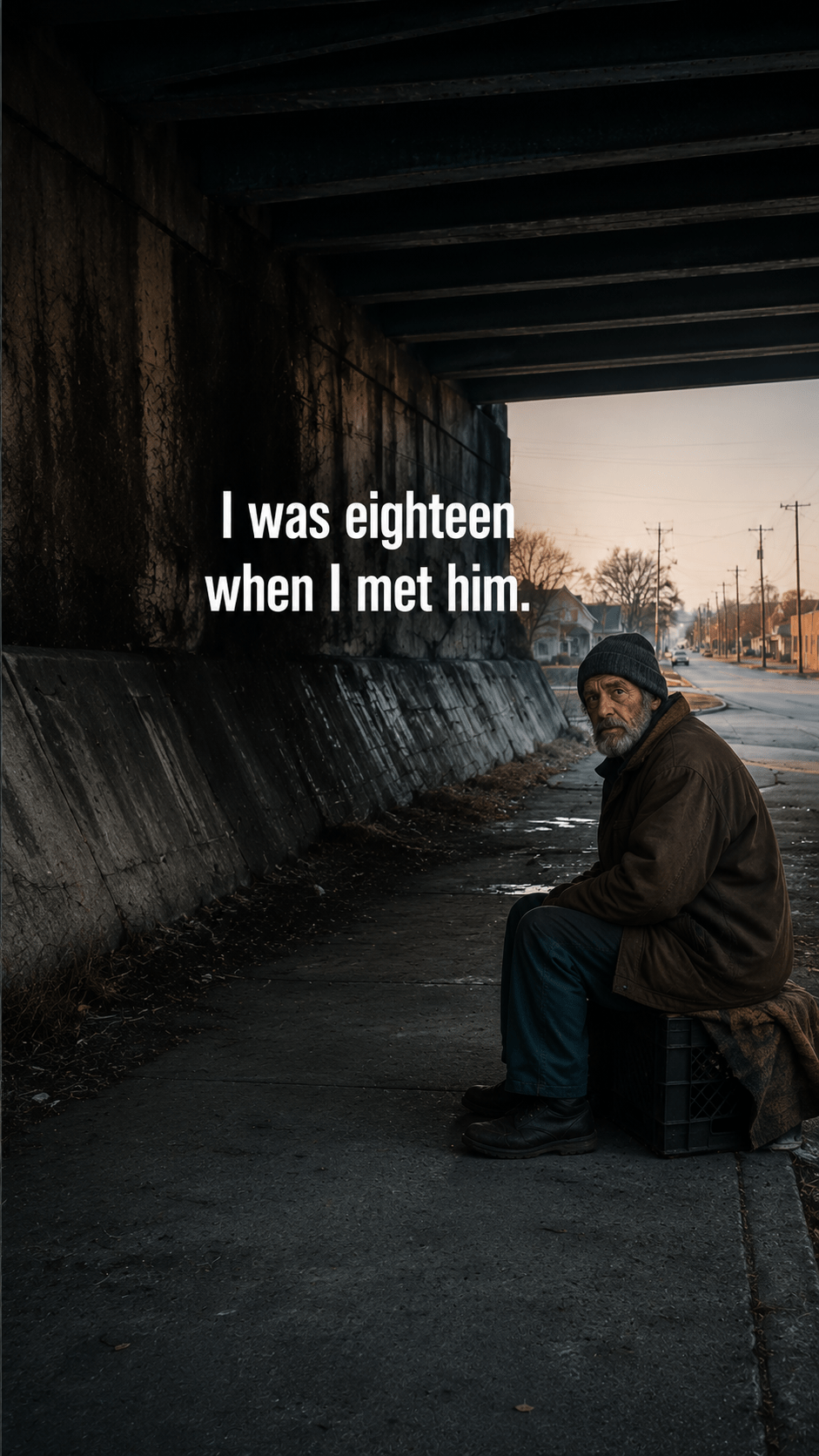
    When I was eighteen years old, I attended a powerful Sunday night church service followed by a youth prayer meeting. The following morning, I encountered a homeless man beneath the railroad overpass near North Peoria Avenue and East Archer Street in Tulsa.

    He asked whether I had a couple of dollars. After I gave him what I had, we began talking.

    He may have been about the same age then that I am now. He told me that he had once been a worship leader and preacher at a large Assembly of God church in Tulsa.

    Then he told me what had happened.

    He had an affair.

    His wife left him.

    His children deserted him.

    He began drinking heavily.

    He lost his ministry position.

    He lost his job.

    He lost his home.

    For more than an hour, we stood beneath that overpass while he told me his story.

    And throughout our conversation, I kept feeling something in my spirit:

    “Ask him to pray.”

    But I didn’t…

    We were standing in public.
    On a sidewalk.
    In the neighborhood where many of my friends lived.

    What if they saw me?

    What would they think?

    What would they say?

    So I said nothing.

    Three days later, I learned that he had stepped off a curb in front of a city bus and had been killed.

    For more than forty years, I have lived with the what-ifs of that Monday morning.

    What if I had asked him to pray?

    What if we had knelt together beneath that railroad overpass?

    What if someone had seen us?

    And what if it had made a difference?

    I cannot tell you what would have happened if I had prayed with him. I was eighteen years old, and I was not his savior. I cannot assume responsibility for everything that happened after we parted ways.

    But I do know that I felt prompted to pray.

    I also know that fear of what other people might think kept me from obeying.

    And three days later, the opportunity was gone forever.

    I had carried the light into that man’s darkness, but I allowed fear to place a basket over the lamp.

    That is why this message is not being written from a place of superiority or condemnation. I am not standing above anyone and saying, “You should be more courageous.”

    I am speaking as someone who knows the lasting regret of recognizing an opportunity, feeling the Spirit’s prompting, and walking away without doing what I believed God was asking me to do.

    Boldness does not mean being loud, argumentative, or obnoxious. It does not mean forcing a sermon into every conversation or pretending to possess every answer.

    Sometimes boldness is simply saying:

    “Can I pray for you?”

    “God helped me through something similar.”

    “There is a Scripture that carried me when I was hurting.”

    “Would you like to come to church with me?”

    “Let me tell you what Jesus has done in my life.”

    Those words may feel small to us, but one exposed flame can light another wick.

    Every believer carries light into places a preacher may never enter.

    The recovering addict can reach another addict.

    The former inmate can speak to someone who believes his past has permanently disqualified him.

    The construction worker can carry Christ onto the jobsite.

    The police officer encounters people during some of the most frightening and vulnerable moments of their lives.

    The inside salesman speaks with customers, representatives, and coworkers scattered across places he may never physically visit.

    The nurse enters rooms where pain has stripped away appearances and people are suddenly willing to discuss what truly matters.

    The gas station attendant may regularly encounter someone everyone else overlooks.

    The corporate trainer reaches people across departments, cities, and walks of life.

    The housewife influences her family, her neighbors, other parents, and generations still being formed within her home.

    The teacher stands before young lives still deciding what they believe, what they value, and who they will become.

    These are not interruptions to ministry.

    They are ministry.

    We each have a circle of influence that belongs uniquely to us. We have relationships others do not have, access others may never receive, and credibility born from experiences others have never lived.

    I cannot occupy your relationships.

    I have not earned the trust you have earned.

    I do not know all the people who cross your path each day.

    You do not have to reach everyone. But there are people whom you may be uniquely positioned to reach.

    God has not placed every lamp in the same room.

    Over the past several days, I have shared some of the things God showed me while traveling through Puerto Rico and returning home.

    The journey began with rest:

    “Come ye yourselves apart into a desert place, and rest a while.”
    —Mark 6:31

    There were lessons in the dawn at thirty thousand feet, an unfinished building, burdened streets, a scarred beach, an ancient fortress, storm clouds over the ocean, and a darkened airplane cabin where I could not see the way home.

    But every journey eventually ends.

    We come home.

    We return to our families, our jobs, our responsibilities, and the ordinary conversations that fill our days.

    Eventually, we find ourselves back on the sidewalk, standing beside someone whose darkness may be deeper than we realize.

    The question is not merely whether the journey refreshed us.

    The question is what we brought home.

    God does not call us apart so that we can permanently withdraw from the world. He gives us rest because there is still work to do. He renews our strength because there are still burdens to carry. He speaks to us in quiet places because there are still people who need to hear what He has placed within us.

    We come apart to be renewed.

    We return to shine.

    The vacation ends.

    The calling does not.

    So perhaps we should ask ourselves:

    If God has placed His fire within me, who was it meant to give light to?

    Who is receiving light because of the fire I claim to possess?

    Where have fear, embarrassment, comfort, or self-consciousness caused me to place a basket over the lamp?

    And when the Spirit prompts me again, will I obey—or will I first look around to see who might be watching?

    We have rested.

    We have listened.

    We have seen.

    Now it is time to return to the places God has positioned us, remove the basket, and let the light shine.

    Lord, set us afire.

    Not merely so that we may feel the flame—

    but so that someone standing in darkness may finally see the Light.

  • The Potters Wheel

    The Potters Wheel

    Primary Text: Jeremiah 18:1–6

    “Arise, and go down to the potter’s house, and there I will cause thee to hear my words.” — Jeremiah 18:2

    When I was a kid, I had the opportunity to spend time at Philbrook Art Museum in Tulsa participating in art programs that introduced us to Native American crafts and traditions. One of the projects was pottery.

    I wasn’t very good at it.

    My attempts usually looked more like lopsided bowls than useful vessels.

    But while my own efforts left much to be desired, I never forgot watching an experienced potter at work.

    Years later, when I read Jeremiah 18, those memories came rushing back.

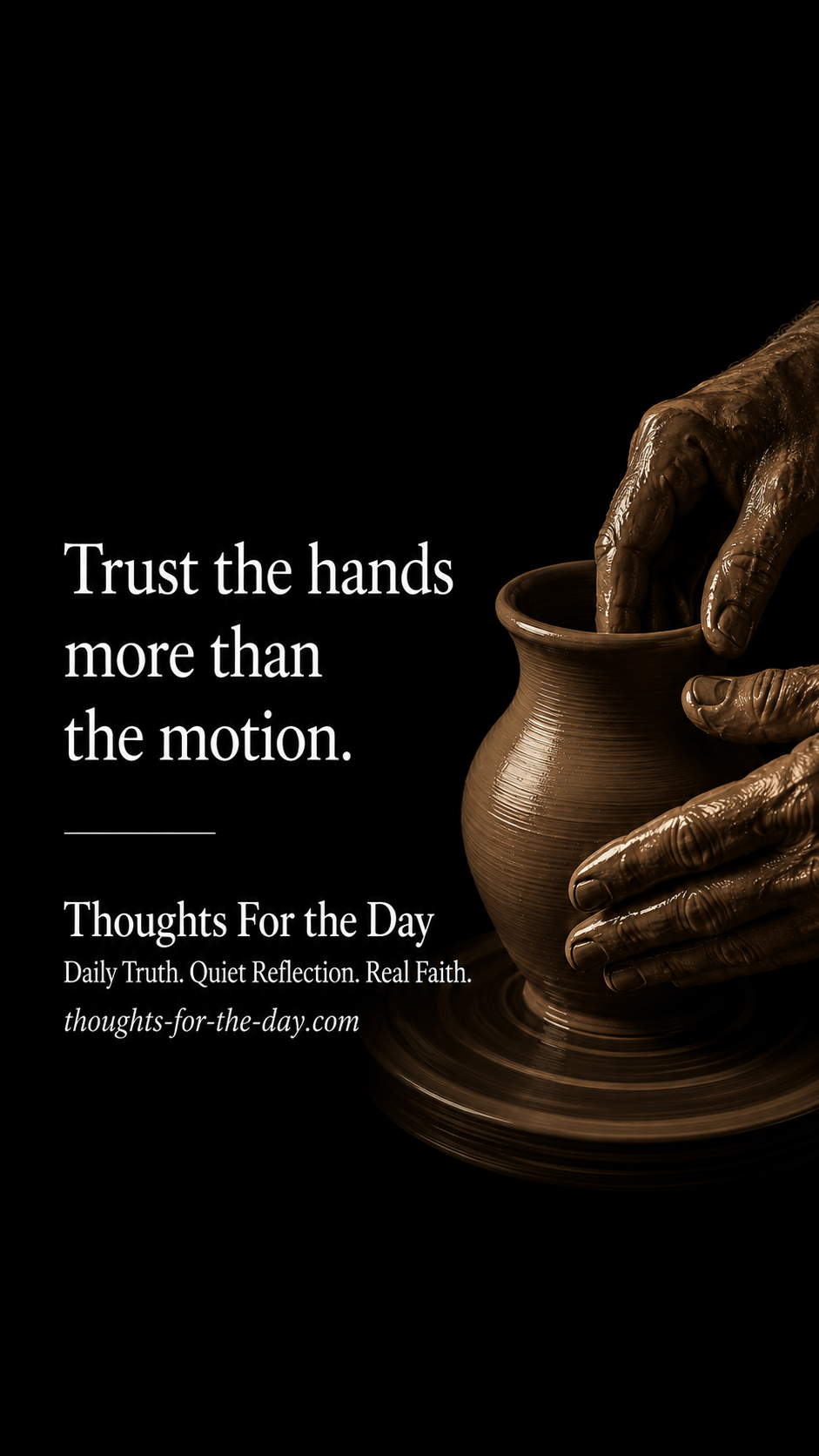
    God didn’t send Jeremiah to a palace or a battlefield to teach him one of Scripture’s greatest lessons. He sent him to a workshop.

    “Go to the potter’s house.”

    The lesson wouldn’t come through a sermon.

    It would come through observation.

    Sometimes God teaches us the same way.

    Instead of immediately answering our questions, He simply says, “Watch.”

    Watch how I work.

    Watch what I do.

    Watch the Potter.

    The first thing I remember about the process was how important it was to center the clay.

    Nothing else happened until that was right.

    If the clay wasn’t perfectly centered on the wheel, everything that followed would be uneven. The faster the wheel turned, the more obvious the wobble became. No amount of skill could compensate for clay that wasn’t centered.

    Life works much the same way.

    When life speeds up, whatever sits at the center of our hearts is revealed.

    Responsibilities increase.

    Schedules become full.

    Unexpected trials appear.

    Pressure mounts.

    Those seasons don’t usually create our instability. They expose it.

    Before God shapes our lives, He centers our hearts.

    Jesus said, “Seek first the kingdom of God.”

    The writer of Hebrews tells us to keep our eyes fixed on Jesus.

    Only when Christ occupies the center can everything else begin taking its proper place.

    Then came the pressure.

    Watching the potter’s hands was fascinating.

    To someone unfamiliar with pottery, the process almost looks harsh.

    The hands press firmly.

    They squeeze.

    They pull.

    They stretch.

    Yet every movement has purpose.

    Nothing is random.

    One hand supports the outside while the other shapes from within.

    Remove either hand, and the vessel collapses.

    How often is that exactly how God works in our lives?

    We notice the pressures around us—the disappointments, the delays, the hardships, the uncertainties.

    What we often fail to recognize is the quieter work taking place within us.

    While circumstances shape our character externally, the Holy Spirit is transforming our hearts internally.

    God is working from both sides at once.

    The pressure isn’t punishment.

    It’s preparation.

    I also remember the water.

    Clay without water quickly becomes stiff and brittle.

    Push too hard, and it cracks.

    Add too much water, and it loses its strength altogether.

    The potter constantly adds just enough to keep the clay workable.

    What a beautiful picture of God’s grace.

    He knows exactly when our hearts need softening.

    He comforts us without making us complacent.

    He strengthens us without making us hard.

    His grace is never excessive.

    It is always sufficient.

    Perhaps the greatest lesson, however, is this:

    The clay never shaped itself.

    Its responsibility was not to decide what kind of vessel it wanted to become.

    Its responsibility was simply to remain in the potter’s hands.

    That runs completely contrary to our culture.

    We want control.

    We want to choose the timing.

    We want to determine the outcome.

    We even try to tell God what our lives should become.

    But clay has never instructed the potter.

    It simply yields.

    Jeremiah watched as something unexpected happened.

    The vessel became marred in the potter’s hand.

    The clay resisted.

    The shape was spoiled.

    Yet the potter didn’t throw it away.

    He didn’t become frustrated.

    He didn’t walk away from the wheel.

    Scripture says, “So he made it again another vessel, as seemed good to the potter to make it.”

    Those words have always moved me.

    He made it again.

    Not repaired.

    Not patched.

    Remade.

    That is the story of redemption.

    Every one of us has been marred by sin.

    Every one of us has failed to become what we were created to be.

    Yet our failures do not surprise the Potter.

    He is able to begin again.

    He reshapes what has been broken.

    He restores what has been damaged.

    He creates something beautiful where we expected only disappointment.

    Sometimes people say they feel like life is going in circles.

    Perhaps you’ve felt that way.

    The same struggles.

    The same prayers.

    The same waiting.

    The same unanswered questions.

    May I offer another perspective?

    Perhaps you’re not going in circles.

    Perhaps you’re still on the wheel.

    The wheel keeps turning because the vessel isn’t finished.

    Every rotation places another part of our lives beneath the Potter’s hands.

    Every season brings another opportunity for Him to remove what doesn’t belong and strengthen what does.

    The clay never sees what the Potter sees.

    The clay feels the pressure.

    The Potter sees the finished vessel.

    The clay experiences the spinning.

    The Potter sees the purpose.

    The clay only knows today.

    The Potter already sees what tomorrow will require.

    That is why faith is ultimately trust.

    Not trust in the wheel.

    Not trust in the process.

    Trust in the One whose hands never leave the clay.

    If your life feels uncertain today…

    if the pressure seems greater than you expected…

    if the wheel seems to keep turning without end…

    don’t mistake movement for abandonment.

    The Potter is still at work.

    And the fact that His hands are still shaping you is evidence that He is not finished yet.

  • Keep Your Eyes Ahead

    Keep Your Eyes Ahead

    Some of life’s greatest lessons aren’t learned in a classroom.

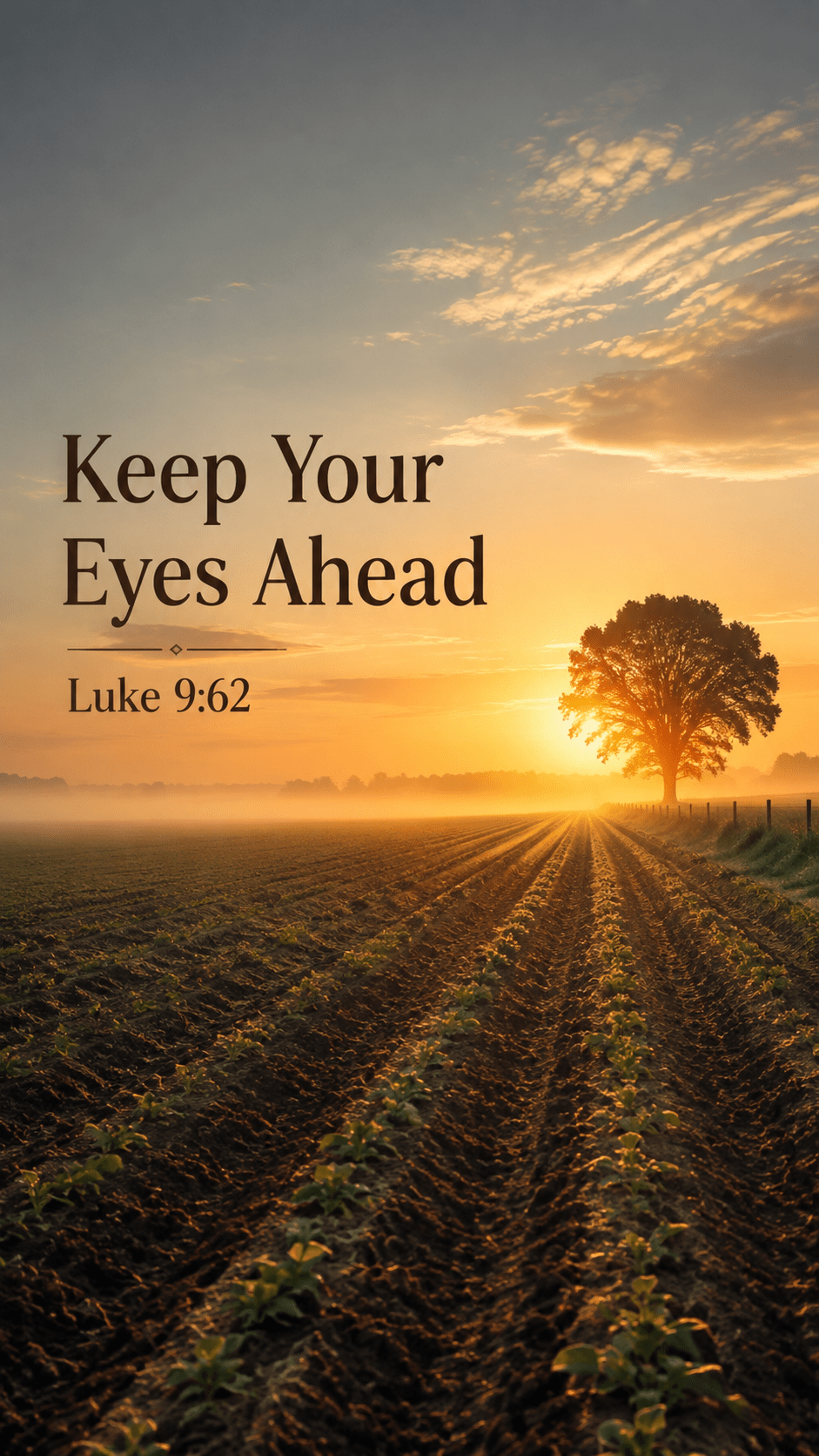
    They’re learned behind a plow.

    When I was a boy, my cousins, siblings, and I would argue over who got to pull Grandpa’s plow through the garden. Looking back, I smile at those memories. At the time, all we knew was that we wanted to help.

    Years later, when I began making the furrows myself, Grandpa’s lesson finally made sense.

    If I wanted a straight row, I couldn’t keep looking at the plow.

    I couldn’t keep looking behind me to see how I was doing.

    I had to pick something in the distance—a tree, a fence post, anything that wouldn’t move—and keep my eyes fixed on it.

    The moment my attention drifted, so did the furrow.

    Oddly enough, I discovered the same thing mowing lawns.

    The straightest lines didn’t come from staring at the mower deck. They came from focusing on something far ahead.

    Later, football taught me the lesson again.

    A quarterback doesn’t stare at where the receiver is. He throws toward where the receiver is going to be.

    Three very different experiences.

    One unchanging principle.

    You don’t move accurately by staring at what’s immediately in front of you.

    You move accurately by fixing your attention on where you’re headed.

    Then one day I realized…

    Jesus had already taught that lesson.

    “No one, having put his hand to the plow, and looking back, is fit for the kingdom of God.”
    — Luke 9:62 (NKJV)

    Jesus wasn’t giving farming advice.

    He was describing discipleship.

    The New Testament repeats this same pattern.

    Paul wrote,

    ”…forgetting those things which are behind and reaching forward to those things which are ahead…”
    — Philippians 3:13 (NKJV)

    The writer of Hebrews adds,

    ”…looking unto Jesus, the author and finisher of our faith…”
    — Hebrews 12:2 (NKJV)

    Notice the consistency.

    Not looking at yesterday.

    Not looking at ourselves.

    Not looking at the obstacles.

    Looking at Christ.

    Reflection has its place. Looking back reminds us of God’s faithfulness and how far He has brought us.

    But we were never meant to live looking over our shoulder.

    Reflection celebrates progress.

    Fixation prevents it.

    The One who called us forward never intended for us to follow Him while facing yesterday.

    Keep your eyes on Christ.

    The furrow will follow.

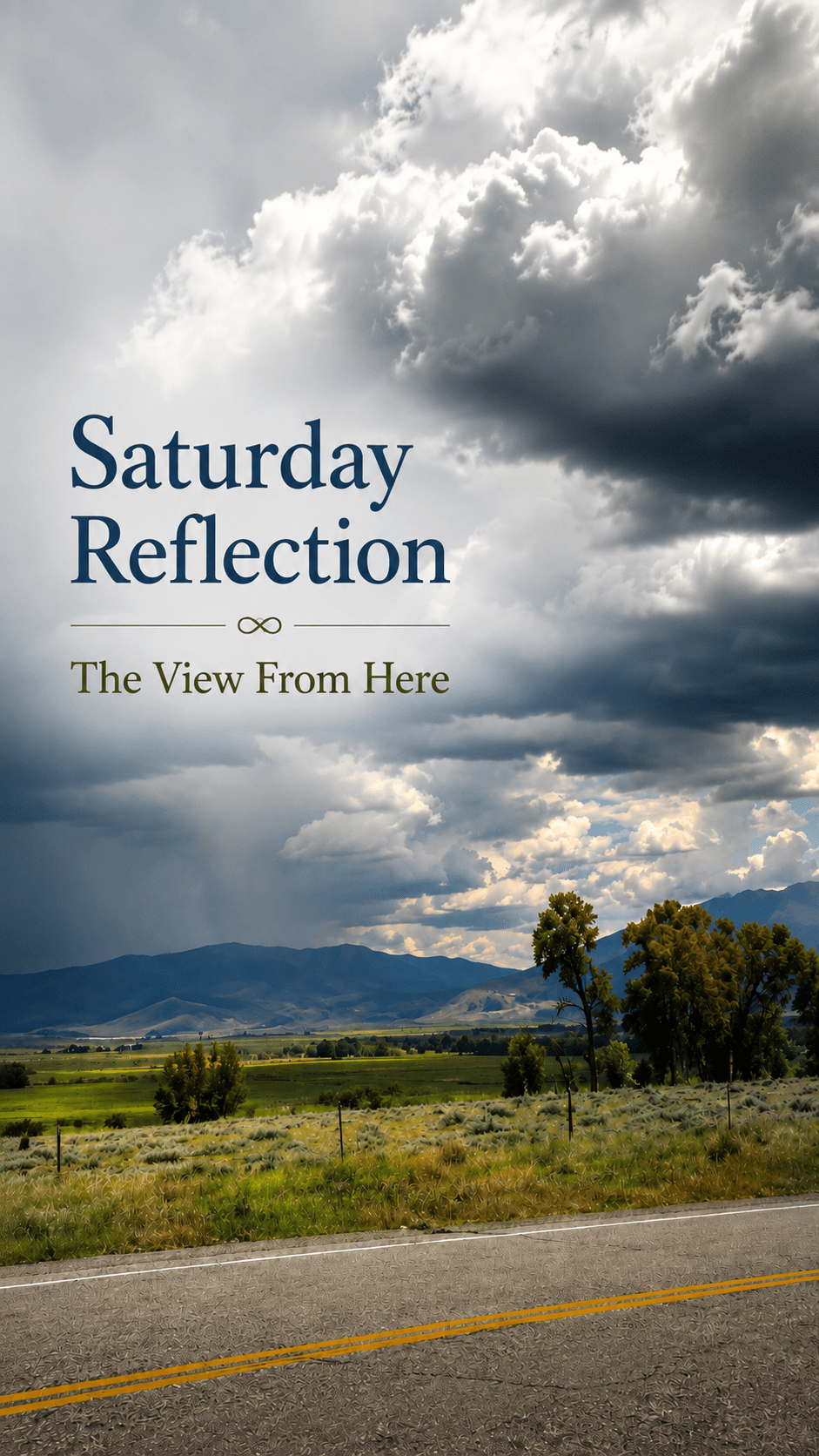
  • Saturday Reflection: The View From Here

    Saturday Reflection: The View From Here

    Last summer, while driving through Wyoming, I found myself doing something I hadn’t planned.

    More than once, I pulled off the road.

    Not because there was a problem.

    Not because I was lost.

    Simply because I wanted to look back.

    It happened on the road leaving Devil’s Tower. It happened again as we descended from Medicine Bow Peak. The mountains behind us, the winding roads, the valleys we’d already crossed—they looked different from where we stood than they had while we were driving through them.

    Standing still gave me a perspective I couldn’t have while I was moving.

    This week has reminded me of those moments.

    We’ve talked about moving into new seasons.

    We’ve talked about leaving some things behind while carrying forward what matters most.

    We’ve talked about knowing the Author instead of simply memorizing the story.

    We’ve reflected on God’s intentional grace.

    We’ve considered the ancient landmarks He established that were never meant to be moved.

    At first glance, those seem like different conversations.

    But when I stop and look back…

    I realize they’ve all been pointing in the same direction.

    God never calls us to stand still.

    He calls us to keep walking.

    He leads us into new places, new seasons, and new opportunities to trust Him.

    Yet every step forward is anchored by truths that never change.

    The scenery changes.

    The road twists and climbs.

    Sometimes the view is breathtaking.

    Sometimes it’s hidden by fog.

    But the landmarks remain exactly where God placed them.

    His Word still tells the truth.

    Repentance still restores.

    Faith still trusts Him when the road disappears around the bend.

    Prayer still reaches heaven.

    Holiness still matters.

    Love still marks His people.

    Making disciples is still our calling.

    Looking back isn’t about wishing we could return to yesterday.

    It’s about recognizing the faithfulness of the God who brought us this far.

    Israel crossed the Jordan and stacked stones so future generations would ask, “What do these stones mean?”

    Samuel raised Ebenezer and declared, “Thus far the LORD has helped us.”

    God’s people have always paused to remember—not because the journey was over, but because remembering gave them confidence to continue.

    Maybe we need more moments like that.

    Moments when we pull off the road—not to stop following Christ, but to see more clearly how faithfully He has led us.

    Then, with grateful hearts…

    we get back in,

    put the road in front of us once again,

    and keep walking toward whatever He has prepared next.

    “Remember the days of old, consider the years of many generations…”
    Deuteronomy 32:7 (NKJV)

  • Forsake Not the Ancient Landmarks: What Every Generation Must Carry Forward

    Forsake Not the Ancient Landmarks: What Every Generation Must Carry Forward

    “Do not remove the ancient landmark,Nor enter the fields of the fatherless.”
    Proverbs 23:10 (NKJV)

    Moving into a new season doesn’t require abandoning every old one.

    Some things are meant to be left behind.

    Others are meant to be carried forward.

    The wisdom is knowing the difference.

    Over the past several weeks, I’ve spent a great deal of time packing boxes, sorting through memories, and preparing for a new chapter of life. Along the way, I’ve found myself asking a question that reaches far beyond moving from one house to another.

    What do I carry with me… and what do I leave behind?

    That question isn’t just practical.

    It’s deeply spiritual.

    Recently, I read a reflection from someone remembering her Pentecostal childhood. She described old church pews, crowded altars, saints praying through tears, late-night prayer meetings, and worship that came from sincere hearts. She admitted that not everything from those years was perfect, but neither was everything broken.

    One phrase stayed with me.

    “I hear echoes.”

    I understand exactly what she meant.

    I hear them too.

    I can still hear my childhood pastor, Rev. E. G. Bass, preaching messages that shaped my life. One message, in particular, has stayed with me for more than forty years.

    “Forsake Not the Ancient Landmarks.”

    His text came from Proverbs 23:10.

    As a teenager, I understood the words.

    As an adult, I understand their weight.

    In Solomon’s day, ancient landmarks were the equivalent of today’s land survey markers. They identified the boundaries of a family’s inheritance. They weren’t placed casually, nor were they moved on a whim.

    To move one wasn’t merely dishonest.

    It was an attempt to redefine what God had already assigned.

    When Israel entered the Promised Land, it was God who determined each tribe’s inheritance. Those boundary markers testified to His provision and His authority. To move one was not only stealing from a neighbor—it was disregarding the boundaries God Himself had established.

    Spiritually, every generation faces a similar temptation.

    Not necessarily to reject God.

    But to quietly move the landmarks He established.

    That’s an important distinction.

    Because not everything old is a landmark.

    Traditions are not landmarks.

    Preferences are not landmarks.

    Methods are not landmarks.

    Buildings are not landmarks.

    Styles of worship are not landmarks.

    Every generation changes those things.

    The landmarks are different.

    The landmarks are the truths God Himself established.

    The authority of His Word.

    Repentance.

    Faith in Jesus Christ.

    The new birth.

    Prayer.

    Holiness.

    The work of the Holy Spirit.

    Love for one another.

    Bearing one another’s burdens.

    Making disciples.

    These aren’t relics from another generation.

    They aren’t denominational distinctives.

    They are the boundaries God has given His people for every generation.

    The writer of Hebrews reminds us just how essential one of those landmarks truly is.

    “Pursue peace with all people, and holiness, without which no one will see the Lord.”
    — Hebrews 12:14 (NKJV)

    Holiness isn’t a relic of a previous generation.

    It is the lifelong pursuit of every believer who desires to see Christ.

    Sometimes I think we’ve confused the landmarks with the scenery.

    We say we miss the wooden pews…

    when what we really miss is the sincerity of the people who knelt beside them.

    We talk about how we don’t sing the old songs anymore…

    when what we really miss is hearts that worshiped without concern for appearances.

    We long for the crowded altars…

    when what we really miss is a generation that believed God still hears and answers prayer.

    The scenery changes.

    It always has.

    The landmarks don’t.

    And they shouldn’t.

    Today, we don’t usually move stones.

    We move definitions.

    We redefine repentance.

    We redefine holiness.

    We redefine sin.

    We redefine marriage.

    We redefine the gospel.

    The boundary hasn’t been erased.

    It’s simply been relocated.

    That is exactly what Proverbs warns us against.

    Jeremiah echoed the same truth centuries later.

    “Thus says the LORD: ‘Stand in the ways and see, and ask for the old paths, where the good way is, and walk in it; then you will find rest for your souls.’”
    — Jeremiah 6:16 (NKJV)

    Notice what God said.

    He didn’t tell them to ask for the old days.

    He told them to ask for the old paths.

    God has never called His people to live in the past.

    But He has always called them to walk the path He established.

    As Christians, we should never be afraid of new technology, new opportunities, or new seasons of life.

    But we should be very careful about moving the landmarks.

    Every generation inherits two things.

    The landmarks God established…

    and the traditions people built around them.

    Wisdom is knowing the difference.

    As I continue moving into a new season of life, I’ve realized something.

    The house may change.

    The address may change.

    The season may change.

    Even the scenery may change.

    But the landmarks remain exactly where God placed them.

    And that’s where I intend to build.

    The scenery may change…

    but the landmarks still point the way home.

    The Way Forward

    Every generation must decide whether it will preserve the landmarks or move them.

    The Church doesn’t need to recreate another era.

    It needs to remain anchored to the truths God established.

    Don’t spend your life trying to recreate yesterday.

    Walk the ancient paths that have always led people to Christ.

    Because when the scenery changes—and it always will—the landmarks are what keep us from losing our way.

  • Walking Out Of Yesterday’s Rooms

    Walking Out Of Yesterday’s Rooms

    “Do not remember the former things, nor consider the things of old. Behold, I will do a new thing…”
    Isaiah 43:18–19 (NKJV)

    I’ve packed for moving several times.

    There were moves where the house was still occupied. Furniture remained in place. Pictures still hung on the walls. Yet somehow, it no longer felt like home.

    There were other moves where the house stood completely empty. Every room echoed with silence. Bare walls marked the places where pictures had once hung, and the emptiness quietly announced that the chapter had ended.

    One moment, though, caught me completely by surprise.

    It wasn’t the furniture.

    It wasn’t the boxes.

    It was the photographs.

    One by one, I found myself deciding which memories would make the move with me and which would not.

    Some made me smile.

    Others brought tears.

    Some reminded me of God’s faithfulness through seasons I never would have chosen. Others reminded me of burdens I had carried far longer than I should have.

    As I sorted through them, I realized something.

    Following Christ isn’t about pretending the past never happened.

    It’s about learning which memories to treasure, which lessons to carry forward, and which burdens to finally leave at His feet.

    Isaiah records these words from the Lord:

    “Do not remember the former things, nor consider the things of old. Behold, I will do a new thing…”
    — Isaiah 43:18–19 (NKJV)

    God wasn’t telling Israel to erase their history. He was calling them not to become so anchored to yesterday that they missed what He was doing today.

    The past matters.

    It shapes us.

    It teaches us.

    It reminds us of God’s faithfulness.

    But it was never meant to become our permanent address.

    God never asks us to erase our story.

    He simply refuses to let our yesterday become our destination.

    His grace allows us to remember without remaining there.

    His mercy allows us to learn without living in regret.

    And His faithfulness keeps leading us toward the new thing He has prepared.

    Sometimes, following Christ looks a lot like packing for a move.

    You carry what belongs in the next chapter.

    You leave behind what doesn’t.

    Then, with gratitude for where you’ve been and confidence in the God who goes before you, you quietly close the door…

    …and step into tomorrow.

  • Where Is Your Faith Anchored

    Where Is Your Faith Anchored

    “It is better to trust in the Lord than to put confidence in man.” ~ Psalm 118:8 (NKJV) ~

    Where is your faith anchored?

    It’s an easy question to answer when life is calm.

    It’s much harder to answer when someone you admire disappoints you.

    When someone you trusted walks away.

    When someone you respected falls.

    That’s when you discover what—or who—your faith has really been resting upon.

    Every time a well-known Christian leader falls…

    Social media erupts.

    Headlines spread.

    Phones buzz with text messages.

    Office conversations begin.

    Church lobbies fill with opinions.

    Some rush to defend them.

    Others rush to condemn them.

    But almost no one stops to ask the question that matters most.

    Where was my faith anchored before they fell?

    As a boy, I often heard my pastor, Rev. E. G. Bass, say something that has stayed with me for decades:

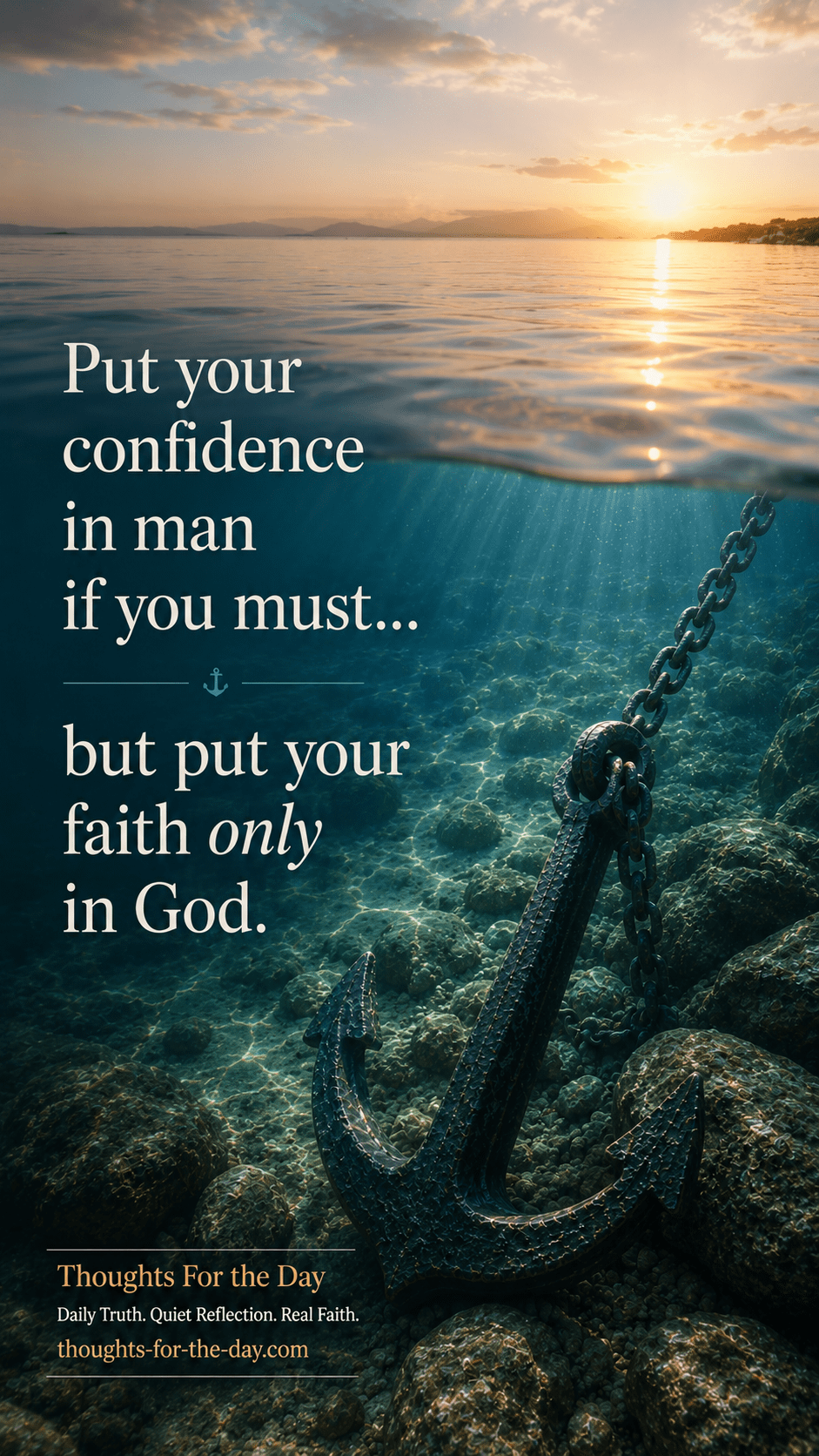
    “Put your confidence in man if you must, but put your faith only in God.”

    The older I’ve become, the more I’ve realized he was simply putting Psalm 118:8 into everyday language.

    The Bible tells us to honor faithful leaders.

    To pray for them.

    To learn from them.

    But it never tells us to build our faith upon them.

    Why?

    Because every pastor…

    Every evangelist…

    Every teacher…

    Every Christian…

    Is still a sinner in need of God’s grace.

    The Bible never hides that reality.

    Noah stumbled.

    Abraham failed.

    Moses disobeyed.

    David sinned.

    Peter denied the Lord.

    Yet the story of Scripture has never been about perfect people.

    It has always been about a perfect Savior working through imperfect people.

    So when a leader falls, our faith should not fall with them.

    Christianity was never built upon pastors.

    It was never built upon apostles.

    It was never built upon denominations.

    It was built upon Jesus Christ.

    A pastor’s failure cannot undo an empty tomb.

    A minister’s sin cannot erase the cross.

    Someone else’s unfaithfulness cannot change God’s faithfulness.

    Some who fall repent and are restored.

    Some never return.

    God’s mercy remains available.

    Whether they receive it is a choice for which they are personally responsible.

    But regardless of what anyone else chooses…

    Jesus Christ remains exactly who He has always been.

    Yesterday.

    Today.

    And forever.

    Final Word

    Love your pastor.

    Pray for your pastor.

    Be thankful for faithful spiritual leaders.

    But never ask another person to bear a weight only Christ can carry.

    As Rev. E. G. Bass used to say,

    “Put your confidence in man if you must, but put your faith only in God.”

  • Doing the Truth

    Doing the Truth

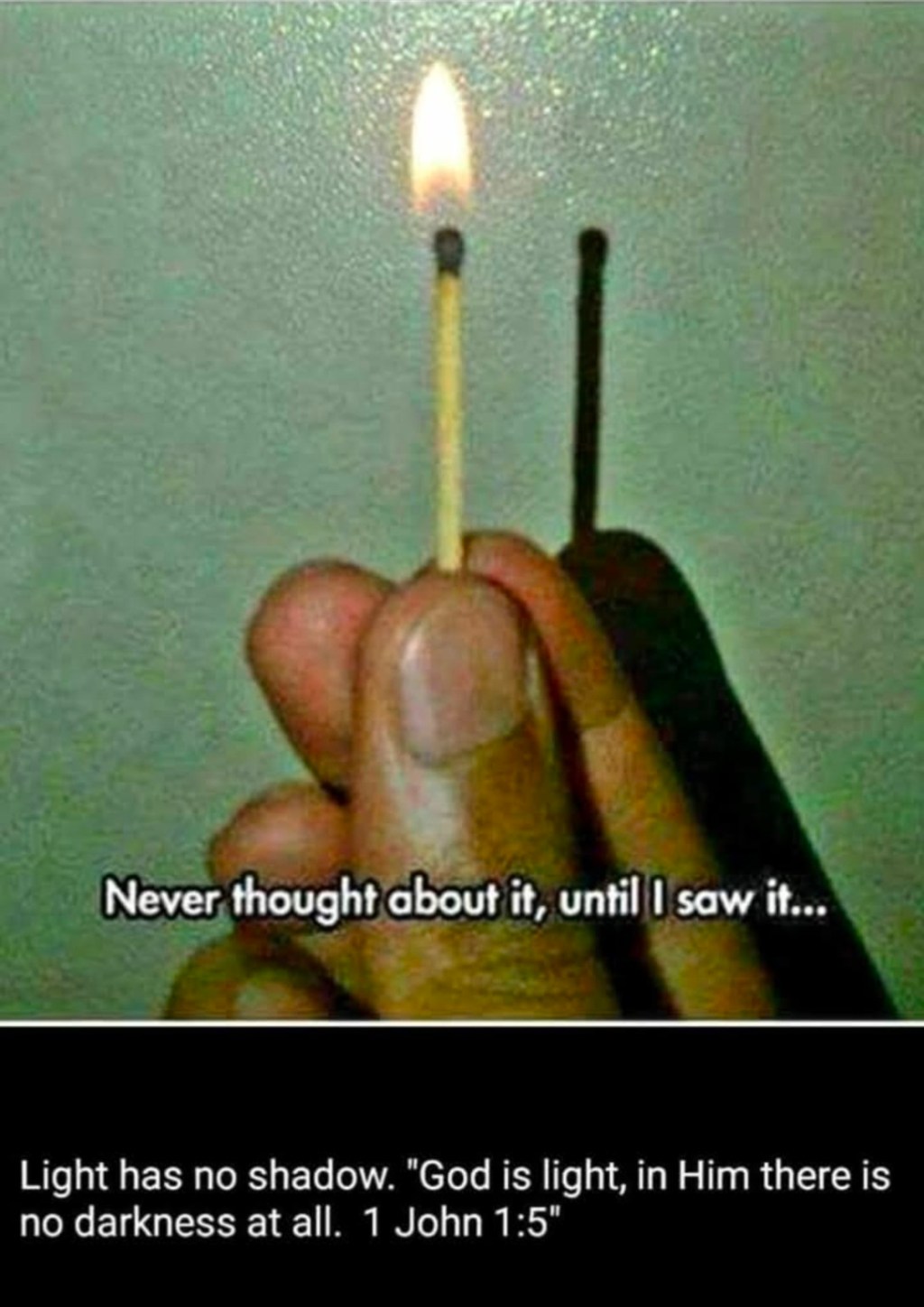
    A Facebook memory from seven years ago appeared in my feed this week. It was a simple image of a burning match with the words:

    “God is light, and in Him is no darkness at all.” (1 John 1:5)

    Years ago, that’s where I stopped reading.

    This week, I kept going.

    The very next verse says,

    “If we say that we have fellowship with Him, and walk in darkness, we lie and do not practice the truth.” (1 John 1:6, NKJV)

    Most English translations read “practice the truth,” but John’s wording is even more vivid. Literally, he says we do not “do the truth.”

    That stopped me.

    For a long time, I thought spiritual maturity was measured by how much I knew.

    I knew the doctrine.

    I knew the Scriptures.

    I knew the answers.

    But knowing the truth had not yet become doing the truth.

    Then I thought about James.

    “You believe that there is one God. You do well. Even the demons believe—and tremble!” (James 2:19)

    James reminds us that belief by itself is not the finish line. Even demons know who God is. They believe the truth about Him.

    What they do not do is submit to Him.

    Truth was never intended merely to fill our minds. It was meant to shape our lives.

    Jesus said,

    “If you know these things, blessed are you if you do them.” (John 13:17)

    Knowledge.

    Belief.

    Obedience.

    That’s the progression.

    The question isn’t simply, “Do I know the truth?”

    Or even, “Do I believe the truth?”

    The question John asks is far more personal:

    Am I doing the truth?

    Because the strongest testimony of what we believe isn’t found in what we say.

    It’s found in how we walk.