Tag: Trusting God

  • But If Not

    But If Not

    Daniel 3:16–18 NKJV

    They knew God was able.

    But they did not know what God would do.

    That is the tension at the center of Daniel 3.

    Shadrach, Meshach, and Abed-Nego stood before an enraged king with a furnace burning nearby. Nebuchadnezzar had given them one more opportunity to bow before the image he had made. If they complied, they could return to their positions and continue their lives in Babylon. If they refused, they would be thrown into the fire.

    The fire had not touched them… yet.

    They could still avoid it.

    All they had to do was bow.

    Instead, they answered:

    “O Nebuchadnezzar, we have no need to answer you in this matter. If that is the case, our God whom we serve is able to deliver us from the burning fiery furnace, and He will deliver us from your hand, O king. But if not, let it be known to you, O king, that we do not serve your gods, nor will we worship the gold image which you have set up.”
    — Daniel 3:16–18 NKJV

    The King James says, “O Nebuchadnezzar, we are not careful to answer thee…”

    Their answer moved through three declarations:

    Our God is able.

    But if not.

    We will not bow.

    The first declaration was faith.

    They did not minimize the danger.
    They did not pretend the flames were harmless or that Nebuchadnezzar lacked the power to carry out his threat.
    And their confidence was not in their position, their influence, or their ability to survive.

    Their confidence was in God.

    The furnace was real, but it was not greater than Him. The king had authority, but he did not have final authority. God was able to deliver them from the fire and from the hand of Nebuchadnezzar.

    Faith still begins there.

    God is able to heal. He is able to restore. He is able to provide. He is able to open the door, change the heart, reverse the decision, and make a way where we cannot see one.

    We should pray boldly. We should bring our needs to God and believe in His power. Surrender is not unbelief, and it is not wrong to ask God for the outcome we desperately desire.

    But confidence in God’s ability is not the same as certainty about His decision.

    The three Hebrews knew what God could do.

    They did not presume to tell Him what He must do.

    That is where their second declaration becomes so important:

    But if not.

    Those words did not weaken their faith. They completed it.

    Without “our God is able”, “but if not” could sound like hopeless resignation.

    Without “but if not”, “our God is able” can become an attempt to control God through religious certainty.

    Together, the two declarations reveal mature trust.

    Faith says God is able.

    Surrender says He will still be God if He does not do what I am asking.

    I have discovered how easy it is to call something trust while quietly attaching conditions to it.

    I will trust God if He heals.

    I will keep serving if the door eventually opens.

    I will remain faithful if the sacrifice produces something I can see.

    I will obey if He protects me from the consequences.

    I will trust Him if the story ends the way I believe it should.

    But that is not complete surrender. It says, “God, I will trust You only if You give me the outcome I want.” Instead of surrendering our will to Him, we are asking Him to surrender His will to ours.

    Shadrach, Meshach, and Abed-Nego refused to make that bargain.

    They would not worship the golden image Nebuchadnezzar had erected. Neither would they turn deliverance into an idol of their own.

    They did not know whether they would walk out of the furnace. They were not promised that the flames would leave them untouched. What they knew was that God’s worthiness did not depend upon their survival.

    He was worthy before the answer.

    He would remain worthy within the fire.

    He would still be worthy if their story ended in a way they would never have chosen.

    That brought them to the third declaration:

    We will not bow.

    They could not control Nebuchadnezzar.

    They could not control the furnace.

    They could not control whether God would rescue them.

    They could decide whom they would worship.

    There is freedom in recognizing that difference.

    We spend enormous amounts of strength trying to control decisions that belong to God, responses that belong to other people, and outcomes no human being can guarantee. We want to determine how quickly the answer comes, how the story develops, and what obedience will cost.

    But the outcome belongs to God.

    Faithfulness belongs to us.

    Trust does not mean we stop caring about the outcome. The three Hebrews were not eager to burn. Their willingness to die did not mean they had no desire to live. Surrender does not require us to become detached, emotionless, or indifferent.

    It means the outcome will not become our master.

    It means we can ask God for deliverance without demanding it as the price of our devotion.

    It means we can place the request before Him while leaving the throne occupied by Him.

    Most of us will never stand before a literal furnace. But every believer eventually reaches a place where God’s ability is unquestioned and His decision remains unknown.

    We know He can intervene.

    We do not know whether He will intervene in the way we desire.

    That is when “but if not” stops being a phrase from an ancient story and becomes the language of personal surrender.

    If the answer is no, does God retain my worship?

    If the door remains closed, does He retain my obedience?

    If the healing does not come, does He retain my trust?

    If the story takes a road I would never choose, does He remain worthy?

    The answer cannot be grounded in our ability to predict the ending. It must be grounded in the character of the God to whom we have entrusted it.

    God’s goodness is not established by our comfort.

    His faithfulness is not measured by the ease of our lives.

    His worthiness does not rise and fall with the outcome of our prayers.

    The three Hebrews stood before the king without knowing what would happen next. Their obedience was complete before deliverance became visible.

    Perhaps that is the deepest meaning of “but if not.”

    It is not faith giving way to doubt.

    It is faith releasing its demand for control.

    It is worship that no longer belongs to an answer, an outcome, or an explanation.

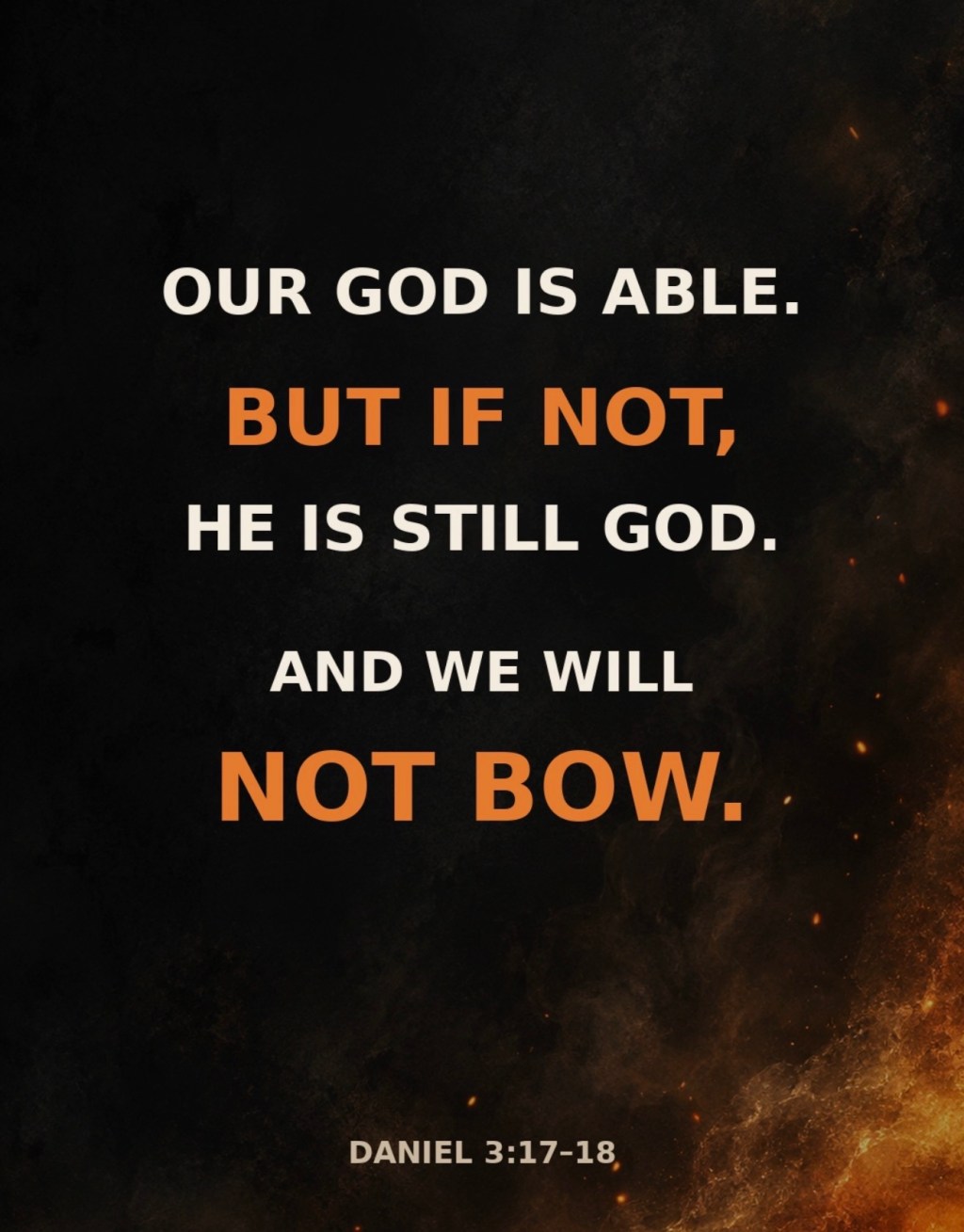
    Our God is able.

    But if not,

    He is still God.

    And we will not bow.

  • What the Mountains Taught Me About the Valley

    What the Mountains Taught Me About the Valley

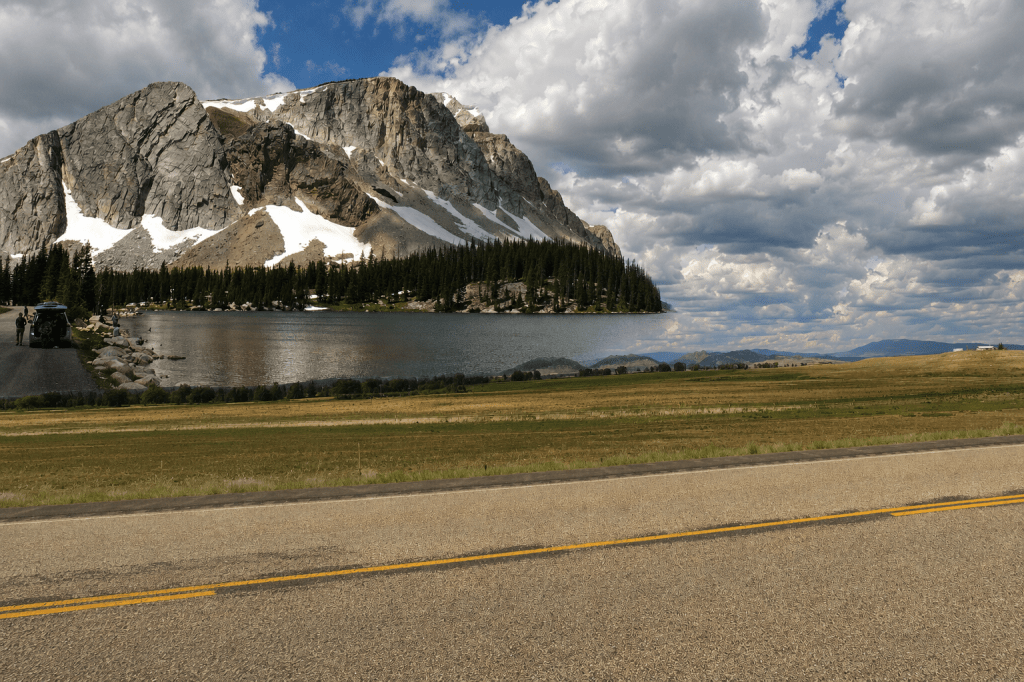
    Last summer, while driving through Wyoming and Colorado, I noticed something that challenged an assumption I’d carried for years.

    The valleys weren’t the difficult part of the journey.

    They were broad. Open. In many places, I could see for miles. The roads were relatively gentle, and obstacles could often be spotted long before I reached them.

    It was the mountains that demanded my full attention.

    The road narrowed.

    The next curve disappeared from view.

    The drop-offs became steeper.

    The weather changed without warning.

    Every mile required a little more caution than the last.

    As I drove, a question quietly settled into my mind.

    Have we, as Christians, oversimplified the Bible’s language about mountains and valleys?

    For years, I’ve heard people describe difficult seasons as “walking through the valley” and victorious seasons as “standing on the mountaintop.” There is certainly biblical truth behind those expressions. After all, David wrote of walking through “the valley of the shadow of death,” and mountains are often places where God revealed Himself in extraordinary ways.

    But Scripture paints a richer picture than our clichés sometimes allow.

    Not every valley in the Bible is a place of despair.

    Some valleys are fertile.

    Some are filled with rivers.

    Some become places where battles are fought and won.

    Some are where people build homes, raise families, and experience God’s daily provision.

    Likewise, not every mountain represents ease or triumph.

    Abraham climbed Mount Moriah carrying the wood for Isaac’s sacrifice.

    Moses climbed Mount Sinai into God’s presence.

    Elijah climbed Mount Carmel to confront hundreds of false prophets.

    Each ascent required obedience before it brought revelation.

    Then I thought about Lot.

    When Abraham gave him first choice, Lot looked toward the well-watered plain of the Jordan. It seemed like the obvious decision. Fertile land. Prosperity. Opportunity. Yet that same plain led him toward Sodom. The problem wasn’t that Lot chose a valley. The problem was that he chose by sight instead of by faith.

    The geography wasn’t the lesson.

    His heart was.

    Perhaps that’s where we sometimes miss the point.

    We become so focused on whether we’re living in a “valley” or standing on a “mountain” that we forget the Bible never asks us to put our confidence in the terrain.

    It asks us to trust the One who leads us through it.

    Sometimes God meets us on the mountain.

    Sometimes He restores us beside still waters in the valley.

    Sometimes He calls us to climb.

    Sometimes He calls us to descend.

    Peter wanted to remain on the mountain after witnessing Christ’s glory, but Jesus led him back down because ministry was waiting below.

    Mountaintops are often places of revelation.

    Valleys are often places where that revelation is lived out.

    Looking back, I realized the most dangerous part of my drive wasn’t the open valley stretching before me.

    It was the climb where I couldn’t see what lay around the next bend.

    Yet that’s also where I became most attentive.

    I slowed down.

    I watched more carefully.

    I depended less on myself.

    Maybe that’s exactly why God sometimes leads us into seasons where we can’t see very far ahead.

    Not because He has abandoned us…

    But because faith grows best when we learn to trust the Guide more than the map.

    The older I get, the less interested I am in labeling every season of life as either a mountain or a valley.

    Instead, I’m learning to ask a different question.

    Where is God leading me today?

    Because whether the road winds through fertile plains, shadowed ravines, or steep mountain passes, His presence has always mattered far more than the landscape.

    ⸻

    Final Word

    We spend a lot of time asking whether we’re on the mountaintop or in the valley.

    Scripture asks a different question.

    Are you following the Shepherd?

    The terrain will change.

    Some days will be wide, open valleys filled with quiet provision.

    Others will be steep climbs where every step requires faith.

    Neither place defines your relationship with God.

    His presence does.

    So don’t place your hope in reaching easier ground.

    Place it in the One who never leaves the path.

  • The Blessing You Didn’t Pray For

    The Blessing You Didn’t Pray For

    “Every good gift and every perfect gift is from above…” — James 1:17

    A song came to mind this week that asks a series of thought-provoking questions.

    What if the things we call hardships are sometimes the very means by which God accomplishes His greatest work in our lives?

    It isn’t asking whether pain is enjoyable.
    It isn’t suggesting that loss somehow becomes pleasant.

    Instead, it challenges us to consider a difficult possibility:

    What if some of God’s greatest blessings arrive in packages we would never choose to open?

    That thought immediately took me back through Scripture.

    Joseph certainly wouldn’t have chosen betrayal by his brothers.
    He wouldn’t have chosen slavery.
    He wouldn’t have chosen prison.

    Yet years later, he could look back and see that God had been working through every painful chapter.

    David probably wouldn’t have chosen years of hiding in caves while running for his life.

    Moses likely wouldn’t have volunteered for forty years in the wilderness.

    Naomi certainly wouldn’t have chosen famine, widowhood, and the loss of her sons.

    None of those experiences felt like blessings when they were happening.

    Yet every one of them became part of God’s greater purpose.

    I wonder how many blessings I’ve almost missed because I was looking for the wrong wrapping paper.

    We naturally think blessings look like answered prayers.

    Open doors.
    Good health.
    Financial provision.
    Restored relationships.

    There is no question those things can be tremendous gifts from God.

    But sometimes His greatest gifts are quieter.

    A disappointment that redirected our lives.
    A closed door that protected us from walking somewhere we shouldn’t.
    A season of waiting that taught us patience.
    A trial that stripped away our self-reliance and taught us complete dependence upon Him.

    None of us pray for those things.

    Yet many of us would honestly say they became turning points in our walk with Christ.

    I’ve noticed something else.

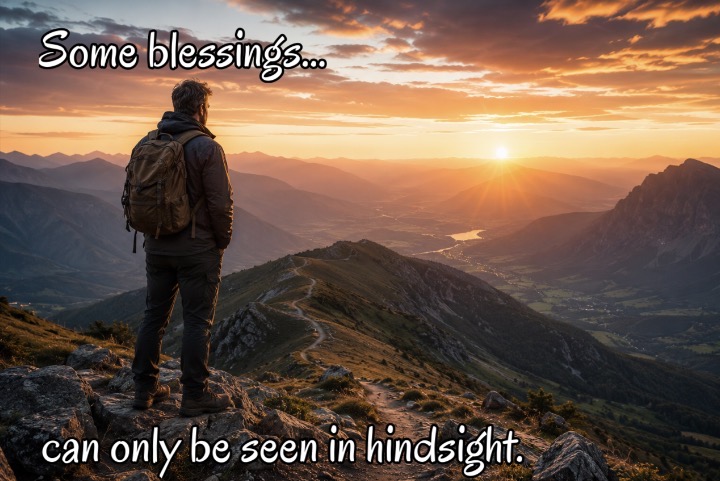
    We usually recognize those blessings only by looking backward.

    Very few people say in the middle of suffering,

    “I can already see why God allowed this.”

    Perspective often comes long after the pain.

    Perhaps that’s why faith is so essential.

    Faith trusts that God is good before we can understand what He is doing.

    Only later do we begin to see how He was weaving together circumstances we never could have imagined.

    Romans 8:28 isn’t a promise that everything is good.

    It’s a promise that God is working through everything for the good of those who love Him and are called according to His purpose.

    That doesn’t minimize grief.
    It doesn’t erase loss.
    It doesn’t pretend suffering isn’t real.

    It simply reminds us that God never wastes any of it.

    One day, I believe we’ll look back and discover that some of the moments we would have erased from our story became the very chapters God used to shape us most into the image of Christ.

    Final Word

    We spend much of our lives asking God to change our circumstances.

    Sometimes He does.

    But often, His greater miracle is using those circumstances to change us.

    Perhaps the greatest blessings aren’t always the ones that make life easier.

    Perhaps they’re the ones that make us more like Jesus.

  • The Only Opinion That Ultimately Matters

    “For if our heart condemn us, God is greater than our heart, and knoweth all things.” — 1 John 3:20

    Someone once shared a thought that has stayed with me:

    “Sometimes maturing in Christ means letting people believe things about you that aren’t true, remaining quiet, and trusting God to defend you.”

    That isn’t always easy.

    Everything inside us wants to explain ourselves, defend our motives, and make sure everyone knows our side of the story.

    Sometimes that’s appropriate.

    Paul defended his ministry. Jesus answered honest questions. Scripture never teaches us to remain silent in every situation.

    But it does teach us that there comes a point where our confidence must rest in something greater than public opinion.

    I’ve often said:

    “What God knows about me is infinitely more important than what people think or say about me.”

    Think about David.

    As he fled Jerusalem, Shimei cursed him, threw stones at him, and publicly accused him. David’s soldiers wanted to silence the man immediately.

    David refused.

    Instead, he entrusted his reputation to God.

    Think about Jesus.

    He was called a deceiver, a blasphemer, demon possessed, and a friend of sinners. Many of the accusations He simply allowed to stand unanswered because His mission was greater than winning the court of public opinion.

    The older I get, the more I realize that maturity isn’t learning how to win every argument.

    It’s learning which ones don’t need to be won.

    If every misunderstanding demands an explanation…

    If every criticism demands a rebuttal…

    If every accusation demands a defense…

    We’ll spend our lives trying to manage our image instead of cultivating our character.

    That doesn’t mean we ignore godly correction. In fact, mature believers should welcome correction when it’s true.

    But false assumptions, rumors, and misunderstandings are different.

    Sometimes the greatest act of faith is quietly continuing to live a life of integrity and allowing time—and God—to reveal the truth.

    One day, none of us will stand before our critics.

    We won’t stand before Facebook.

    We won’t stand before our friends.

    We won’t stand before those who misunderstood us.

    We will stand before God.

    And on that day, what He knows about us will matter infinitely more than what anyone ever thought or said about us.

    So don’t spend your life chasing the approval of people.

    Pursue the approval of the One who already knows your heart.

    Final Word

    Your reputation is what people believe about you.

    Your character is who you are when only God sees.

    Invest more energy in your character than your reputation.